Samrat Choudhary hails railway modernisation under PM Modi
Synopsis
Bihar Chief Minister Samrat Choudhary on 3 June 2026 praised Prime Minister Narendra Modi's railway modernisation drive, citing 145 million tonnes of record freight, over 61 crore passengers, 164 Vande Bharat and 68 Amrit Bharat trains. He framed Indian Railways as a strong foundation for development, investment and employment under the Viksit Bharat agenda.
Key Takeaways
Bihar CM Samrat Choudhary posted on X on 3 June 2026 praising railway modernisation under PM Narendra Modi .
He cited 145 million tonnes of record freight handled by Indian Railways.
He noted over 61 crore passengers carried 'safely and conveniently'.
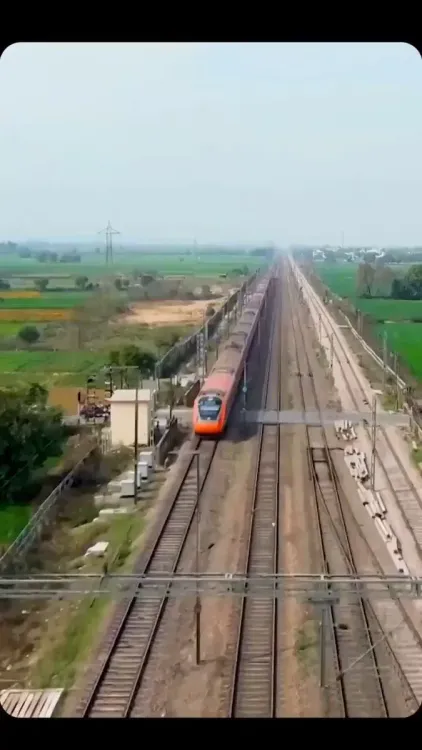
He highlighted 164 Vande Bharat and 68 Amrit Bharat trains connecting remote regions.
He described railways as a base for development, investment and employment under Viksit Bharat .
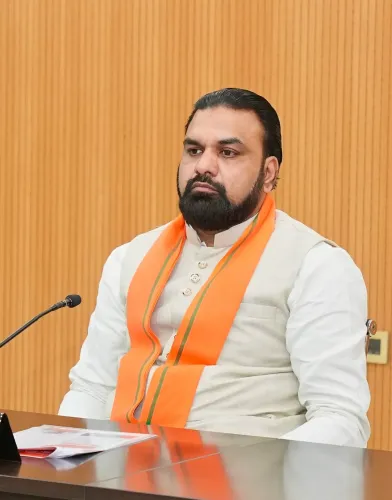
Bihar Chief Minister and senior BJP leader Samrat Choudhary on 3 June 2026 praised the modernisation of Indian Railways under Prime Minister Narendra Modi, calling it an effort that has given the country's transport system 'new pace and new identity'. In a post on X, he highlighted record freight volumes, passenger numbers and the expansion of new-generation trains as evidence of an 'unprecedented' transformation.
Citing operational milestones, Choudhary said Indian Railways had handled 145 million tonnes of record freight and provided a 'safe and convenient journey' to over 61 crore passengers. He further noted the running of 164 Vande Bharat trains and 68 Amrit Bharat trains, which he said were linking the country's remote regions in a way not seen before. 'Bhartiya Railway vikas, nivesh aur rozgar ki nayi sambhavnaon ka mazboot aadhar ban rahi hai' (Indian Railways is becoming a strong foundation for new possibilities of development, investment and employment), he wrote, closing with the hashtags #IndianRailways, #ViksitBharat and #NewIndia.
Context
Choudhary, who took charge as Chief Minister of Bihar after a long innings as state BJP president and deputy chief minister, has been an active voice on national infrastructure themes since assuming office. His latest post fits a pattern of state-level BJP leaders amplifying the central government's record on rail, road and digital connectivity ahead of the next round of legislative debates.
Bihar itself is a significant stakeholder in the railway expansion story, with several Vande Bharat and Amrit Bharat services routed through key junctions such as Patna, Muzaffarpur and Darbhanga. State governments have often used such occasions to underline central allocations flowing into station redevelopment and new line projects in their territory.
Policy backdrop
The Vande Bharat Express, an indigenously developed semi-high-speed train, was first flagged off in 2019 on the New Delhi-Varanasi route and has since been extended across multiple corridors. The Amrit Bharat initiative, by contrast, focuses on upgrading trains that serve smaller towns and non-premium routes, offering improved coaches and passenger amenities.
These rollouts sit within the broader framework of the National Rail Plan 2030, released around 2021, which outlines long-term targets for network expansion, higher average speeds and a larger share of freight on rail. Sustained capital expenditure since 2014 has been directed at indigenous rolling stock, electrification, safety systems and dedicated freight corridors.
Stakeholders and impact
The constituencies most directly affected by the modernisation push are everyday rail passengers, freight operators moving bulk commodities, and communities in remote districts that have historically had limited access to fast intercity services. For freight customers, higher tonnage handled on the network is pitched as a route to lower logistics costs across the economy.
For political leaders in states such as Bihar, the railway story doubles as a development pitch: new train stops, station upgrades and faster connections to metros are tangible deliverables that can be cited on the campaign trail. Choudhary's framing of railways as 'a strong foundation for development, investment and employment' aligns with the Viksit Bharat messaging the BJP has built its national narrative around.
What's next
Attention now turns to the next railway budget cycle and any fresh announcements on Vande Bharat or Amrit Bharat route additions, particularly those serving eastern India. Parliamentary discussions on capital outlay, safety upgrades and station redevelopment will offer the next test of how far the modernisation drive Choudhary celebrated can be sustained, and how its benefits are distributed across states.
Point of View
He signals that railway modernisation has become as central to BJP messaging as highways and digital payments once were. The framing of railways as a driver of 'investment and employment' also previews how the party plans to defend its capex-heavy fiscal choices. Expect more such amplification from Bihar's leadership as central allocations to eastern India become a campaign talking point.
NationPress
21 Oct 2026
Frequently Asked Questions
What did Bihar CM Samrat Choudhary say about Indian Railways?
Samrat Choudhary praised the modernisation of Indian Railways under Prime Minister Narendra Modi, calling the transformation 'unprecedented'. In his post on 3 June 2026, he cited record freight, passenger numbers and the expansion of Vande Bharat and Amrit Bharat services as proof of the change.
How many Vande Bharat trains are running in India?
Samrat Choudhary's post referred to 164 Vande Bharat trains in operation. The Vande Bharat Express, an indigenously developed semi-high-speed service, was first flagged off in 2019 on the New Delhi-Varanasi route and has since been extended across multiple corridors.
What is the Amrit Bharat train scheme?
Amrit Bharat is a train initiative focused on serving smaller towns and remote regions with upgraded coaches and passenger amenities. Choudhary said 68 such trains are connecting the country's distant regions, complementing the premium Vande Bharat services.
Who is Samrat Choudhary?
Samrat Choudhary is the Chief Minister of Bihar and a senior BJP leader. He previously served as state BJP president and as deputy chief minister before taking charge as chief minister.
What is the National Rail Plan 2030?
The National Rail Plan 2030, released around 2021, is a long-term blueprint for Indian Railways. It outlines targets for network expansion, higher average speeds, modernised rolling stock and a larger share of freight movement on rail.