Nepal FM Khanal warns Himalayan melt threatens 2 billion people

Synopsis
Nepal's Foreign Minister didn't just warn about melting glaciers — he challenged the entire vocabulary of India-Nepal relations. By calling for an ecological reframing of ties that have long been defined by culture and religion, Khanal is making climate diplomacy central to Kathmandu's neighbourhood strategy, with fresh flash floods providing an urgent, real-time case study.
Key Takeaways
Nepal FM Shisir Khanal warned on 27 August that Himalayan glacial melt threatens freshwater access for two billion people across the region.
He called the crisis a 'civilisational threat' at the NDTV World Anviksha Summit in Kathmandu .
Flash floods along the Bhote Koshi River (originating in Tibet) devastated parts of Nepal, sweeping away bridges and damaging hydropower plants.
Rivers including the Kosi and Gandak swelled dangerously, prompting emergency alerts in Bihar and Uttar Pradesh ; impact on India was ultimately less severe.
Khanal called on China , Nepal , India , and Bhutan to prioritise ecological survival over political rivalry.
He urged India-Nepal ties to be reframed in ecological terms, beyond traditional Roti-Beti, Sita-Ram cultural bonds.
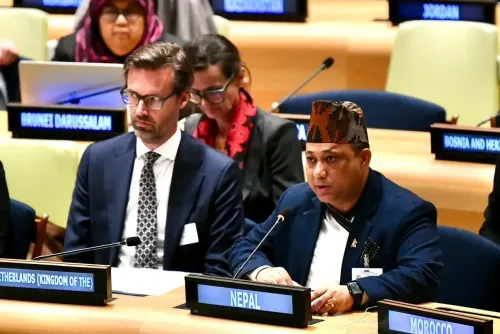
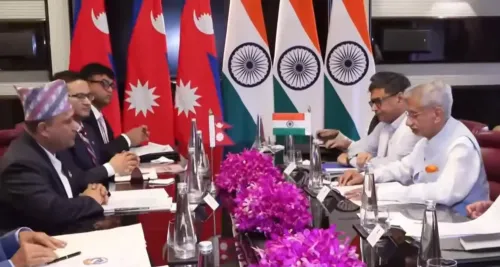
Nepal's Foreign Minister Shisir Khanal on Thursday, 27 August warned that accelerating glacial melt in the Himalayas poses a civilisational threat to Nepal, India, and neighbouring countries, potentially jeopardising freshwater access for two billion people across the region. Speaking at the NDTV World Anviksha Summit in Kathmandu, Khanal called for a fundamental reframing of India-Nepal relations around ecological security rather than cultural ties alone.
The Core Warning
'Whatever melts in the Himalayas rises in the sea,' Khanal said, underscoring the cascading consequences of glacial retreat — from flash floods to long-term freshwater scarcity. He described the situation as a 'civilisational threat', noting that as environmental conditions deteriorate, the region's vulnerability compounds. 'It's important how we come together and act,' he urged.
A New Frame for India-Nepal Relations
Khanal argued that the traditional cultural and religious idiom governing India-Nepal ties — often described in terms of Roti-Beti and Sita-Ram — must now be supplemented by an ecological framework. 'Nepal and India have always talked about our relations in terms of Roti-Beti, Sita-Ram. Religion and civilisational links have always played a big role in our ties. But we have to reframe our relationship in ecological terms,' he said. The remarks signal Kathmandu's intent to elevate climate diplomacy as a pillar of its foreign policy.
Flash Floods Provide the Backdrop
Khanal's appeal came in the immediate aftermath of devastating flash floods along the Bhote Koshi River, originating in Tibet, which inundated swathes of Nepal. Torrents swept away bridges, damaged hydropower infrastructure, and submerged villages. The disaster reinforced, in real time, the very risk he was describing from the summit stage.
Downstream, several major rivers — including the Gandak (Narayani) and the Kosi River, long called the 'Sorrow of Bihar' — flow from Nepal into Bihar and Uttar Pradesh, threatening millions of lives and livelihoods. State governments in India convened emergency meetings and placed administrations on high alert, though the eventual impact on Indian territory was reported to be less severe than feared.
Regional Ecology Above Political Rivalry
Khanal extended his call for cooperation beyond the India-Nepal bilateral, explicitly including China and Bhutan. 'Our shared survival and future depend on protecting the Himalayan ecology,' he said, acknowledging that political rivalries exist but insisting they cannot override ecological imperatives. 'There could be political rivalry, but we have to come together as the Himalayan region is most vulnerable to climate change,' he added.
This comes amid a broader global pattern: the frequency and severity of Himalayan climate events have intensified sharply over the past decade, according to climate scientists. Nepal's diplomatic positioning — centring ecological security in its neighbourhood outreach — reflects a growing recognition that upstream geography makes it both a first victim and a key partner in any regional climate response. Whether India, China, and Bhutan respond with matching urgency remains the defining question.
Point of View
Kathmandu is effectively asking New Delhi to engage on terms where Nepal — as an upstream Himalayan state — holds structural leverage. The political subtext is hard to miss: ecological interdependence is a frame that neutralises India's larger economic and strategic weight. Whether this translates into binding regional mechanisms or remains aspirational rhetoric depends almost entirely on India's willingness to institutionalise what, so far, has been a bilateral relationship managed through ad hoc crisis response rather than shared governance architecture.
NationPress
11 Oct 2026
Frequently Asked Questions
What did Nepal FM Shisir Khanal say about Himalayan glacial melt?
Khanal warned that accelerating glacial melt in the Himalayas poses a civilisational threat, potentially cutting off freshwater for two billion people across South Asia. He made the remarks at the NDTV World Anviksha Summit in Kathmandu on 27 August, calling for collective regional action.
What caused the flash floods in Nepal that preceded Khanal's remarks?
Flash floods along the Bhote Koshi River, which originates in Tibet, inundated several parts of Nepal, sweeping away bridges, damaging hydropower plants, and submerging villages. The disaster served as a direct backdrop to Khanal's appeal for Himalayan ecological cooperation.
How did the Nepal floods affect India?
Rivers including the Gandak (Narayani) and the Kosi — known as the 'Sorrow of Bihar' — swelled dangerously, prompting emergency meetings and high-alert orders in Bihar and Uttar Pradesh. The eventual impact on Indian territory was reported to be less severe than initially feared.
Why is Khanal calling for a reframing of India-Nepal relations?
Khanal argued that traditional cultural and religious ties, while important, are insufficient to address shared ecological risks. He called for India-Nepal relations to be reframed in ecological terms, with climate cooperation becoming a central pillar of the bilateral relationship.
Which countries did Khanal include in his call for Himalayan cooperation?
Khanal explicitly called on China, Nepal, India, and Bhutan to set aside political rivalries and act collectively to protect Himalayan ecology, arguing that their shared survival depends on joint environmental stewardship.