Nepal FM Shisir Khanal downplays India boundary row, expects PM visits in 2026
Synopsis
Nepal's Foreign Minister Shisir Khanal has publicly downplayed the India boundary row — calling it 'not as big as it is made out to be' — while confirming that joint border mechanisms have resumed and that PM-level visits from both sides are expected in 2026. It is a deliberate diplomatic signal: Kathmandu is choosing quiet negotiation over nationalist escalation.
Key Takeaways
Nepal's Foreign Minister Shisir Khanal on 27 August called the India boundary dispute 'not as big as it is often made out in narratives.' He cited border management meetings held 'last week' in Lucknow and Dehradun as evidence that bilateral mechanisms are active.
The Lipulekh-Limpiyadhura-Kalapani triangle — claimed by Nepal, administered by India as part of Uttarakhand — remains the primary unresolved flashpoint.
Khanal said most boundary demarcation work is complete, with a 'couple of politically charged hotspots' still outstanding.
High-level visits by Nepal PM Balendra Shah to India and PM Narendra Modi to Nepal are anticipated in 2026 , though dates are not yet confirmed.
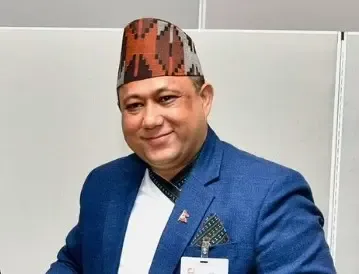
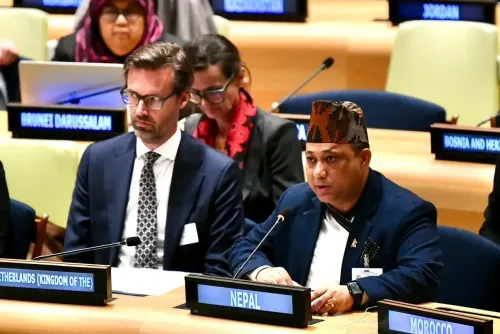
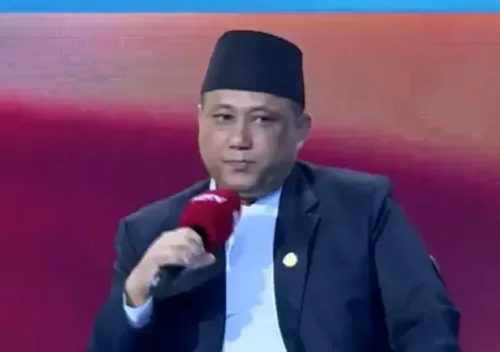
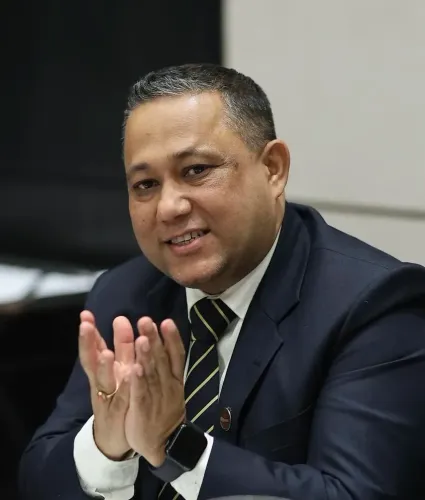
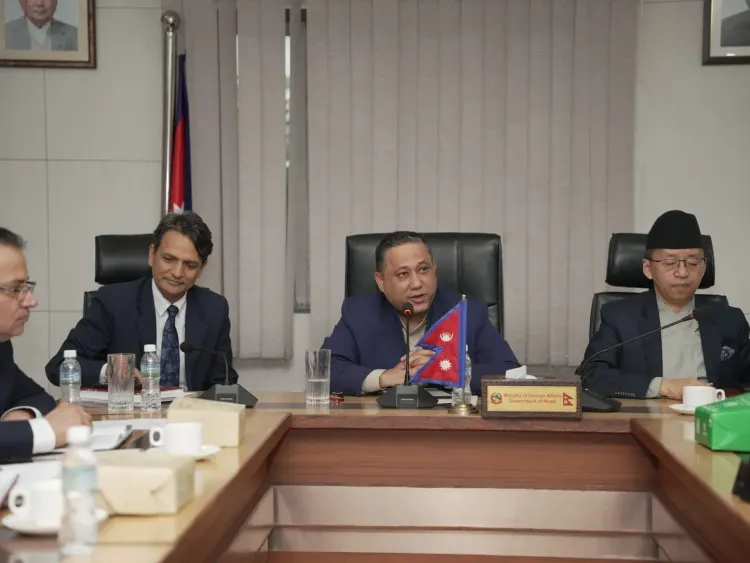
Nepal's Foreign Minister Shisir Khanal on Thursday, 27 August sought to temper the diplomatic temperature over the longstanding boundary dispute with India, saying the issue is 'not as big as it is often made out in narratives' and that robust bilateral mechanisms are already working to address it. Khanal made the remarks at NDTV World's 'Anviksha' India-Nepal Dialogue in what amounted to one of the clearest public signals yet from Kathmandu that it prefers dialogue over escalation.
Khanal's Core Argument
The minister acknowledged that 'some issues' exist between the two neighbours but framed them as a natural feature of any shared border. 'Only neighbours will have boundary problems. If you're not a neighbour, you would not have that problem,' he said, pointing to the uniquely open nature of the India-Nepal border — where citizens on both sides can cross without documentation — as evidence of a relationship that transcends routine territorial friction.
Khanal noted that most of the boundary demarcation work between the two countries has already been completed, with a 'couple of strong politically charged hotspots on both sides' remaining. He did not name the specific areas but the Lipulekh-Limpiyadhura-Kalapani triangle — claimed by Nepal and administered by India as part of Uttarakhand — has historically been the principal flashpoint. Located near the India-China border, the territories have carried strategic weight well beyond their geographic size.
Mechanisms Back in Motion
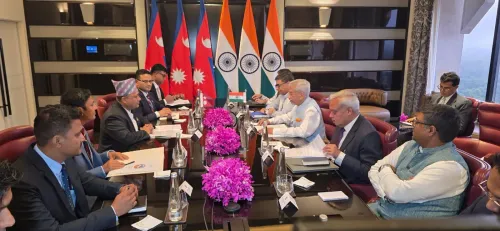
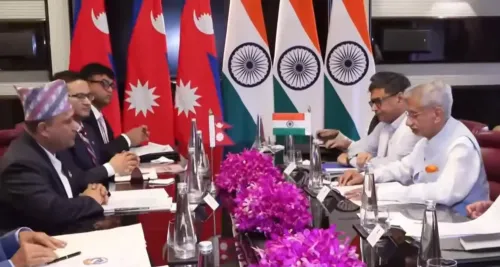
Khanal expressed satisfaction that bilateral mechanisms, which had been largely dormant, have resumed functioning in recent months. He cited meetings held 'last week in Lucknow and Dehradun on border management' as concrete evidence of renewed engagement. 'Several meetings have taken place... our mechanisms are active. I feel that as we strengthen our existing institutions, we will be able to overcome the challenges we have,' he said.
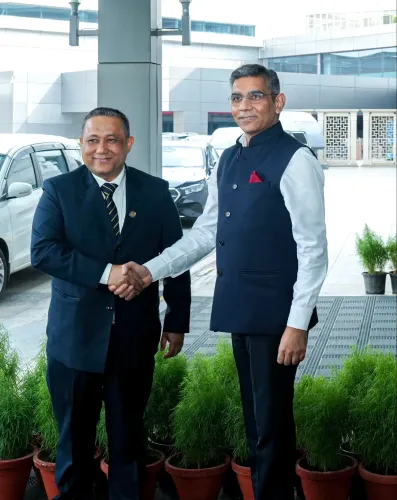
This comes amid a broader pattern of India-Nepal relations cycling through periods of friction and reset. The 2020 publication of Nepal's revised political map — which incorporated Lipulekh, Limpiyadhura, and Kalapani — triggered a sharp diplomatic chill. The current thaw, signalled by Khanal's own visit to New Delhi earlier this year and the reactivation of joint mechanisms, suggests both sides are choosing pragmatic engagement over public posturing.
High-Level Visits on the Horizon
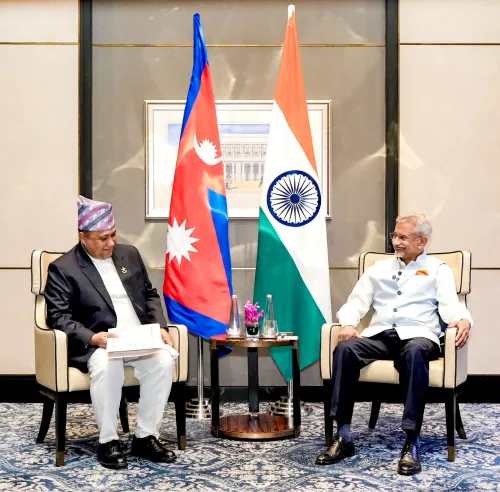
On the question of summit diplomacy, Khanal said he anticipates both a State Visit by Nepal's Prime Minister Balendra Shah to India and a reciprocal visit by Prime Minister Narendra Modi to Nepal taking place in 2026, though he confirmed that dates have not yet been finalised. 'There is a lot of anticipation of these high-level visits on both sides. Both sides are working to make sure that these visits take place at the earliest,' he said.
High-level bilateral visits have historically served as catalysts for resolving pending issues — from trade and transit treaties to hydropower agreements. The absence of a Modi visit to Nepal since 2014 and 2018 has itself been read as a barometer of the relationship's temperature in diplomatic circles.
What to Watch
The frequency and outcomes of the joint border management meetings — particularly those focused on the politically sensitive western sector — will be the real test of whether the current momentum translates into durable progress. Khanal's public framing of the dispute as manageable and overstated is itself a diplomatic signal, likely aimed at creating space for quiet negotiation away from nationalist pressure on both sides.
Point of View
Not naivety — it gives both governments cover to negotiate without inflaming domestic audiences. But the Lipulekh-Kalapani issue has a structural problem: it sits at the intersection of India's China border strategy and Nepal's constitutional map, making quiet resolution genuinely difficult. The reactivation of joint mechanisms is a positive signal, yet mechanisms have been reactivated before without resolving the western-sector question. The real indicator will be whether the 2026 PM-level visits produce a joint statement that addresses the territorial dispute by name — or sidesteps it, as previous summits have.
NationPress
11 Oct 2026
Frequently Asked Questions
What is the India-Nepal boundary dispute about?
The core dispute centres on the Lipulekh , Limpiyadhura , and Kalapani territories in the western Himalayas, which Nepal claims as its own but which India administers as part of Uttarakhand . The areas are strategically significant due to their proximity to the India-China border.
What did Nepal's Foreign Minister Shisir Khanal say about the dispute?
Speaking at the NDTV World 'Anviksha' India-Nepal Dialogue on 27 August, Khanal said the boundary dispute is 'not as big as it is often made out in narratives' and that multiple bilateral mechanisms are already in place and active to address it.
Are India and Nepal currently talking about the border issue?
Yes. Khanal confirmed that border management meetings were held the previous week in Lucknow and Dehradun , and that joint mechanisms between the two countries have resumed functioning after a period of limited engagement.
When will the India-Nepal PM-level visits take place?
Khanal said he anticipates visits by Nepal PM Balendra Shah to India and PM Narendra Modi to Nepal both taking place in 2026 , though he confirmed that specific dates have not yet been finalised by either side.
Why does the Lipulekh-Kalapani dispute matter beyond the two countries?
The territories lie near the India-China border, giving them strategic importance beyond bilateral relations. Any resolution — or further deterioration — carries implications for India's northern security posture and for Nepal's balancing act between its two giant neighbours.