India-Nepal ties: Jaishankar flags AI, clean energy as new frontiers
Synopsis
EAM Jaishankar's meeting with Nepal FM Khanal was not routine diplomatic courtesy — it was a deliberate signal. By framing AI, startups, and clean energy as the next chapter of India-Nepal ties, and by invoking the RSP chief's recent Delhi visit, New Delhi is moving quickly to shape its relationship with Nepal's new political order before other regional players do.
Key Takeaways
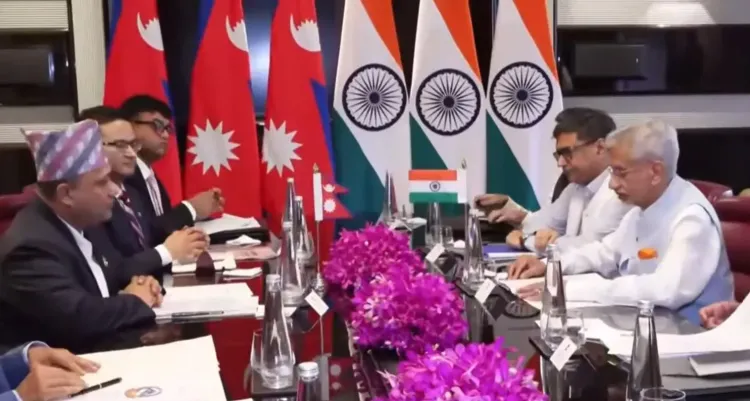
Jaishankar met Nepal Foreign Minister Shisir Khanal in New Delhi on 6 June .
Jaishankar called for expanding cooperation into AI, startups, IT, and renewable energy .
India has maintained uninterrupted fuel supplies to Nepal amid the West Asian crisis.
The meeting follows the recent India visit of RSP chief Rabi Lamichhane , signalling New Delhi's early engagement with Nepal's new ruling party.
PM Modi's commitment to advancing bilateral ties for mutual progress was reiterated.
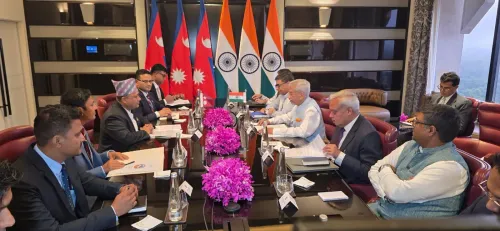
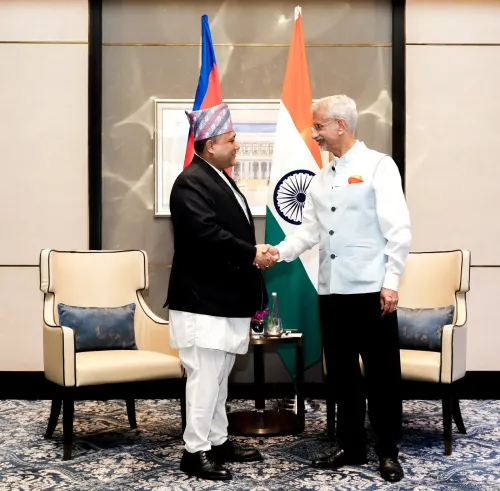
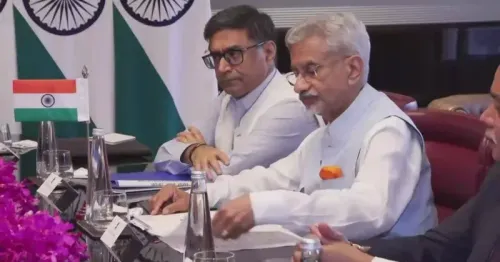
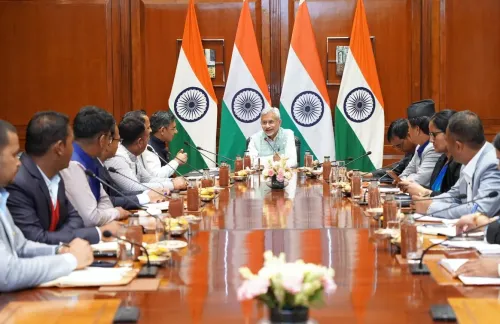
External Affairs Minister S. Jaishankar on Saturday, 6 June called for a decisive shift in the trajectory of India-Nepal relations, urging deeper cooperation in emerging domains including artificial intelligence, startups, information technology, and renewable energy. Speaking at a bilateral meeting with visiting Nepal Foreign Minister Shisir Khanal in New Delhi, Jaishankar said the two countries have an opportunity to realise the full potential of their ties.
What Jaishankar Said
Opening the talks, the External Affairs Minister underscored the depth of the existing partnership. 'India and Nepal share a very special relationship… one which is built on a strong foundation of vibrant people-to-people ties, cross-border connections, and shared cultural and religious traditions. It is anchored by shared trust, goodwill, and mutual benefit,' he said.
He added: 'Today we have an opportunity to also take it forward in many other areas, in newer domains like startups, AI, information technology, renewable energy, and others.' Jaishankar also noted that the two countries 'collaborate closely to maintain security along our long and uniquely open border.'
Energy Security and Regional Stability
Jaishankar highlighted that India has ensured uninterrupted fuel supplies to Nepal amid the ongoing crisis in the West Asian region — a pointed reference to India's role as a reliable energy partner when global supply chains face stress. This comes amid broader concerns about energy security across South Asia, where import-dependent economies have been particularly exposed to price volatility.
RSP Chief's Visit and Political Signals
The EAM noted that the importance India accords to the bilateral relationship was reflected in the recent visit of Nepal's ruling Rastriya Swatantra Party (RSP) chief Rabi Lamichhane to India. Jaishankar conveyed New Delhi's best wishes to the new Nepali government, stating: 'There are strong complementarities between the objectives outlined by your government and the initiatives that India has taken in the neighbourhood.'
The Bigger Picture
Jaishankar closed with an unusually direct call to action: 'I want today to very clearly and strongly send a message of collaboration and cooperation. We believe that today there is an opportunity to decisively shift the trajectory of India-Nepal relations and realise the full potential of our ties.' He reiterated Prime Minister Narendra Modi's commitment to working with Nepal for mutual progress, prosperity, and well-being.
Notably, the meeting comes at a moment when Nepal's political landscape has seen rapid churn, with the RSP emerging as a key power centre. New Delhi's outreach signals a calibrated effort to build early rapport with the new dispensation in Kathmandu. The next steps — including any joint statements or agreed frameworks on the new cooperation areas — are expected to emerge from follow-up diplomatic engagements in the coming weeks.
Point of View
And that choice of words matters. New Delhi is signalling urgency, likely because Nepal's political volatility has historically created openings for competing regional influence. The pivot to AI and clean energy as cooperation anchors is strategically sound: these are areas where India has credible capacity and Nepal has genuine need, making them harder for rivals to match. The real test is whether this meeting produces binding frameworks or remains aspirational. India has made similar overtures to Kathmandu before; execution, not intent, is where past initiatives have faltered.
NationPress
21 Oct 2026
Frequently Asked Questions
What was discussed at the Jaishankar-Khanal meeting on 6 June?
External Affairs Minister S. Jaishankar and Nepal Foreign Minister Shisir Khanal met in New Delhi on 6 June to discuss expanding bilateral cooperation. Key areas flagged included AI, startups, information technology, renewable energy, trade, and border security.
Why is India focusing on AI and renewable energy in its Nepal outreach?
India sees emerging technology and clean energy as new frontiers for deepening ties beyond the traditional areas of trade and development cooperation. These sectors align with both countries' stated development priorities and offer India a competitive edge as a capacity-building partner.
What is the significance of the RSP chief Rabi Lamichhane's visit to India?
The visit of Rastriya Swatantra Party chief Rabi Lamichhane to India signalled New Delhi's intent to build early rapport with Nepal's new ruling party. Jaishankar cited it as evidence of the importance India attaches to the bilateral relationship.
How has India supported Nepal during the West Asian crisis?
According to Jaishankar, India has ensured uninterrupted fuel supplies to Nepal despite disruptions caused by the ongoing crisis in the West Asian region, underscoring India's role as a stable energy partner for its landlocked neighbour.
What happens next after the India-Nepal foreign ministers' meeting?
Follow-up diplomatic engagements are expected in the coming weeks, with potential joint frameworks on the newly identified cooperation areas. No specific timelines have been publicly announced yet.