Nepal PM Shah proposes India-China-Nepal Himalayan climate mechanism at UNGA
Synopsis
Nepal's Prime Minister Balendra Shah used his UNGA address to propose a formal Nepal-India-China climate mechanism — a geopolitically ambitious trilateral body — just weeks after floods killed 1,453 people and inflicted US$2.69 billion in losses. With reconstruction costs equal to 10 percent of Nepal's GDP, his call for grant-based climate finance and Loss and Damage reform carries both moral force and acute economic urgency.
Key Takeaways
Nepal PM Balendra Shah proposed a Himalayan Climate Resilience Mechanism involving Nepal , India , and China at the 81st UNGA on 24 September 2026 .
August floods claimed 1,453 lives and left 5,550 people missing, including 636 foreign nationals , according to the NDRRMA .
Total disaster losses estimated at US$2.69 billion ; reconstruction requires US$4.77 billion — about 10% of Nepal's GDP.
The proposed mechanism would cover satellite data sharing, glacial lake monitoring, and cross-border early warning systems.
Shah called the Loss and Damage Fund and other climate financing mechanisms 'grossly inadequate' and demanded grant-based support for vulnerable nations.
Nepal contributes less than 0.1% of global greenhouse gas emissions but faces severe climate impacts.
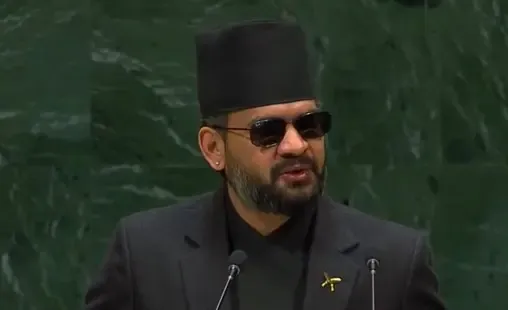
Nepal's Prime Minister Balendra Shah on 24 September 2026 proposed a trilateral Himalayan Climate Resilience Mechanism involving Nepal, India, and China, calling on the three Himalayan neighbours to jointly monitor glacial lakes, share satellite data, and build cross-border early warning systems. The proposal, made during Shah's address to the 81st session of the United Nations General Assembly in New York, comes in the wake of catastrophic floods that devastated mountain communities across Nepal last month.
The Trigger: Nepal's August Floods
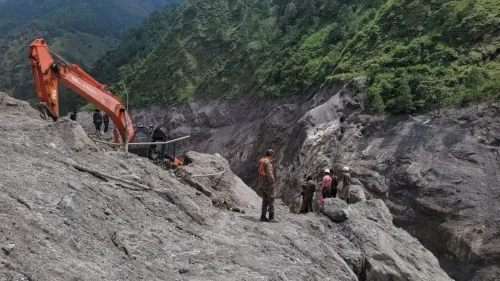
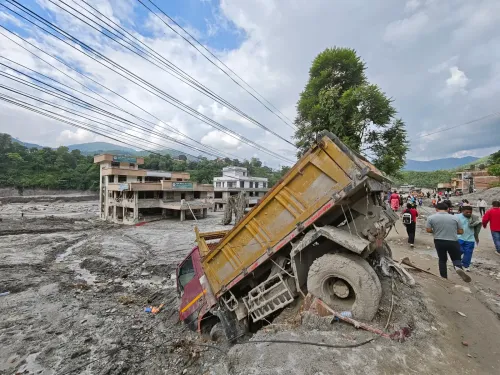
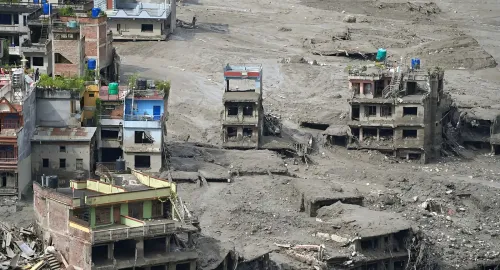
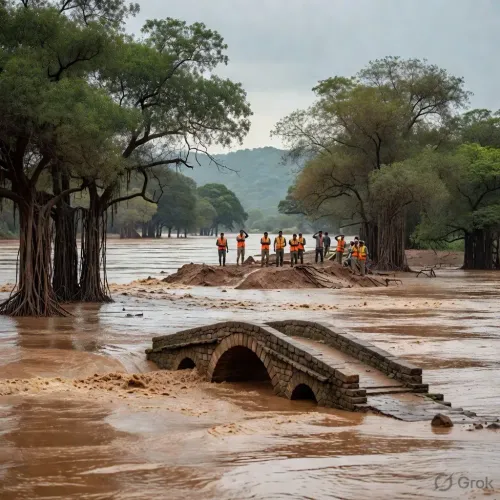
On 26 August, flash floods — described by witnesses and officials as a 'Mountain Tsunami' — tore through the Bhotekoshi and Trishuli river corridors, sweeping away settlements, bridges, roads, schools, and hydropower installations. According to the National Disaster Risk Reduction and Management Authority (NDRRMA), the disaster has claimed 1,453 lives, with 5,550 people still missing as of Thursday evening, including 636 foreign nationals. Experts have described the floods as climate change-induced.
A Rapid Disaster Needs Assessment (RDNA) report, prepared jointly by the National Planning Commission and the NDRRMA, estimates total losses at US$2.69 billion. Reconstruction and recovery of damaged infrastructure is projected to require US$4.77 billion — roughly 10 percent of Nepal's gross domestic product.
What the Proposed Mechanism Would Do
Addressing the General Assembly, Shah outlined the core functions of the proposed trilateral body: sharing satellite data and technical expertise, continuously monitoring dangerous glacial lakes, and strengthening regional early warning systems that can coordinate assistance across national borders.
'Let us monitor dangerous glacial lakes. Let us strengthen joint early warning systems. And when disaster strikes, let us coordinate assistance across borders,' Shah said.
He urged member states to reframe the Himalayas not as a fault line of geopolitical fragmentation but as a proving ground for multilateral cooperation. 'Let the Himalayas become a laboratory of international cooperation rather than a frontier of fragmented information,' he said. The proposal is notable for its geopolitical ambition: a formal trilateral mechanism would require buy-in from both India and China, two powers whose bilateral ties remain strained, making Nepal's role as convener both symbolically significant and practically complex.
Nepal's Climate Credentials and Grievances
Shah emphasised that Nepal contributes less than 0.1 percent of global greenhouse gas emissions, yet absorbs a disproportionate share of climate consequences. The country has restored forest cover to nearly half its territory and is expanding hydropower capacity to displace fossil-fuel-based energy, including for export. Electric vehicle adoption, he said, is proceeding at a rate comparable to parts of Europe.
'We did not create this crisis, yet we are paying a colossal price for it. Our glaciers are retreating, our mountain slopes are becoming unstable, our rivers are becoming less predictable, and every major disaster threatens to erase years of development,' Shah said.
He described the climate catastrophe as not merely a humanitarian event but a 'development emergency' — one that destroys roads, bridges, schools, homes, farms, and the very clean-energy infrastructure Nepal depends on for its economic future.
Calls for Reform in Global Climate Finance
Shah used the UNGA platform to press for structural reform in how climate finance reaches vulnerable nations. He criticised the Loss and Damage Fund, the Global Environment Facility, and other mechanisms as 'grossly inadequate,' and singled out what he called cumbersome bureaucratic procedures that force vulnerable countries to spend years proving eligibility for assistance.
'When a climate-driven disaster destroys the infrastructure of a poor country, the answer cannot simply be another mega loan or a patchwork of small grants,' he said, calling instead for adequate grant-based international support. Shah also invoked a six-word framework he urged the Assembly to adopt: relief, rehabilitation, reconstruction — and responsibility, reparation, resilience — arguing the first three address immediate needs while the latter three are essential to prevent disasters from becoming a permanent condition for climate-vulnerable states.
What Comes Next
No formal timeline has been announced for the proposed Himalayan Climate Resilience Mechanism, and it remains to be seen whether India and China will formally engage with the proposal. Internationally, Nepal's appeal for grant-based climate finance and Loss and Damage reform echoes positions taken by a growing bloc of developing nations ahead of COP30. The reconstruction bill of US$4.77 billion ensures that Nepal's climate diplomacy will carry urgent domestic stakes well into the next fiscal cycle.
Point of View
Something neither has agreed to do in any domain. The August floods lend the proposal visceral urgency, but the harder question is whether Nepal, a small landlocked state squeezed between two giants, has sufficient leverage to make either party commit. Meanwhile, Shah's Loss and Damage framing — essentially asking wealthy emitters to pay reparations — resonates with the global south but has consistently stalled in COP negotiations. The US$4.77 billion reconstruction bill is not a diplomatic abstraction; it is a fiscal crisis that will shape Nepal's debt trajectory and development priorities for years, regardless of what any international forum decides.
NationPress
25 Sept 2026
Frequently Asked Questions
What is the Himalayan Climate Resilience Mechanism proposed by Nepal?
It is a trilateral cooperation framework proposed by Nepal PM Balendra Shah at the 81st UNGA, involving Nepal, India, and China. The mechanism would focus on sharing satellite data and technical expertise, monitoring dangerous glacial lakes, and building joint cross-border early warning systems for climate disasters.
How deadly were the Nepal floods of August 2026?
The floods, which struck on 26 August 2026, have killed 1,453 people and left 5,550 missing — including 636 foreign nationals — according to the National Disaster Risk Reduction and Management Authority. The disaster swept through the Bhotekoshi and Trishuli river corridors, destroying settlements, bridges, roads, and hydropower infrastructure.
What is the estimated economic damage from the Nepal floods?
A Rapid Disaster Needs Assessment report estimates total losses at US$2.69 billion, with reconstruction and recovery costs projected at US$4.77 billion — equivalent to approximately 10 percent of Nepal's GDP.
Why does Nepal blame wealthier countries for its climate crisis?
Nepal contributes less than 0.1 percent of global greenhouse gas emissions but faces disproportionate climate impacts, including retreating glaciers, unstable mountain slopes, and increasingly unpredictable rivers. PM Shah argued that Nepal did not cause the crisis but is being forced to borrow money to repair damage it did not cause.
What reforms to global climate finance did Nepal call for at the UNGA?
PM Shah criticised the Loss and Damage Fund, the Global Environment Facility, and other mechanisms as 'grossly inadequate' and called for grant-based international support rather than loans. He also demanded simplified access procedures, arguing that vulnerable countries should not spend years navigating bureaucratic hurdles to prove their need for climate assistance.