CM Mohan Yadav Signals MP's Push for Uniform Civil Code
Synopsis
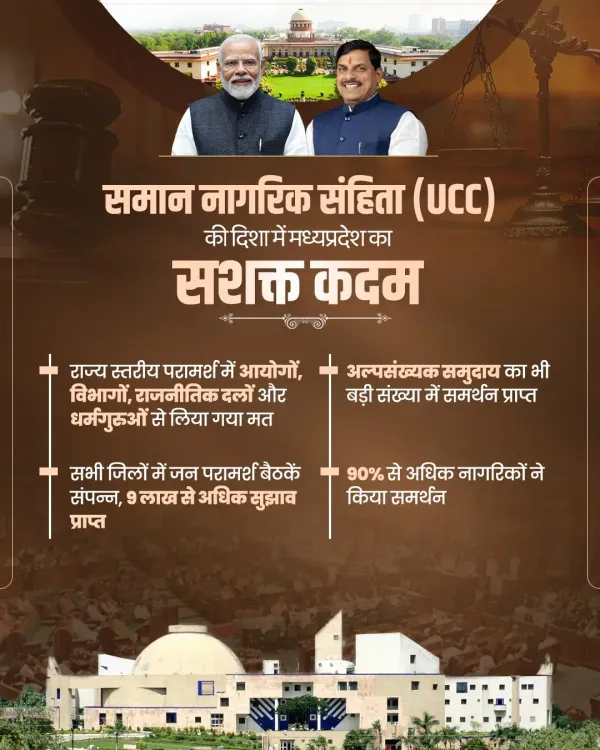
Madhya Pradesh Chief Minister Dr. Mohan Yadav on 23 June 2026 declared a 'strong step' toward implementing the Uniform Civil Code, following Uttarakhand's 2024 precedent and the BJP's long-standing national commitment to replace religion-based personal laws with a common civil framework.
Key Takeaways
Mohan Yadav announced on 23 June 2026 that Madhya Pradesh is taking a 'strong step' toward implementing the Uniform Civil Code (UCC) .
The UCC is enshrined under Article 44 of the Constitution as a Directive Principle, calling for a single civil law framework for all citizens regardless of religion.
Uttarakhand became the first Indian state to enact a UCC law in February 2024 , setting a legislative template for other BJP-ruled states.
The BJP has included UCC in its national manifestos since the 1990s, and has reiterated the commitment in both its 2019 and 2024 election manifestos.
Key stakeholders include women — who proponents say will benefit from stronger legal protections — and religious communities currently governed by faith-based personal laws.
Concrete next steps to watch include possible expert committee formation and a draft bill introduction in the Madhya Pradesh legislative assembly.
Madhya Pradesh Chief Minister Dr. Mohan Yadav on Tuesday, 23 June 2026 declared that the state is taking a 'strong step' toward implementing the Uniform Civil Code (UCC), signalling a significant policy move by the BJP-governed state in central India.
Context
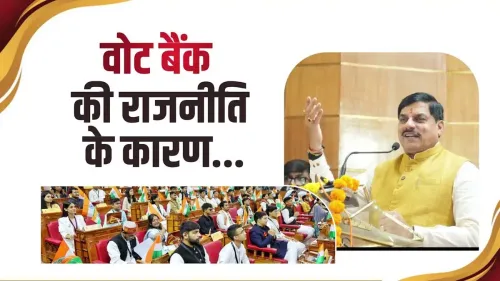
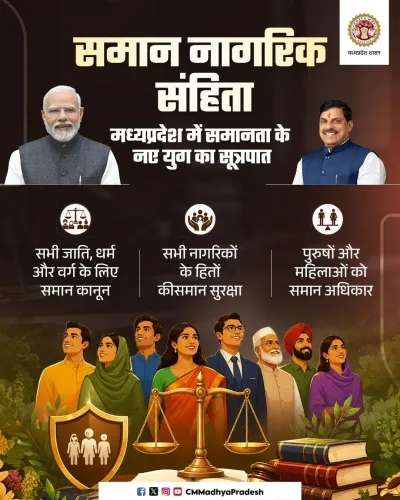
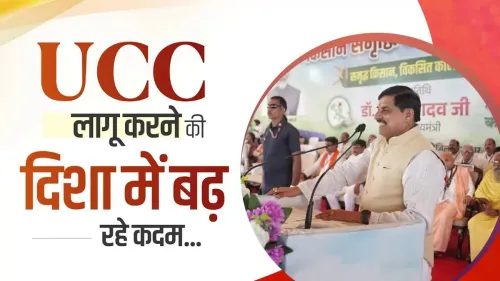
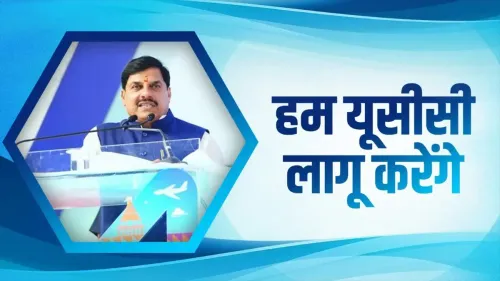
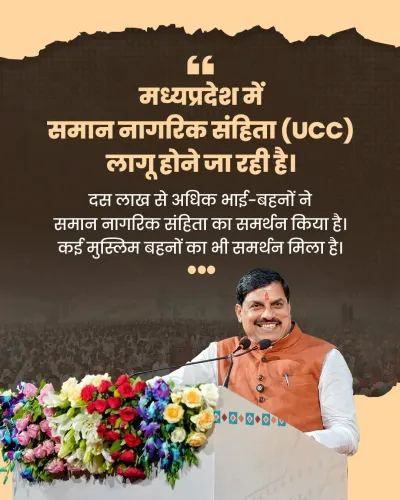
In his post on X, Dr. Mohan Yadav wrote: 'समान नागरिक संहिता (UCC) लागू करने की दिशा में मध्यप्रदेश का सशक्त कदम...' — translated as 'A strong step by Madhya Pradesh in the direction of implementing the Uniform Civil Code (UCC).' The post, accompanied by an image, was shared under the hashtags #UniformCivilCode and #UCC, underscoring the political weight the Chief Minister attaches to this initiative.
The Uniform Civil Code envisions a single set of civil laws — governing marriage, divorce, inheritance, and adoption — applicable to all citizens regardless of religion. It finds mention under Article 44 of the Constitution's Directive Principles of State Policy, making it an aspiration rather than a mandate, and one that successive governments have debated for decades.
Policy Backdrop
Uttarakhand became the first Indian state to enact a UCC law in February 2024 under its BJP government, providing a legislative template that other states have studied closely. The BJP has included UCC as a core electoral commitment in its 2019 and 2024 national manifestos, and the party's successive electoral victories have renewed momentum for its implementation at the state level.
Dr. Mohan Yadav took charge as Chief Minister of Madhya Pradesh in December 2023, succeeding Shivraj Singh Chouhan. Since then, the state has signalled intent to move on UCC, and Tuesday's post appears to mark a formal step in that direction. The broader BJP strategy has involved BJP-ruled states pursuing preparatory measures — including expert committee formations and draft legislation — in coordination with the party's national agenda.
Stakeholders and Impact
The UCC debate directly affects women across religious communities, with proponents arguing that a uniform code would strengthen gender equality by replacing personal laws that critics say disadvantage women in matters of marriage, divorce, and inheritance. Religious communities, particularly minorities who currently govern personal matters through their own faith-based laws, have historically raised concerns about the implications of such a code for religious autonomy.
For Madhya Pradesh, a state with a population of over 8 crore people and significant tribal and minority demographics, any UCC framework would require careful drafting to address the diversity of personal law practices across communities. The state's legislative and administrative machinery would be central to any rollout.
What's Next
Observers will watch closely for concrete legislative or administrative actions following the Chief Minister's announcement — including any expert committee formation, a draft bill introduction in the Madhya Pradesh assembly, or coordination meetings among BJP chief ministers to align on model UCC provisions. Uttarakhand's 2024 law is expected to serve as a primary reference point for any draft that Madhya Pradesh may table. The pace at which the state moves from declaration to legislation will be a key indicator of political intent and administrative readiness.
Point of View
With Uttarakhand's 2024 law having broken the legislative ice. For Madhya Pradesh, a state with complex demographic diversity, the move carries both electoral and administrative stakes. The announcement fits a broader pattern in which state-level action on UCC serves as both policy implementation and political messaging ahead of electoral cycles. The critical question is whether the declaration translates into a tabled bill or remains at the committee stage — a distinction that will define the seriousness of the push.
NationPress
22 Sept 2026
Frequently Asked Questions
What is the Uniform Civil Code and why is it significant in India?
The Uniform Civil Code (UCC) is a proposed set of common civil laws — covering marriage, divorce, inheritance, and adoption — that would apply to all Indian citizens regardless of religion, replacing the current system of religion-based personal laws. It is listed under Article 44 of the Constitution's Directive Principles and has been a longstanding demand of the BJP.
What step has Madhya Pradesh taken on the Uniform Civil Code in 2026?
Madhya Pradesh Chief Minister Dr. Mohan Yadav announced on 23 June 2026 that the state is taking a 'strong step' toward implementing the UCC, though specific details of the action — such as a committee formation or draft bill — are yet to be formally disclosed.
Which state first implemented the Uniform Civil Code in India?
Uttarakhand became the first Indian state to enact a UCC law in February 2024 under its BJP government, creating a legislative template that other states, including Madhya Pradesh, have referenced.
Who is Dr. Mohan Yadav and when did he become Madhya Pradesh Chief Minister?
Dr. Mohan Yadav is a senior BJP leader who became Chief Minister of Madhya Pradesh in December 2023, succeeding Shivraj Singh Chouhan after the party's victory in the state assembly elections.
How does the UCC affect women and religious communities in India?
Proponents argue the UCC would strengthen gender equality by replacing personal laws that critics say disadvantage women in marriage, divorce, and inheritance. Religious communities — particularly minorities — have raised concerns about the impact on religious autonomy and faith-based personal law practices.