CM Mohan Yadav Pushes UCC in MP, Seeks Public Input by June 15
Synopsis
Madhya Pradesh Chief Minister Dr. Mohan Yadav has declared that the state is rapidly advancing toward Uniform Civil Code implementation, inviting citizens to submit suggestions by 15 June 2026. The move follows Uttarakhand's landmark UCC enactment in 2024 and aligns with BJP's long-standing national manifesto commitment.
Key Takeaways
Madhya Pradesh Chief Minister Dr.
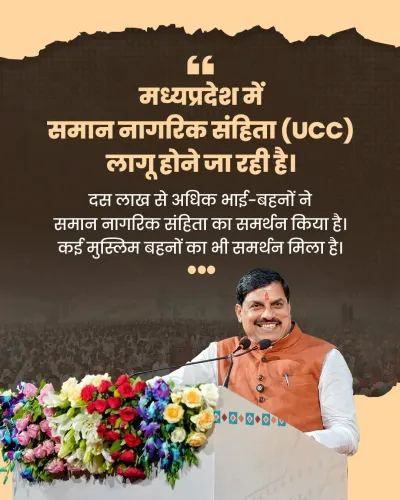
Mohan Yadav announced on 27 May 2026 that the state is moving rapidly toward Uniform Civil Code implementation.
Citizens have been asked to submit their suggestions by 15 June 2026 .
Uttarakhand was the first Indian state to enact the UCC, in February 2024 , setting the legislative precedent.
The BJP included UCC implementation in its 2024 Lok Sabha election manifesto and governs Madhya Pradesh since December 2023 .
Article 44 of the Indian Constitution, a Directive Principle, has long urged the state to enact a Uniform Civil Code.
Key stakeholders include religious communities, women's groups, and legal experts who will scrutinise any draft legislation.
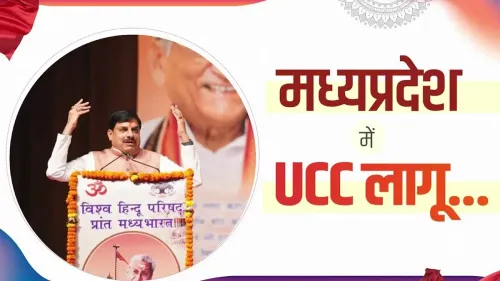
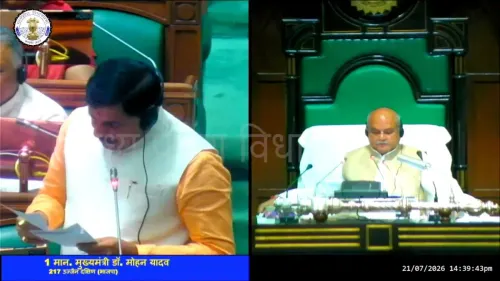
Madhya Pradesh Chief Minister Dr. Mohan Yadav on Wednesday, 27 May 2026, announced that Madhya Pradesh is moving swiftly toward implementing the Uniform Civil Code (UCC), and called on citizens to submit their suggestions by 15 June 2026.
Context
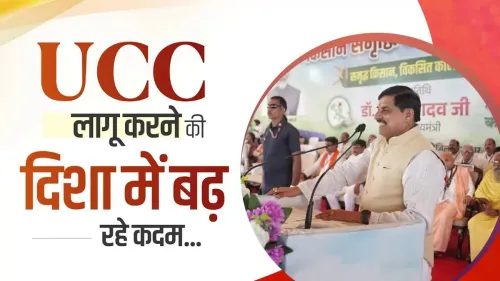
In his post, Dr. Mohan Yadav wrote: 'यूसीसी लागू करने की दिशा में मध्यप्रदेश तेजी से आगे बढ़ रहा है' ['Madhya Pradesh is moving rapidly in the direction of implementing the UCC'], urging all citizens to submit their suggestions by 15 June. The post was pinned to his official profile, signalling the administration's intent to treat this as a priority agenda item.
The hashtag #ViksitMadhyaPradesh ('Developed Madhya Pradesh') frames the UCC push as part of a broader governance and development vision for the state.
Policy Backdrop
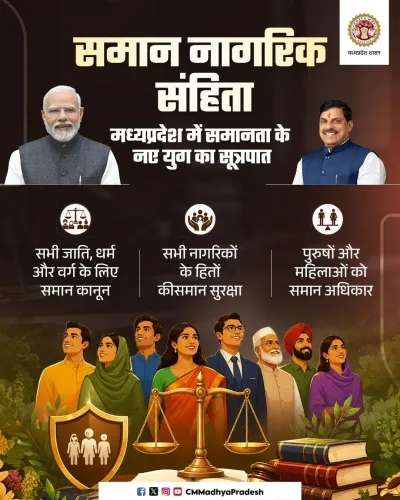
Article 44 of the Indian Constitution, a Directive Principle of State Policy, has long called upon the state to secure a Uniform Civil Code for all citizens — replacing religion-specific personal laws governing marriage, divorce, inheritance, and adoption with a single common framework.
Uttarakhand became the first Indian state to enact the UCC in February 2024, providing a legislative template for other states. Goa has historically operated under a common civil code inherited from Portuguese colonial rule. The Bharatiya Janata Party (BJP) included UCC implementation in its 2024 Lok Sabha election manifesto, and several BJP-governed states have since initiated consultations or constituted expert panels on the subject.
Madhya Pradesh, governed by the BJP since Dr. Mohan Yadav assumed office in December 2023, is now positioning itself as the next state to advance concrete legislative steps on the issue.
Stakeholders and Impact
A UCC would directly affect the personal law rights of all religious communities in Madhya Pradesh, a state with a population of over 8 crore. Women's rights groups have broadly supported UCC provisions that would standardise protections around marriage age, divorce rights, and inheritance — areas where current personal laws vary significantly across communities.
Legal experts and minority community representatives have historically raised questions about the scope of such a code and the process of consultation. The public comment window announced by Dr. Yadav — closing on 15 June 2026 — represents a participatory step ahead of any draft legislation.
What's Next
Observers will watch closely for the formation of a formal expert committee in Madhya Pradesh and the eventual tabling of a draft bill in the state assembly, mirroring the legislative path taken by Uttarakhand. Any bill passed in Bhopal would likely face judicial scrutiny, with comparisons drawn to Uttarakhand's implementation experience.
If Madhya Pradesh enacts the UCC, it would mark a significant expansion of the code's geographic footprint and could accelerate similar moves in other BJP-ruled states, reshaping the national debate on uniform personal law ahead of future electoral cycles.
Point of View
Reinforcing Madhya Pradesh's alignment with the BJP's core ideological agenda while borrowing credibility from Uttarakhand's precedent. The public consultation framing lends the exercise a participatory veneer that could help pre-empt minority community criticism. Coming less than three years into his tenure, the move also serves to define Yadav's chief ministership around a high-visibility ideological deliverable. If a draft bill emerges, Madhya Pradesh's large and religiously diverse population will make it a far more consequential — and contested — test case than Uttarakhand.
NationPress
11 Oct 2026
Frequently Asked Questions
What is the Uniform Civil Code and why is Madhya Pradesh pushing for it?
The Uniform Civil Code is a proposed set of common personal laws — covering marriage, divorce, inheritance, and adoption — applicable to all citizens regardless of religion. Madhya Pradesh, governed by the BJP, is advancing UCC as part of the party's long-standing manifesto commitment and following Uttarakhand's enactment of the code in 2024.
What is the deadline to submit UCC suggestions in Madhya Pradesh?
Chief Minister Dr. Mohan Yadav has asked citizens to submit their suggestions on the Uniform Civil Code by 15 June 2026.
Which Indian state first implemented the Uniform Civil Code?
Uttarakhand became the first Indian state to enact the Uniform Civil Code in February 2024. Goa has historically operated under a common civil code inherited from Portuguese colonial rule.
What does Article 44 of the Indian Constitution say about UCC?
Article 44 is a Directive Principle of State Policy that calls upon the state to secure a Uniform Civil Code for all citizens across India, though it is not a justiciable right.
How will the UCC affect people in Madhya Pradesh?
If enacted, the UCC would replace religion-specific personal laws with a single common framework for all residents of Madhya Pradesh, potentially standardising rights around marriage, divorce, and inheritance — particularly impacting women's protections across communities.