Rubio defends US foreign aid cuts, says assistance now 'faster, results-driven'
Synopsis
Rubio's pitch to Congress reframes US foreign aid as a results-led instrument of national interest, not a spending metric. With USAID dismantled and 32 new health compacts in play, the Trump administration is betting that 'nimbler' assistance can replace scale — even as Democrats warn the cuts have already hit Ebola response, women's programmes and food security in fragile states.
Key Takeaways
Marco Rubio defended Trump's foreign aid overhaul before the House Appropriations Subcommittee on 3 June .
He cited more than 32 health compacts with partner countries as the backbone of a new global health strategy.
Rubio said the US had programmed over $200 million for the current Ebola response.
He warned against dependence on any single country for 90 per cent of critical minerals, an implicit reference to China.
Republican lawmakers back reduced FY2027 outlays while protecting funding for Israel, Taiwan and Indo-Pacific priorities.
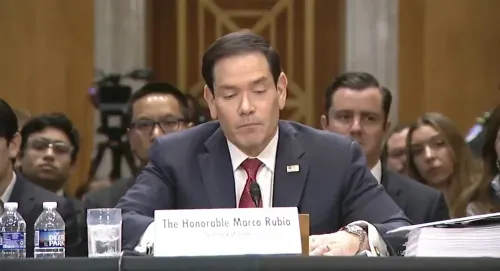
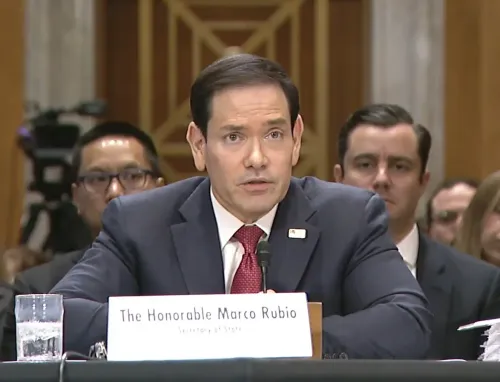
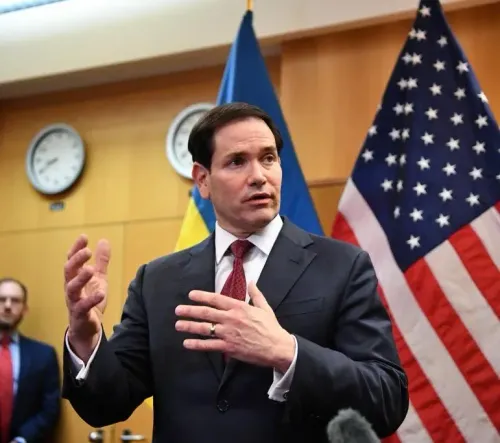
US Secretary of State Marco Rubio on 3 June mounted a forceful defence of the Trump administration's overhaul of American foreign assistance, telling lawmakers in Washington that the restructuring had made US aid 'more nimble, more responsive' and more tightly aligned with national interests. Rubio pushed back against Democratic charges that the dismantling of parts of the foreign aid bureaucracy had eroded American influence and worsened humanitarian conditions abroad.
Key Developments at the Hearing
Appearing before the House Appropriations Subcommittee on National Security, Department of State and Related Programs, Rubio framed the changes as a shift from spending-led to outcome-led aid. 'The core of our foreign policy must always be the national interest of the United States,' he told lawmakers during a lengthy budget hearing that ranged across global health, refugees, Iran, Gaza and immigration.
The Secretary maintained that the United States remains the world's largest donor of foreign assistance, but argued that the yardstick must change. 'We don't want aid to solely be judged by how much you spend. We want it to be judged by what its results are,' he said.
New Global Health Strategy
Rubio highlighted a recalibrated global health approach anchored in more than 32 health compacts with partner countries. 'We are trying to lay the groundwork in many of these countries where one day they will no longer need foreign aid because they will be able to sustain it,' he said. 'We're helping build the internal infrastructure.'
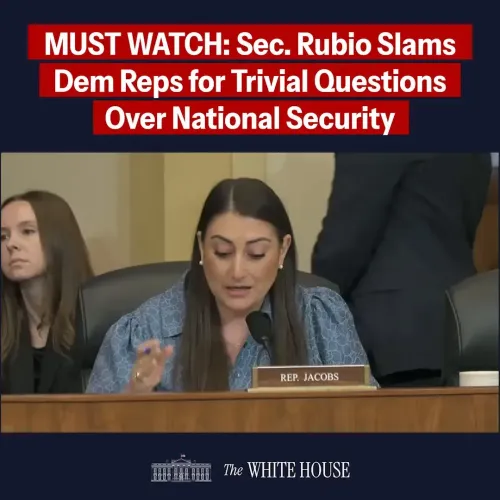
The pitch lands amid reported disruptions to health and development programmes following the rollback of USAID functions. Representative Lois Frankel argued the cuts had hurt healthcare, food security and women's programmes in vulnerable countries, while Representative Rosa DeLauro raised alarms over the global Ebola response and what she described as weakened public health preparedness.
Rubio rejected those criticisms, saying the US had moved fast on the current Ebola outbreak. 'We were able to program upwards of over $200 million very quickly in responding to it,' he said, adding that the State Department had set up mechanisms to assist Americans potentially exposed.
Iran, China and Critical Minerals
On Iran, Rubio ruled out upfront concessions in any nuclear negotiation. 'There is not going to be some sort of advanced signing bonus or good faith' payment, he said, responding to concerns that released funds could be funnelled to proxy groups.
On China, the Secretary warned against concentrated dependence on any single supplier for strategic inputs. 'It is not healthy for the global economy and frankly, it is dangerous for national security and the security of the world to depend on any single country for 90 per cent of anything that's critical to your industrial base, your defence base, your technology base,' he said. Rubio added that critical minerals diplomacy had become central to US engagement, with nearly every American embassy now treating supply chain security as a strategic priority.
What Happens Next
The hearing comes as Congress weighs the fiscal year 2027 State Department budget. Republican lawmakers are backing reductions in overall outlays while preserving funding for strategic priorities including Israel, Taiwan, counterterrorism and Indo-Pacific initiatives. 'We are going to award those that are good to the United States,' Rubio said. 'We're not going to be as friendly to places that are not furthering our national interests.' The final appropriations vote will determine how far Rubio's results-led doctrine reshapes the architecture of US assistance.
Point of View
And the gutting of USAID has removed much of the institutional capacity that would measure them. The 32 health compacts sound substantive, but compacts are commitments, not delivery. The deeper signal is a doctrinal shift: aid is now an instrument of leverage, not solidarity, and recipients are being sorted into 'friendly' and 'not furthering our interests' tiers. That is a meaningful break from decades of bipartisan development orthodoxy, and its costs will show up first in the fragile states least able to absorb the shock.
NationPress
16 Oct 2026
Frequently Asked Questions
What did Marco Rubio say about US foreign aid cuts?
Rubio defended the Trump administration's restructuring of US foreign assistance, arguing it had made aid 'more nimble, more responsive' and more closely tied to national interests. He told the House Appropriations Subcommittee that aid should be judged by results rather than spending levels.
What is the new US global health strategy under Rubio?
The strategy is built around more than 32 health compacts with partner countries, designed to help them eventually sustain their own health systems without US aid. Rubio described it as building 'internal infrastructure' in recipient nations.
How is the US responding to the current Ebola outbreak?
Rubio said the State Department had programmed over $200 million quickly to respond to the outbreak and set up mechanisms to assist Americans who may have been exposed. The response came under sharp questioning from Democratic lawmakers who alleged weakened preparedness.
What did Rubio say about Iran and China?
On Iran, Rubio ruled out any upfront 'signing bonus' or good-faith payment in nuclear talks, citing concerns about funds reaching proxy groups. On China, he warned against depending on any single country for 90 per cent of critical minerals and said supply chain security is now a priority for nearly every US embassy.
Which priorities will Congress protect in the FY2027 budget?
Republican lawmakers are backing overall spending reductions while maintaining funding for Israel, Taiwan, counterterrorism efforts and Indo-Pacific initiatives. The final shape of the State Department budget will determine how deeply Rubio's results-led aid doctrine is institutionalised.