Odisha CMO Highlights State Push for Clean Mobility
Synopsis
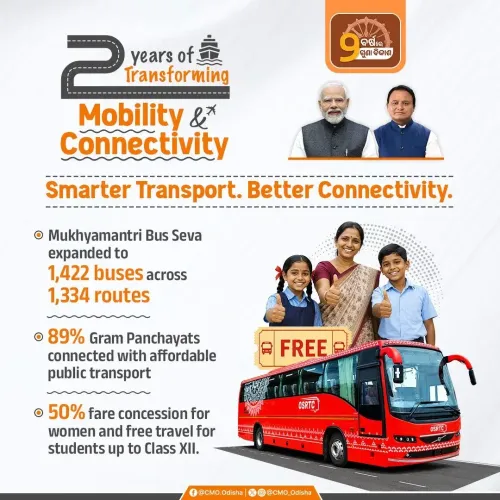
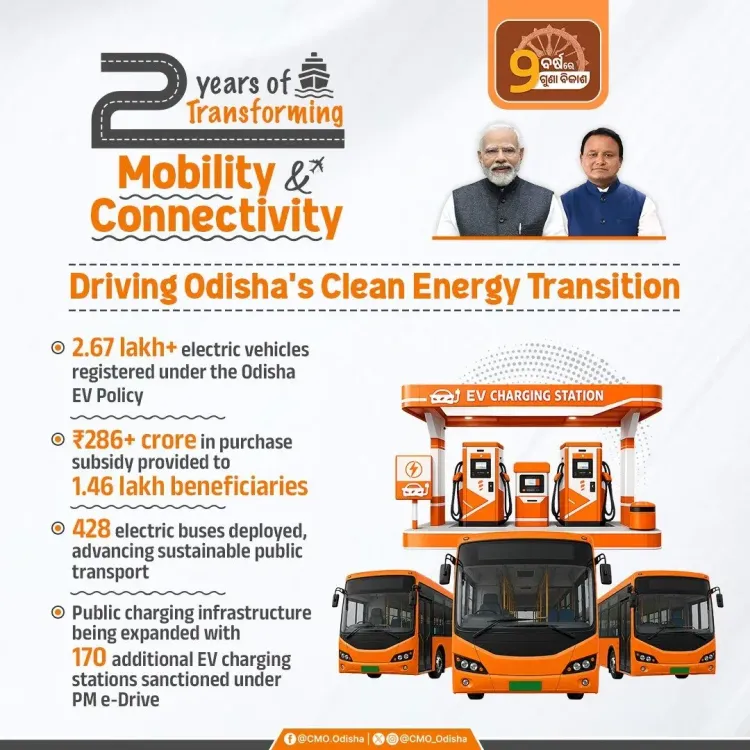
The Chief Minister's Office of Odisha on 18 July 2026 highlighted the state's advancing clean mobility push, citing faster EV adoption, green public transport expansion, and growing charging infrastructure as key drivers of its low-carbon transport transition, in a message directed at PMO India.
Key Takeaways
The Chief Minister's Office of Odisha on 18 July 2026 publicly underscored the state's progress on clean and sustainable mobility.
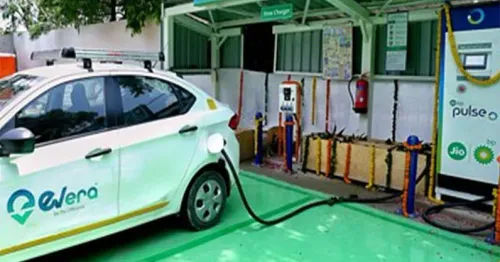
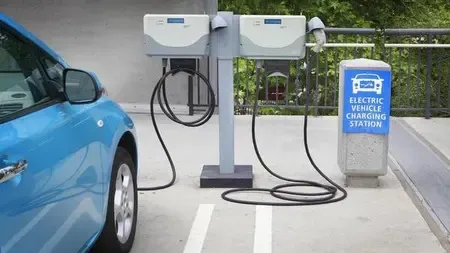
Key focus areas include faster EV adoption , green public transport expansion , and strengthening of charging infrastructure .
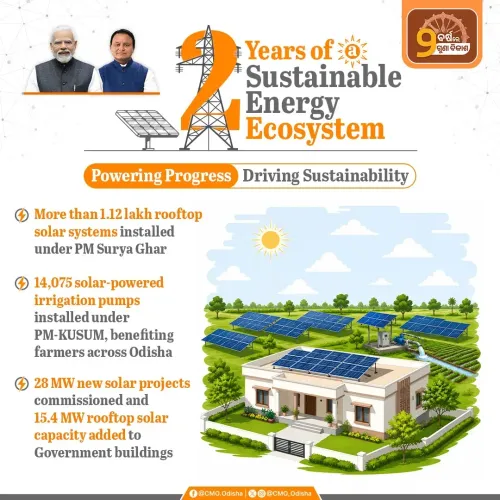
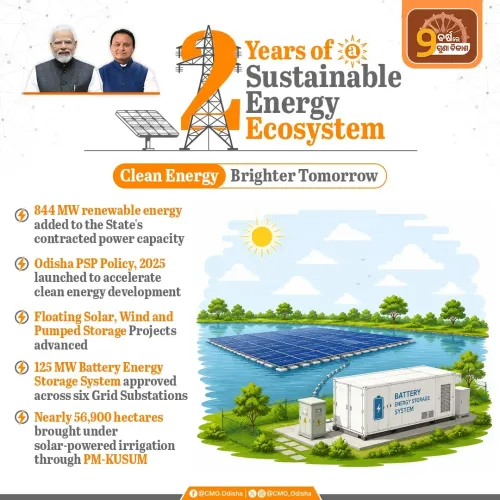
The state's efforts aim to reduce carbon emissions and improve energy efficiency across the transport sector.
The post was directed at PMO India , indicating active state-centre coordination on clean mobility goals.
Odisha's approach mirrors national frameworks including the FAME India Phase II scheme approved in 2019 for EV incentives and charging rollout.
India's broader net-zero by 2070 commitment provides the overarching policy context for state-level EV transitions.
The Chief Minister's Office of Odisha on Saturday, 18 July 2026, signalled the state's accelerating transition toward sustainable transport, citing faster electric vehicle adoption, green public transit expansion, and a growing charging infrastructure network as pillars of a cleaner mobility future.
Context
The official post from CMO Odisha states that the state is 'steadily advancing towards a cleaner and more sustainable mobility ecosystem,' with efforts focused on reducing carbon emissions, improving energy efficiency, and building a 'future-ready transport network powered by clean energy.' The message was directed at PMO India, signalling coordination between the state and the Union government on clean mobility goals.
Odisha, an eastern Indian state, has in recent years aligned its development agenda with national sustainability targets, including India's commitment to achieving net-zero emissions by 2070. Transport electrification is one of the most visible fronts of this effort.
Policy Backdrop
India's clean mobility push has deep policy roots. The National Electric Mobility Mission Plan, launched in 2013, set the foundation for hybrid and electric vehicle adoption across the country. This was followed by the FAME India (Faster Adoption and Manufacturing of Electric Vehicles) scheme, whose Phase II, approved in 2019, channelled increased funding toward electric buses, three-wheelers, and charging infrastructure — with states including Odisha among the intended beneficiaries.
These central schemes are designed to work in tandem with state-level EV policies, creating a layered incentive structure for both consumers and fleet operators. The Production Linked Incentive scheme for advanced chemistry cell battery manufacturing further supports the domestic supply chain underpinning this transition.
Stakeholders and Impact
Urban commuters, state transport operators, and EV manufacturers stand to benefit most directly from Odisha's clean mobility drive. Electrification of public bus fleets reduces operating costs over time and cuts particulate emissions in cities, improving air quality for residents.
Odisha's trajectory mirrors actions taken by states such as Maharashtra, Tamil Nadu, and Delhi, which have prioritised public fleet electrification and dense charging networks. A coordinated multi-state push strengthens the business case for EV manufacturers to scale production and invest in regional service infrastructure.
What's Next
Attention will now turn to the rollout of additional charging stations under state-central cost-sharing arrangements and any upward revision of Odisha's EV policy targets in the next budget cycle. The state's tagging of PMO India in the post suggests ongoing dialogue with the Union government on resource allocation and policy alignment for the clean transport agenda.
As India's transport sector remains one of the largest contributors to urban carbon emissions, Odisha's sustained focus on green mobility positions it as a benchmark for other mid-sized states seeking to balance industrial growth with environmental commitments.
Frequently Asked Questions
What is Odisha doing to promote electric vehicles?
Odisha is accelerating EV adoption through faster uptake of electric vehicles, expansion of green public transport, and strengthening of charging infrastructure, as highlighted by the Chief Minister's Office on 18 July 2026.
What is the FAME India scheme and does Odisha benefit from it?
The FAME (Faster Adoption and Manufacturing of Electric Vehicles) India scheme, whose Phase II was approved in 2019, provides demand incentives for EVs and funding for charging infrastructure; Odisha is among the states included as beneficiaries.
How does Odisha's EV push connect to India's climate goals?
India has committed to reaching net-zero emissions by 2070, and transport electrification at the state level — including Odisha's clean mobility drive — is a key pillar of meeting that national target.
Which other Indian states are pursuing similar clean mobility policies?
Maharashtra, Tamil Nadu, and Delhi have undertaken comparable efforts focused on public fleet electrification and dense EV charging networks, making multi-state coordination a defining feature of India's clean transport push.
What should we watch for next in Odisha's clean transport agenda?
Key developments to track include the rollout of additional charging stations under state-central cost-sharing and any revision of Odisha's EV policy targets in its next budget cycle.