Odisha CMO Moves to Strengthen EV Charging in Urban Bodies
Synopsis
Odisha's Chief Minister's Office announced a draft SOP on June 6, 2026, to set up EV charging stations across Urban Local Bodies, building on the state's Electric Vehicle Policy 2021 and participation in the FAME India scheme to expand green mobility infrastructure in cities and towns.
Key Takeaways
The Chief Minister's Office of Odisha announced a draft SOP on June 6, 2026 to establish EV charging stations across Urban Local Bodies .
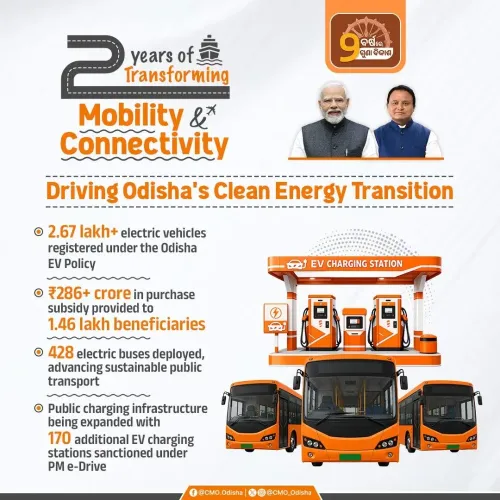
Odisha's Electric Vehicle Policy 2021 provides the foundational framework, offering incentives for EV purchase, manufacturing, and charging infrastructure.
The state has participated in the FAME India scheme since 2015 , supporting electric bus deployment and public charging points.
The SOP aims to standardise site allocation, technical specifications, and operational procedures for municipal officials across Odisha's towns.
Urban commuters, EV charging operators, and municipal bodies are the primary stakeholders affected by the initiative.
Odisha's move mirrors comparable urban EV charging frameworks adopted by Maharashtra , Karnataka , and Tamil Nadu .
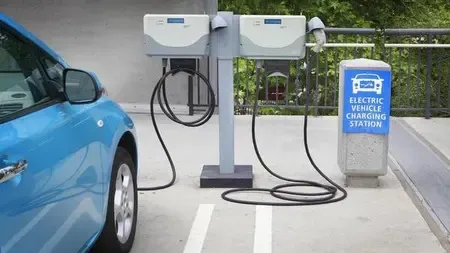
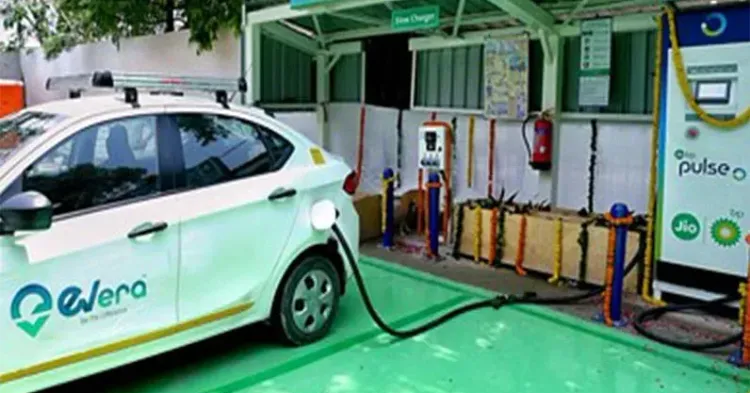
The Chief Minister's Office of Odisha announced on Saturday, June 6, 2026, that the state is drafting a Standard Operating Procedure (SOP) to set up electric vehicle charging stations across Urban Local Bodies (ULBs), signalling a push to deepen the state's green mobility infrastructure in its cities and towns.
Context
The move comes as Indian states accelerate efforts to build city-level EV charging networks in line with national decarbonisation goals. Odisha joins a growing list of states — including Maharashtra, Karnataka, and Tamil Nadu — that have issued or revised urban EV charging frameworks targeting municipal bodies as the primary implementation unit. The SOP is intended to provide a standardised blueprint for municipalities to plan, procure, and operate public charging infrastructure.
Urban Local Bodies in Odisha — comprising municipal corporations, municipalities, and notified area councils — manage civic infrastructure across the state's towns. Bringing them formally into the EV charging rollout addresses a critical last-mile gap: while highways and private premises have seen some charging deployment, dense urban residential and commercial zones have lagged.
Policy Backdrop
Odisha notified its Electric Vehicle Policy 2021, which laid out incentives for EV purchase, manufacturing investment, and charging infrastructure development. The state also participated in the FAME India scheme — the central government's flagship programme for faster adoption of EVs, launched in 2015 and extended in successive phases — which supported the deployment of electric buses and public charging points across Indian cities.
The new SOP draft represents the next layer of that policy architecture: translating broad framework goals into operational procedures that municipal officials can follow on the ground. Standardisation is widely seen as essential to avoid fragmented, incompatible installations that have hampered EV charging rollouts in some cities.
Stakeholders and Impact
Urban commuters stand to benefit most directly if the SOP leads to a denser, more reliable public charging network. EV charging operators — both public-sector utilities and private concessionaires — will look to the SOP for clarity on site-allocation norms, technical specifications, tariff structures, and safety standards. Municipal bodies themselves will need capacity-building support to implement and maintain the new infrastructure.
India's broader EV transition is partly contingent on charging anxiety: surveys consistently show that the perceived scarcity of public chargers is among the top barriers to EV adoption. An SOP that enables Odisha's dozens of ULBs to systematically add charging points could meaningfully shift that calculus for urban residents considering an EV purchase.
What's Next
Stakeholders will watch for the finalisation and official notification of the SOP, including details on funding integration with updated central schemes and timelines for phased rollout across ULBs of different sizes. Growth in Odisha's EV registration numbers and charging-station utilisation data from municipal bodies will serve as early indicators of whether the framework translates into on-ground infrastructure. The state's approach may also inform how other eastern Indian states structure similar urban charging mandates.
Point of View
The state is attempting to convert its 2021 EV policy ambitions into ground-level action, a step that several larger states have found necessary after years of patchy implementation. The timing also aligns with central government pressure on states to demonstrate measurable EV ecosystem progress ahead of the next phase of national clean-mobility funding. Whether Odisha can bridge the capacity gap in smaller ULBs — where technical expertise and capital are thin — will determine whether this becomes a genuine infrastructure push or another well-intentioned framework that stalls at execution.
NationPress
21 Oct 2026
Frequently Asked Questions
What is the Odisha EV charging SOP announced in June 2026?
It is a Standard Operating Procedure being drafted by the Odisha government to guide Urban Local Bodies in setting up electric vehicle charging stations across the state's cities and towns, providing standardised norms for site selection, installation, and operations.
What is Odisha's Electric Vehicle Policy 2021?
Odisha notified its Electric Vehicle Policy in 2021 to promote EV adoption by offering incentives for vehicle purchase, supporting manufacturing investment, and expanding charging infrastructure across the state.
What is the FAME India scheme and how does it relate to Odisha?
FAME India — Faster Adoption and Manufacturing of Electric Vehicles — is a central government scheme launched in 2015 and extended in phases to subsidise EVs and build public charging networks. Odisha has participated in the scheme for deploying electric buses and charging points.
Which Urban Local Bodies in Odisha will be covered by the EV charging SOP?
The SOP is intended for Urban Local Bodies across Odisha, which include municipal corporations, municipalities, and notified area councils responsible for civic infrastructure in the state's urban areas.
How does Odisha's EV charging initiative compare with other Indian states?
Odisha's approach follows similar frameworks adopted by Maharashtra, Karnataka, and Tamil Nadu, which have also issued urban EV charging guidelines targeting municipal bodies as the primary implementation unit for public charging infrastructure.