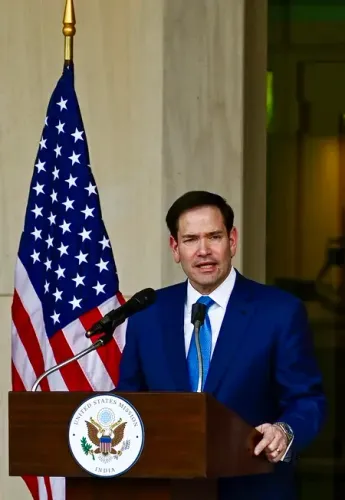
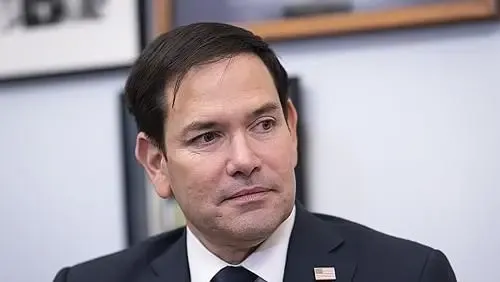
Rubio defends 'America First' doctrine at Senate hearing on State budget
Synopsis
Marco Rubio's Senate testimony was less a budget defence and more a doctrine statement: US foreign policy, he said, is not charity but a contest to 'win'. With aid programmes now tethered to strategic outcomes and a hemispheric coalition pitched as proof of concept, Trump's second-term diplomacy is being formally codified — and Congress is about to push back.
Key Takeaways
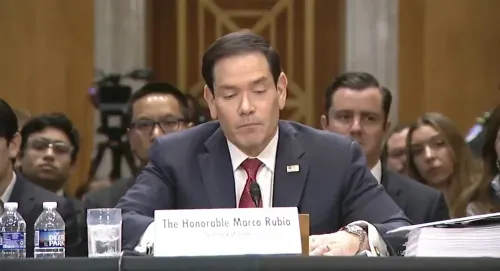
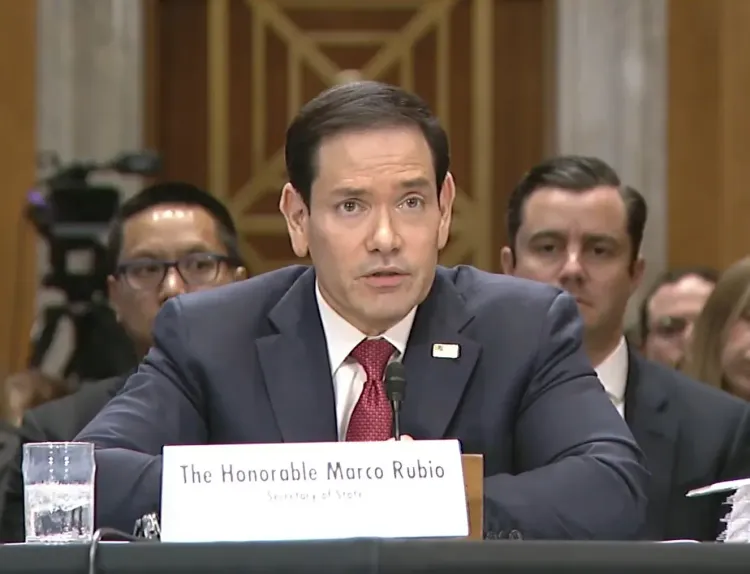
Marco Rubio defended the Trump administration's foreign policy before the Senate Foreign Relations Committee on 2 June .
Rubio said US foreign policy is “solely focused on the national interest” and declared the government is “not a charity”.
Foreign aid programmes have been brought under tighter State Department supervision and tied to measurable outcomes.
Rubio cited a coalition of over a dozen Western Hemisphere countries as a diplomatic success.
Committee Chairman Jim Risch backed the restructuring and Trump's immigration and fentanyl initiatives.
Rubio acknowledged Congress would significantly reshape the proposed State Department budget.
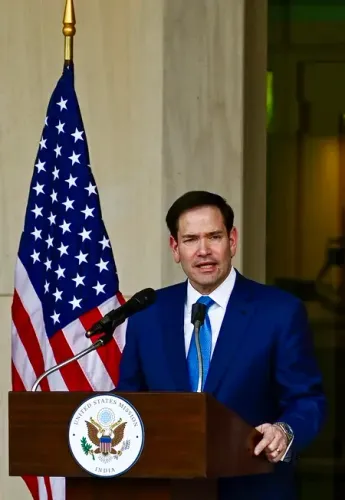
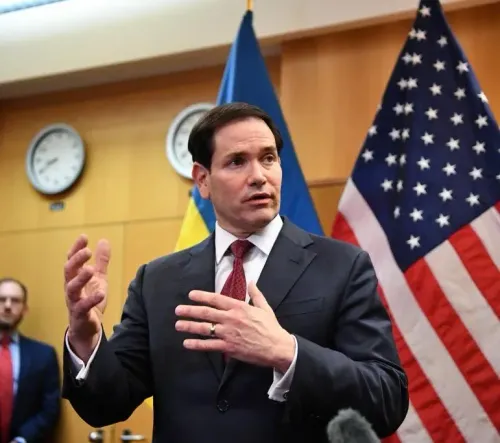
US Secretary of State Marco Rubio on Tuesday, 2 June, mounted a forceful defence of the Donald Trump administration's foreign policy before the Senate Foreign Relations Committee, declaring that every diplomatic move must be measured against whether it serves American interests. The testimony, delivered in Washington, came as lawmakers began scrutinising the President's proposed State Department budget and the sweeping restructuring of US diplomacy and foreign aid.
Key Developments
Rubio told the committee that the administration had reoriented US foreign policy around national security, economic strength and sovereignty after what he described as “years of misplaced priorities”. He argued that Washington's diplomatic and aid programmes must serve American interests first.
“Our foreign policy is one that's solely focused on the national interest of the United States of America,” Rubio said. “The reality of it is that our foreign policy, first and foremost, must always be what is in the national interest of the United States of America.”
What Rubio Said on Aid and Outcomes
The Secretary of State signalled a sharp break from earlier assistance models, saying programmes were now being tied to measurable strategic goals rather than maintained for their own sake.
“The United States government is not a charity,” he said. “We are not here to play social worker. We are here to win.” He added that the “old model had to be replaced” and that Washington was “not just providing money, we are also seeking outcomes”.
Hemispheric Coalition and Hard Trade-offs
Rubio pointed to the Western Hemisphere as a proof point, citing what he called a coalition of “over a dozen” friendly countries aligned with the US on security and economic prosperity. He also acknowledged that diplomacy rarely offered clean choices.
“Sometimes in foreign policy, the choices are not between a good choice and a bad choice,” he said. “It's between two less-than-ideal choices.”
Bipartisan Reception and Budget Battle Ahead
Committee Chairman Jim Risch praised several Trump-era initiatives, including efforts to curb illegal immigration, combat fentanyl trafficking, and push allies to take on greater defence responsibilities. Risch also welcomed the State Department's restructuring, calling the agency more efficient and better aligned with US interests.
Rubio conceded that Congress would ultimately reshape the President's budget proposal. “The appropriators here will have a huge say on the outcome of what that budget ultimately looks like,” he said, adding that he welcomed the debate.
Why It Matters
The remarks are among the clearest articulations to date of the foreign policy doctrine guiding Trump's second term — one that subordinates traditional development goals to a narrower test of national interest. With appropriations hearings set to intensify in the coming weeks, the scale of cuts to legacy aid programmes and the contours of a leaner State Department will be the next flashpoints.
Point of View
But the real signal is institutional: foreign aid is being folded into a transactional framework where disbursement follows strategic alignment. That is a structural shift, not a rhetorical one — and it has implications for partners from Africa to South Asia that have long relied on US development funding. The bipartisan warmth from Risch masks a harder fight ahead with appropriators who will test whether 'outcomes-based' aid is a genuine reform or a euphemism for deep cuts. The hemispheric coalition claim, meanwhile, deserves scrutiny: naming a dozen aligned countries is easy; sustaining policy convergence through an election cycle in Latin America is the harder test.
NationPress
18 Oct 2026
Frequently Asked Questions
What did Marco Rubio tell the Senate Foreign Relations Committee?
Rubio told the committee on 2 June that US foreign policy is 'solely focused on the national interest of the United States' and that diplomatic and aid programmes must serve American interests first. He defended the Trump administration's restructuring of the State Department and foreign assistance.
How is the Trump administration changing US foreign aid?
Foreign aid programmes have been brought under closer State Department supervision and tied to strategic outcomes rather than maintained as standing commitments. Rubio said the 'old model had to be replaced' and that Washington is now 'seeking outcomes', not just providing money.
Why does Rubio's testimony matter?
It is one of the clearest articulations yet of the foreign policy doctrine guiding Trump's second term, formally subordinating development assistance to a narrower national-interest test. The doctrine will shape the State Department budget that Congress is now debating.
How did the Senate committee respond?
Chairman Jim Risch praised many of the administration's initiatives, including efforts on illegal immigration, fentanyl trafficking, and allied defence burden-sharing. He also welcomed the State Department's restructuring as making the agency more efficient.
Will Congress accept the proposed State Department budget?
Rubio himself acknowledged that lawmakers would significantly reshape the proposal during the appropriations process. He said appropriators 'will have a huge say' on the final budget and that he welcomed the debate.