White House Slams Democrats, Backs Rubio on 'America First' Security
Synopsis
The White House on June 3, 2026 accused Democrats of 'political games and virtue-signaling' while spotlighting Secretary of State Marco Rubio as the face of its national-security push. The post extends the second Trump administration's pattern of framing foreign policy as a partisan contrast, with focus shifting to the FY2027 defence bill and fresh sanctions moves.
Key Takeaways
The White House post on June 3, 2026 amplified Secretary of State Marco Rubio and attacked Democrats over national security.
The message cast the Trump Administration as putting 'America's national security FIRST' and ensuring the United States 'wins'.
It aligns with the policy arc set by the 2017 National Security Strategy, which prioritised competition with China and Russia.
Rubio, a former Florida senator, is known for emphasising sanctions and great-power competition.
Key tests ahead include the FY2027 defense authorization bill and new State Department actions on export controls and sanctions.
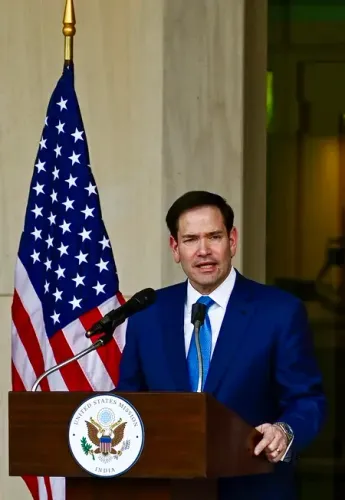
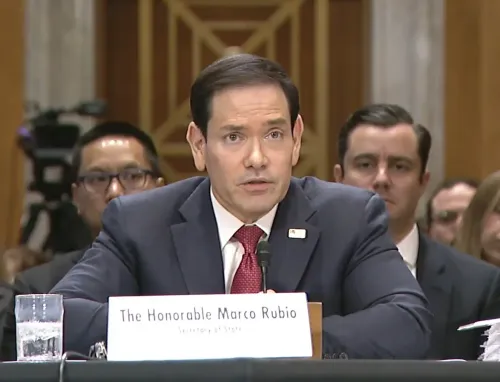
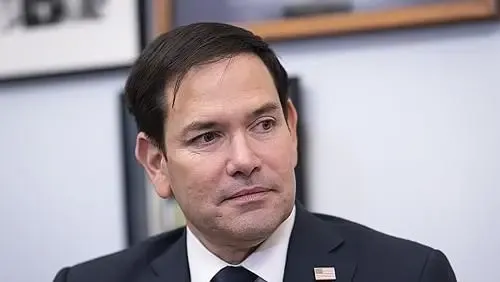
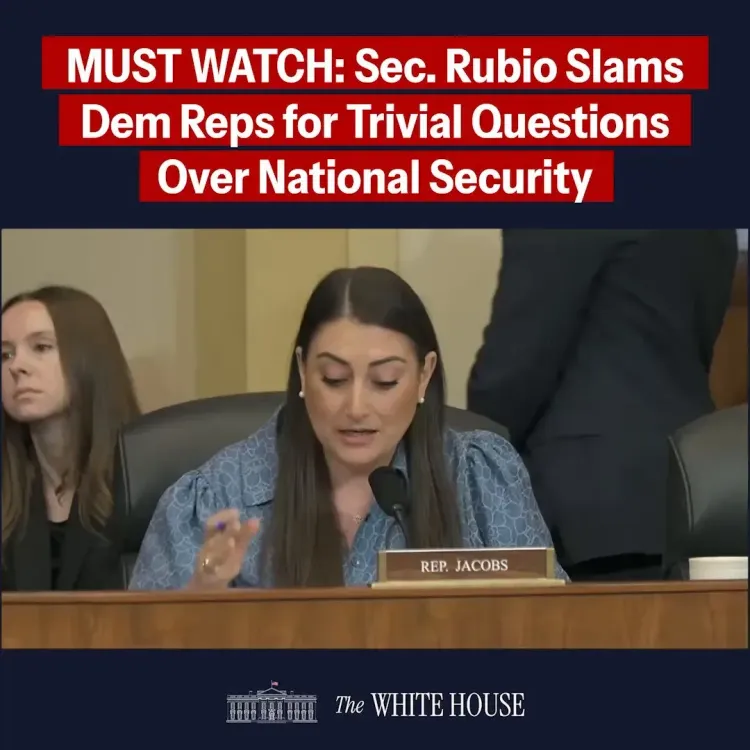
The White House, the official communications arm of the Executive Office of the President of the United States, on Wednesday, June 3, 2026, attacked Democratic lawmakers as engaged in 'political games and virtue-signaling' while asserting that the Trump Administration remains focused on national security. The post amplified a video clip featuring Secretary of State Marco Rubio, signalling continued alignment between the West Wing and Foggy Bottom on the administration's foreign-policy posture.
'While Democrats keep playing their political games and virtue-signaling, the Trump Administration is focused on putting America's national security FIRST and making sure the United States wins — something they clearly don't understand,' the post said, tagging @SecRubio alongside a flame emoji and a downward arrow pointing to an attached video.
Context
The message lands midway through President Donald Trump's second term, which began in January 2025, and reflects the administration's preferred framing of foreign policy as a sharp partisan contrast. By pairing a combative line against Democrats with a direct endorsement of the Secretary of State, the White House is positioning Rubio as a frontline voice for its 'America First' doctrine.
Rubio, a former Republican senator from Florida, has long emphasised great-power competition and aggressive use of sanctions as instruments of statecraft. His confirmation as the top US diplomat placed a known China and Iran hawk at the State Department, a choice broadly consistent with the administration's stated priorities.
Policy backdrop
The 'national security FIRST' formulation echoes the 2017 National Security Strategy released during Trump's first term, which formally pivoted American defence and diplomatic planning away from counterterrorism toward strategic competition with China and Russia. That document set the template for subsequent emphasis on military modernisation, export controls, and economic statecraft.
The second Trump administration has continued that arc, favouring bilateral deal-making and sanctions enforcement over multilateral institutions and traditional foreign-assistance programmes. The White House post is consistent with repeated public messaging that casts diplomatic engagement abroad in transactional, win-or-lose terms.
Stakeholders and impact
For the US military and the intelligence community, the rhetorical posture matters because it shapes budget priorities and the political space for new authorities. The administration's framing tends to support higher Pentagon outlays and looser executive use of sanctions, export controls and tariff tools.
For Democrats on Capitol Hill, the post is the latest signal that any bipartisan ground on foreign policy will be contested terrain through the remainder of this Congress. The framing — that opponents 'clearly don't understand' how to make the United States 'win' — leaves little room for compromise messaging.
For India and other partners in the Indo-Pacific, the underlying continuity is what matters most. A State Department led by Rubio, paired with a White House that prizes hard-power signalling, suggests sustained focus on countering Chinese influence, an issue where New Delhi and Washington have found broad strategic convergence.
What's next
Attention now turns to congressional action on the FY2027 defense authorization bill, which will translate the administration's rhetoric into appropriations, force-structure choices and weapons priorities. Lawmakers are also watching for fresh executive actions from the State Department on export controls and sanctions designations, areas where Rubio has signalled an activist approach.
For observers in New Delhi, the practical test will be whether the administration's 'win' framing produces concrete deliverables — technology transfers, defence co-production, or coordinated sanctions architecture — or remains primarily a domestic political message aimed at contrasting the White House with its critics at home.
Point of View
Fusing partisan combat at home with a hard-edged foreign-policy brand abroad. By elevating Secretary Rubio in the same breath as an attack on Democrats, the White House signals that diplomacy will be messaged through a domestic-political lens for the remainder of this term. For Indian readers, the salient continuity is the administration's appetite for sanctions, export controls and bilateral deal-making — tools that have repeatedly intersected with New Delhi's strategic calculations on China, Russia and trade. The real measure will be deliverables, not adjectives.
NationPress
4 Sept 2026
Frequently Asked Questions
What did the White House post about Marco Rubio on June 3, 2026?
The White House accused Democrats of 'political games and virtue-signaling' and said the Trump Administration is focused on putting America's national security first, while tagging Secretary of State Marco Rubio and sharing a video clip of him.
Who is Marco Rubio and what is his current role?
Marco Rubio is the US Secretary of State in the second Trump administration. A former Republican senator from Florida, he is known for emphasising great-power competition with China and the aggressive use of sanctions.
What is the Trump administration's 'America First' national security approach?
It prioritises strategic competition with China and Russia, military modernisation, sanctions and export controls, and bilateral deal-making over multilateral institutions, building on the framework set by the 2017 National Security Strategy.
How does this affect India and the Indo-Pacific?
A Rubio-led State Department combined with a hard-power White House posture suggests sustained US focus on countering Chinese influence, an area of broad strategic convergence with India, though concrete impact will depend on technology, defence and sanctions decisions.
What should be watched next in US national security policy?
Key items include the FY2027 defense authorization bill in Congress and any fresh executive actions from the State Department on export controls and sanctions designations.