Rubio tells Senate US Taiwan policy unchanged despite Trump's 'chip' remark
Synopsis
Marco Rubio's Senate testimony was less reassurance than damage control. With Trump openly calling Taiwan arms sales a ‘negotiating chip' and a $14 billion package still pending, Rubio leaned on a record $11 billion December deal to argue continuity. But the bipartisan unease in the room signalled deeper anxiety about whether Taipei is now leverage in the US-China endgame.
Key Takeaways
Marco Rubio told the Senate Foreign Relations Committee on 2 June that US policy on Taiwan is unchanged.
Rubio cited a December arms package worth $11 billion , calling it the single largest ever approved for Taiwan.
A separate $14 billion arms package for Taipei remains under review.
Senators Jeff Merkley and Chris Coons questioned whether Trump's ‘negotiating chip' remark signalled weakening support.
Rubio denied Taiwan was raised as a bargaining item in talks between Trump and Xi Jinping .
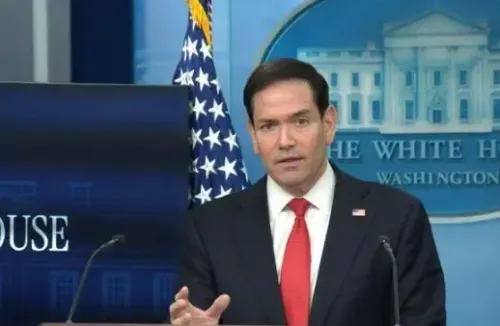
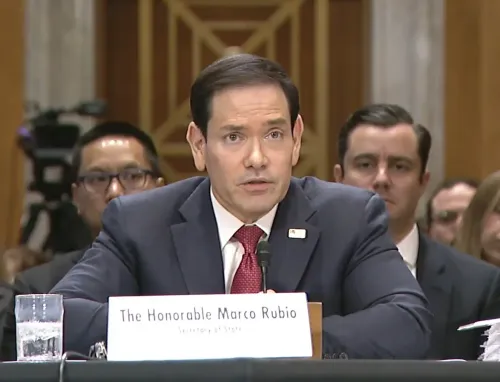
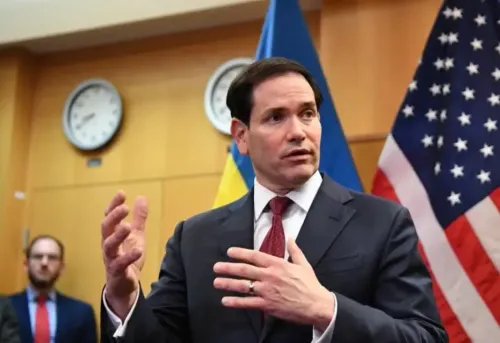
US Secretary of State Marco Rubio on Tuesday, 2 June assured lawmakers in Washington that American policy toward Taiwan remains unchanged, pushing back against concerns sparked by President Donald Trump's recent suggestion that arms sales to Taipei could serve as a negotiating lever with China. Testifying before the Senate Foreign Relations Committee, Rubio insisted Washington continues to back the status quo across the Taiwan Strait.
Key Assurances from Rubio
‘There has been no change to U.S. policy towards Taiwan,' Rubio told lawmakers. ‘Our policy on Taiwan is not changing and did not change on this trip.'
The Secretary dismissed suggestions that the administration was retreating from long-standing commitments to the self-governing island, an issue that surfaced repeatedly as senators from both parties probed whether recent US-China diplomacy had reshaped Washington's posture.
The Arms Sales Record
Senator Jeff Merkley, referring to Trump's characterisation of weapons transfers as ‘a very good negotiating chip', warned that Beijing could read any delay in approvals as a softening of US support for Taiwan's democracy.
Rubio countered by citing what he called the largest American arms package ever cleared for Taipei. ‘I know in December of this year we did approve an arms sale, I think, $11 billion. I think it's the single largest arms sale ever,' he said, adding that it exceeded the cumulative total approved under the Biden administration. A separate $14 billion package, he noted, remains under review.
‘We just had a massive arms sale,' Rubio said. ‘It was so big and so noticeable that the Chinese became very aggressive about it.'
The Xi Meeting Question
Senator Chris Coons pressed whether Trump had offered to condition Taiwan arms sales during talks with Chinese President Xi Jinping. Rubio declined to detail private exchanges between the two leaders but rejected the bargaining-chip framing.
‘When the President says it's a great negotiating thing, what he's really saying is it's because China, as you can imagine, always mentions this,' Rubio said. ‘That in no way is what is holding up our decision-making.'
Why Taiwan Matters Globally
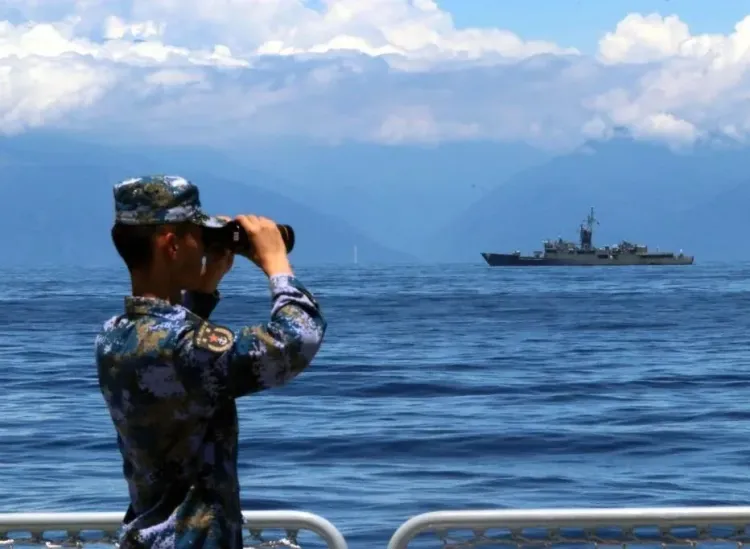
Rubio described Taiwan as a major flashpoint between Washington and Beijing, strategically important both for its geography and for the signal its future sends across the Indo-Pacific. Lawmakers underscored that the island produces a dominant share of the world's most advanced semiconductor chips, making stability across the strait a matter of global economic consequence.
Scrutiny Over China Policy
The hearing unfolded amid growing congressional scrutiny of the administration's China approach following Trump's recent visit to Beijing. Several senators questioned whether Washington had offered concessions for limited returns. Rubio defended the trip as essential to maintaining communication and strategic stability between the two powers. Sectoral and diplomatic decisions on the pending $14 billion package are expected to be closely watched in the weeks ahead.
Point of View
No amount of Cabinet-level reassurance fully neutralises the signal Beijing and Taipei both receive. The $11 billion December deal is real, but so is the unreviewed $14 billion in limbo — and that gap is where strategic ambiguity slides into strategic uncertainty. For India and the wider Indo-Pacific, the lesson is sobering: US security commitments are increasingly subject to transactional reframing at the very top.
NationPress
20 Oct 2026
Frequently Asked Questions
What did Marco Rubio say about US policy on Taiwan?
Rubio told the Senate Foreign Relations Committee on 2 June that there has been no change to US policy on Taiwan and that Washington continues to support the status quo across the Taiwan Strait. He rejected suggestions that recent US-China diplomacy had altered that stance.
Why are lawmakers concerned about Trump's Taiwan comments?
President Trump described arms sales to Taiwan as ‘a very good negotiating chip' in dealings with China, prompting senators from both parties to worry that Beijing could interpret any delay in weapons approvals as weakening US support for Taipei's democracy.
How large is the current US arms package for Taiwan?
Rubio said a December arms sale worth roughly $11 billion is the single largest ever approved for Taiwan, exceeding the total cleared under the Biden administration. A separate $14 billion package remains under review.
Did Trump discuss Taiwan arms sales with Xi Jinping?
Rubio declined to disclose private conversations between Trump and Xi but rejected suggestions that Taiwan had become a bargaining chip. He said China routinely raises the issue, but that this is not influencing US decisions on arms transfers.
Why is Taiwan strategically important globally?
Taiwan produces a dominant share of the world's most advanced semiconductor chips, making stability across the Taiwan Strait critical to the global economy. Its geographic position in the Indo-Pacific also makes it a central flashpoint in US-China strategic competition.