US reaffirms Taiwan policy as $14bn arms package review continues
Synopsis
The Trump administration told Congress on 26 June that its Taiwan policy is unchanged — even as a $14 billion follow-on arms package sits under presidential review. With $11 billion already approved and $32 billion in backlogged deliveries, the US commitment to Taiwan's defence is expanding in scale, even as President Trump's reported discussions with Xi Jinping on arms sales raise questions about the boundaries of strategic ambiguity.
Key Takeaways
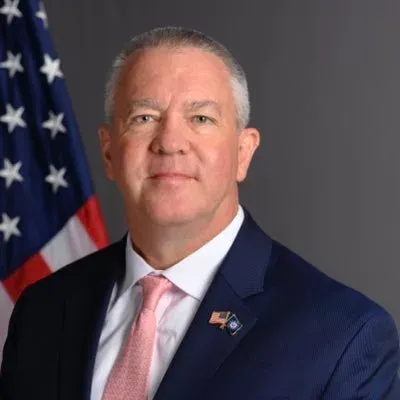
Assistant Secretary of State Michael G.
DeSombre told Congress on 26 June that US policy on Taiwan remains guided by the Taiwan Relations Act , the three joint communiqués , and the six assurances .
A $14 billion follow-on arms package for Taiwan is currently under presidential review ; no Congressional notification timeline was given.
The Trump administration has already approved an $11 billion arms package for Taiwan, including HIMARS , ATACMS missiles, howitzers, and drones.
More than $32 billion in previously approved military equipment for Taiwan remains undelivered, with lawmakers urging faster throughput via a stronger US defence industrial base.
Taiwan's legislature approved a $25 billion defence package but has not fully funded capabilities such as drones; the US is pressing for additional budgetary support.
Beijing raises Taiwan arms sales in virtually every bilateral meeting with Washington, according to DeSombre — a pattern he described as consistent with the six assurances.
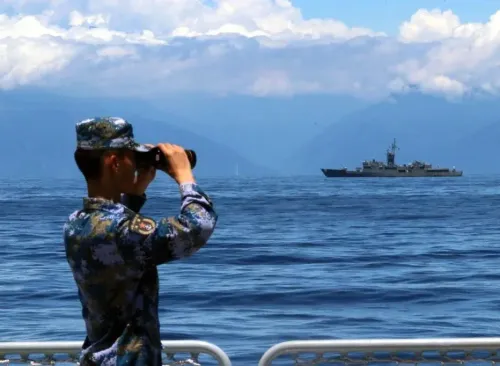
The Trump administration has reaffirmed that its long-standing policy on Taiwan remains unchanged, even as it conducts a review of a proposed $14 billion follow-on arms package for the self-governing island amid intensifying military pressure from China. The reaffirmation came during a 26 June hearing before the House Foreign Affairs Subcommittee on East Asia and the Pacific in Washington.
Key Testimony Before Congress
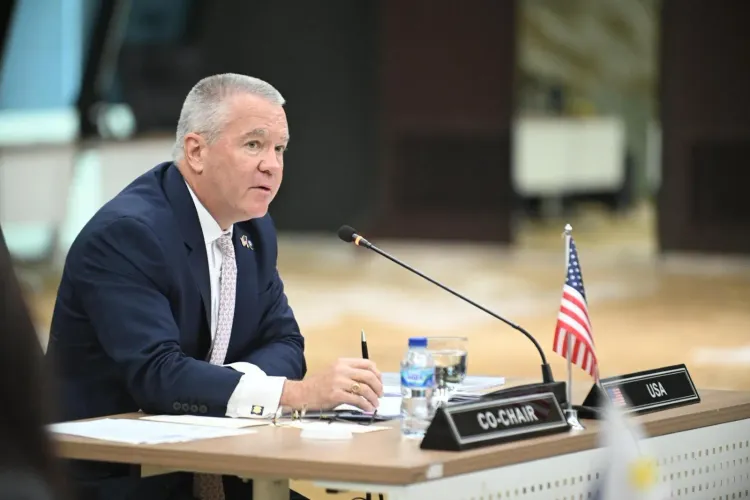
Michael G. DeSombre, Assistant Secretary of State for East Asian and Pacific Affairs, told lawmakers that the administration's position rested on three pillars: the Taiwan Relations Act, the three joint communiqués, and the six assurances. 'Our long standing policy on Taiwan has not changed, which is guided by the Taiwan Relations Act, the three joint communiques and the six assurances,' DeSombre said. He added: 'We remain committed to preserving peace and stability across the Taiwan Strait and oppose any unilateral change to the status quo.'
The hearing drew pointed questions from both sides of the aisle, with Democratic and Republican lawmakers pressing the administration on military assistance, deterrence strategy, and Beijing's escalating pressure on the island.
The Arms Packages: $11 Billion Approved, $14 Billion Under Review
Subcommittee chair Representative Young Kim welcomed the administration's prior approval of an $11 billion arms package for Taiwan and noted that Secretary of State Marco Rubio had informed Congress that a $14 billion follow-on package is now under presidential review. When pressed repeatedly on a timeline for formal Congressional notification, DeSombre said only that 'the President is reviewing it and he'll make that decision.'
Republican Representative Andy Barr defended the administration's record, arguing that the already-approved $11 billion package — which includes HIMARS rocket systems, ATACMS missiles, howitzers, and drones — represented an unprecedented level of commitment to Taiwan's defence. Barr also urged Congress to address delivery delays on more than $32 billion worth of previously approved military equipment by strengthening the US defence industrial base. DeSombre agreed that expanding manufacturing capacity was essential to accelerating foreign military sales.
Trump-Xi Talks and the Six Assurances Question
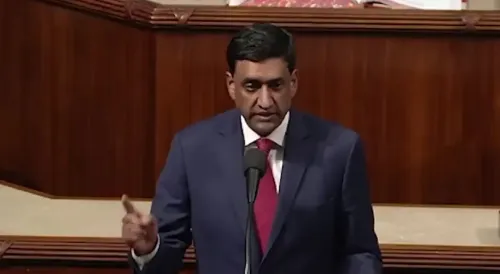
Representative John 'Johnny O' Olszewski Jr. questioned whether recent remarks by President Donald Trump about discussing Taiwan arms sales with Chinese President Xi Jinping were consistent with Washington's long-standing commitments. DeSombre responded that Taiwan and Taiwan arms sales were a routine subject in US-China bilateral meetings. 'Whenever we meet with China, they raise the questions of Taiwan and Taiwan arms sales,' he said. 'That is a part of almost every discussion that we have with them.' He added that this was 'not in any way a deviation from the six assurances.'
Taiwan's Own Defence Spending Under Scrutiny
Representative Kim also urged Taiwan to increase its own defence outlays, noting that while the island's legislature had approved a $25 billion defence package, it had not fully funded capabilities such as drones. DeSombre confirmed that the United States was actively encouraging Taiwan to approve additional budgetary support for further weapons purchases.
Strategic Context
Under the Taiwan Relations Act, the United States provides Taiwan with defensive arms while maintaining a policy of 'strategic ambiguity' over whether it would intervene militarily in the event of a Chinese attack. Beijing regards Taiwan as part of its territory and has stepped up military activity around the island in recent years. Washington officially recognises Beijing rather than Taipei, but remains Taiwan's principal security partner and largest supplier of defensive military equipment. Taiwan remains one of the most sensitive fault lines in US-China relations, and the latest Congressional hearing underscores how central the island has become to American foreign and defence policy deliberations.
Point of View
But it does not address the signal it sends to Taipei or to Beijing's calculus. The $32 billion delivery backlog is the more urgent problem — approved arms that haven't arrived offer deterrence on paper only. Until the US defence industrial base can actually move hardware at the pace commitments demand, the gap between policy rhetoric and operational reality will remain exploitable.
NationPress
24 Sept 2026
Frequently Asked Questions
Has the Trump administration changed its policy on Taiwan?
No. Assistant Secretary of State Michael G. DeSombre told Congress on 26 June that US policy on Taiwan remains unchanged, guided by the Taiwan Relations Act, the three joint communiqués, and the six assurances. The administration also reiterated its opposition to any unilateral change to the status quo in the Taiwan Strait.
What is the $14 billion arms package for Taiwan?
It is a proposed follow-on arms deal for Taiwan, separate from an already-approved $11 billion package. Secretary of State Marco Rubio informed Congress that the $14 billion package is currently under presidential review, though no timeline for formal Congressional notification has been provided.
What weapons are included in the approved $11 billion Taiwan arms package?
The $11 billion package includes HIMARS rocket systems, ATACMS missiles, howitzers, and drones, according to Representative Andy Barr. It is described by Republican lawmakers as the most significant US commitment to Taiwan's defence on record.
Why did lawmakers question Trump's discussions with Xi Jinping on Taiwan arms sales?
Representative John Olszewski raised concerns that President Trump's reported comments about discussing Taiwan arms sales with Chinese President Xi Jinping could signal a departure from Washington's long-standing commitments. DeSombre responded that Beijing raises Taiwan arms sales in virtually every bilateral US-China meeting and that this does not constitute a deviation from the six assurances.
What is the Taiwan Relations Act and why does it matter?
The Taiwan Relations Act is a US law that governs unofficial relations with Taiwan and obligates Washington to provide the island with defensive arms. It underpins US policy of 'strategic ambiguity' — not explicitly committing to military intervention if China attacks, while maintaining Taiwan as a key security partner and the largest recipient of US defensive military equipment.