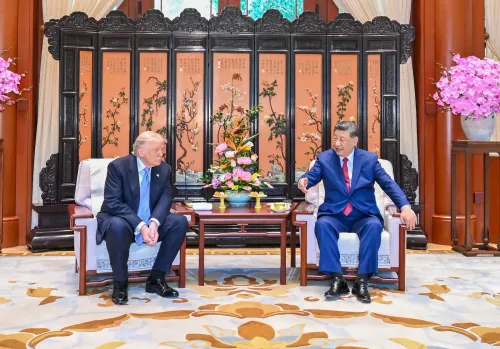
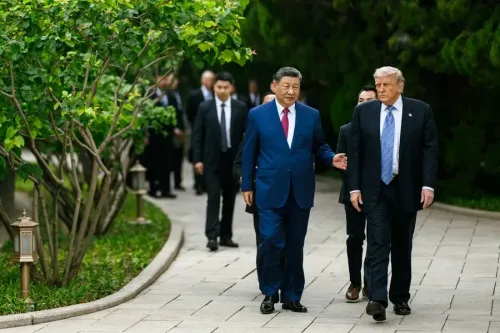
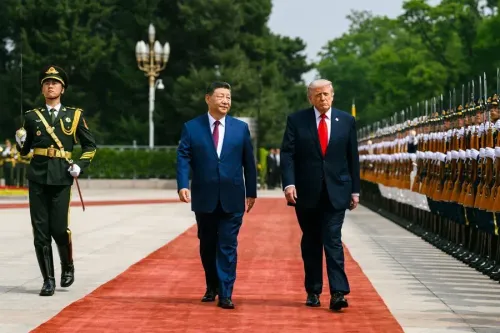
Trump eyes Taiwan arms as China bargaining chip after Xi summit
Synopsis
After his Beijing summit with Xi Jinping, Trump openly floated using Taiwan arms sales as a 'negotiating chip' with China — a remark that has rattled Taipei and raised hard questions about whether Washington's security commitments are now on the table. Taiwan's envoy is pushing back publicly, but the damage to strategic ambiguity may already be done.
Key Takeaways
President Donald Trump suggested US arms sales to Taiwan could serve as a 'negotiating chip' with China following his summit with President Xi Jinping in Beijing .
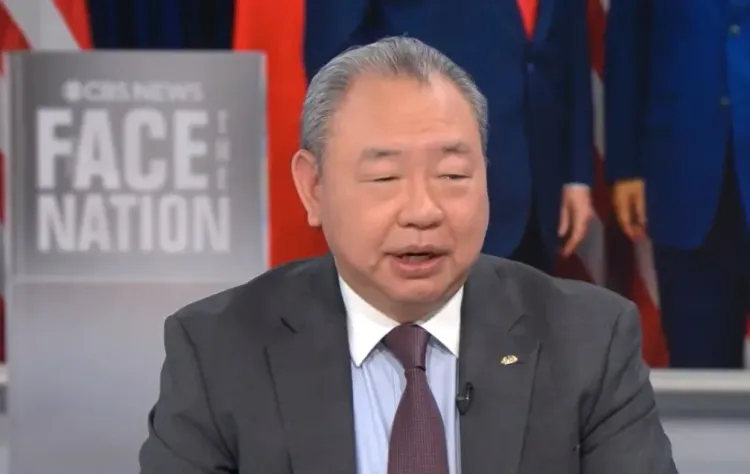
Taiwan's representative to the US, Alexander Yui , warned on CBS News that continued American weapons support was essential to deter Chinese aggression.
Yui said Trump 'heard only their side of the story' after two days of meetings in Beijing .
Former US Defence Secretary Robert Gates cautioned that China could pressure Taiwan via a naval blockade rather than a direct invasion.
Gates urged Washington to proceed with pending arms deliveries to Taiwan despite existing US weapons shortages.
The Trump-Xi summit produced few publicly announced agreements, making the Taiwan arms question its most consequential visible outcome.
Taiwan's representative to the United States, Alexander Yui, on Sunday, 18 May 2025, publicly warned that the island needed uninterrupted American weapons support to deter what he described as escalating Chinese aggression across the Taiwan Strait — a day after President Donald Trump signalled that future US arms sales to Taipei could be folded into broader negotiations with Beijing following his summit with Chinese President Xi Jinping.
The remarks have set off alarm in Taipei, marking one of the most sensitive diplomatic flashpoints to emerge from the Trump-Xi Beijing summit, which otherwise produced few publicly announced agreements.
Trump's 'Negotiating Chip' Remark
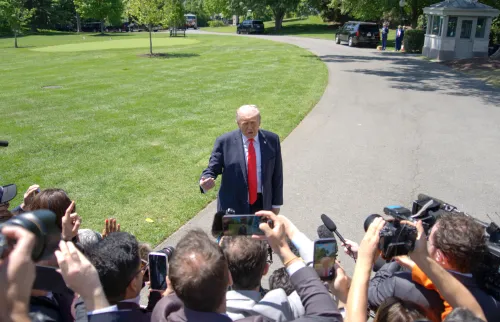
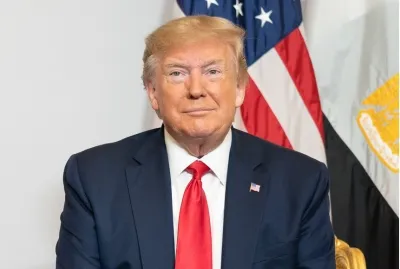
Speaking in interviews and remarks after the Beijing summit, President Trump suggested that Taiwan-related arms sales could serve as leverage with China. 'It's a very good negotiating chip for us, frankly,' Trump said, according to reports citing ABC News. He also expressed a desire for both Taiwan and China to 'cool down', while stopping short of committing to approve a new weapons package that Taipei has been seeking.
The framing alarmed Taiwanese officials, who have long relied on the implicit guarantee of US military hardware as a cornerstone of their defence posture.
Taiwan's Representative Pushes Back
Appearing on CBS News, Yui argued that continued arms deliveries were essential to preserving peace. 'If we want to prevent a war from happening, I think it's best that Taiwan is strong, able to defend itself,' he said.
Yui sought to reassure domestic audiences that Washington had not formally altered its longstanding Taiwan policy, noting that both Trump and Secretary of State Marco Rubio had publicly reaffirmed support for stability in the Taiwan Strait. However, he made clear that Taipei wanted its perspective heard after Trump spent two days in Beijing receiving Chinese concerns about the self-governed island.
'He heard only their side of the story,' Yui said, adding: 'We're not the ones creating all this trouble. It is China... creating all these problems.'
Beijing's Posture and Military Pressure
China claims Taiwan as part of its territory and has repeatedly warned against foreign military support for Taipei. In recent years, Beijing has intensified pressure on the island through air incursions, naval patrols, and large-scale military exercises around the Taiwan Strait. Yui rejected Beijing's characterisation that Taiwan was provoking tensions.
Gates Warns of Blockade Risk
Former US Defence Secretary Robert Gates, also speaking on CBS News, offered a stark assessment of China's military options. Rather than an outright invasion, Gates warned that Beijing could exert pressure through economic strangulation or a naval blockade. 'They could create a blockade or a quarantine around Taiwan anytime they wanted,' he said.
Despite concerns over growing US weapons shortages linked to ongoing conflicts, Gates urged Washington to proceed with pending arms deliveries to Taiwan, arguing that deterrence required credible supply.
What Comes Next
The episode underscores the fragility of Taiwan's strategic position as US-China relations enter a new phase of transactional diplomacy. Whether Washington moves forward with the pending weapons package — or uses it as a bargaining instrument — will be closely watched by allies across the Indo-Pacific as a signal of American reliability on security commitments.
Point of View
While necessary, cannot substitute for a clear US policy statement — which, notably, neither Trump nor Rubio has yet provided.
NationPress
22 Sept 2026
Frequently Asked Questions
What did Trump say about Taiwan arms sales after the Xi summit?
President Trump suggested that future US arms sales to Taiwan could be used as a 'negotiating chip' in broader talks with China, remarks made in interviews following his summit with President Xi Jinping in Beijing. He stopped short of committing to approve a new weapons package that Taipei has been seeking.
How has Taiwan responded to Trump's remarks?
Taiwan's representative to the US, Alexander Yui, publicly warned on CBS News that the island needed continued American weapons support to deter growing Chinese aggression. He also said Trump had 'heard only their side of the story' after two days of meetings in Beijing, and called on Washington to hear Taiwan's perspective.
What threat did Robert Gates identify for Taiwan?
Former US Defence Secretary Robert Gates warned that China could pressure Taiwan through a naval blockade or economic strangulation rather than a direct military invasion, saying Beijing could 'create a blockade or a quarantine around Taiwan anytime they wanted.' He urged Washington to proceed with pending arms deliveries regardless.
Has the US formally changed its Taiwan policy?
No formal policy change has been announced. Alexander Yui noted that both President Trump and Secretary of State Marco Rubio have publicly maintained support for stability in the Taiwan Strait. However, Trump's 'negotiating chip' remarks have raised concerns about whether the longstanding US commitment to arms sales remains unconditional.
Why does the Taiwan arms question matter beyond the island itself?
Taiwan's access to US weapons is a central pillar of deterrence in the Taiwan Strait and a signal of American reliability to Indo-Pacific allies. Any suggestion that arms sales could be bargained away as diplomatic leverage risks undermining confidence in US security commitments across the region.