Taiwan urges Trump to deliver $14 billion arms deal amid China tensions
Synopsis
Taiwan's top envoy to Washington publicly pressed the Trump administration to release a $14 billion arms package already paid for and approved by Congress — but still awaiting a presidential signature. With the Trump-Xi summit sidelining Taiwan in its final statements, Taipei is now left reading geopolitical tea leaves while its defence readiness hangs in the balance.
Key Takeaways
Taiwan has urged the Trump administration to expedite a $14 billion arms package it has already paid for and Congress has approved.
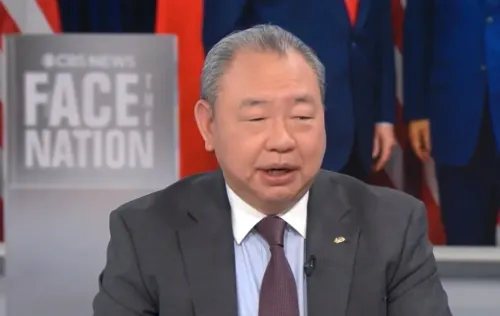
Alexander Yui , Taiwan's US representative, said Taiwan did not feature in post-summit statements from either Washington or Beijing after the Trump-Xi summit .
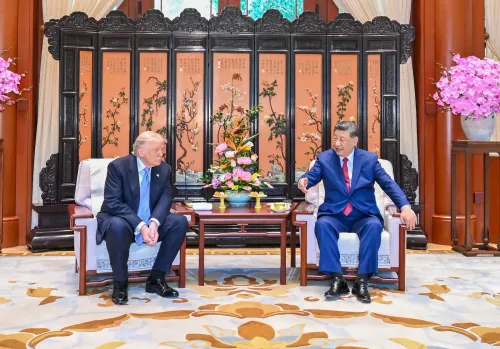
President Trump confirmed Taiwan was raised during talks with Xi Jinping but said the two leaders did not spend much time on it.
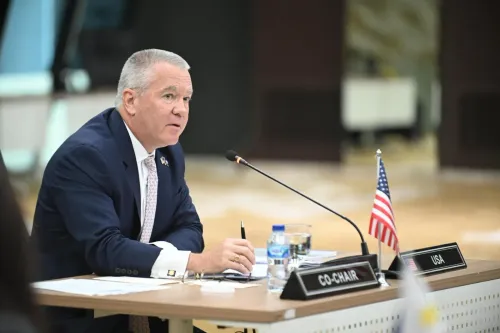
US Ambassador Mike Waltz cited a backlog in the American defence industrial base as the reason for delivery delays, noting competing demands from Europe and the US military.
Waltz said the Trump administration approved more arms sales to Taiwan in its first year than the previous administration did in its entire term.
More than $1 billion in additional assistance also remains undelivered, with several Republican senators reportedly questioning the holdup.
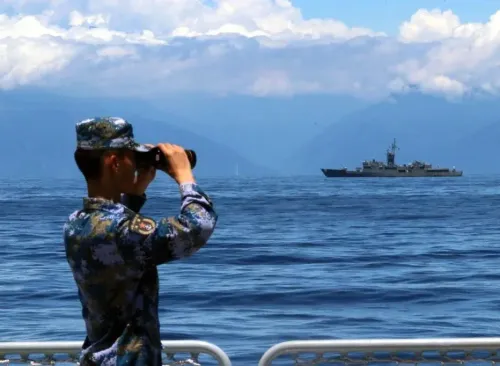
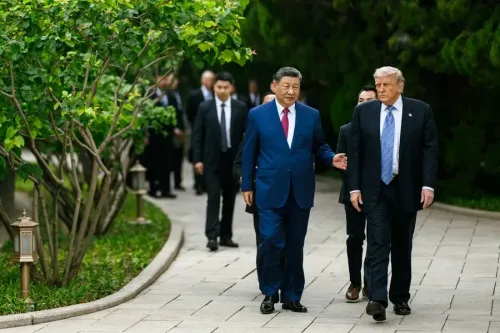
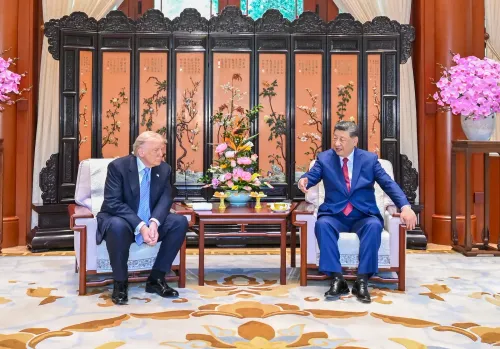
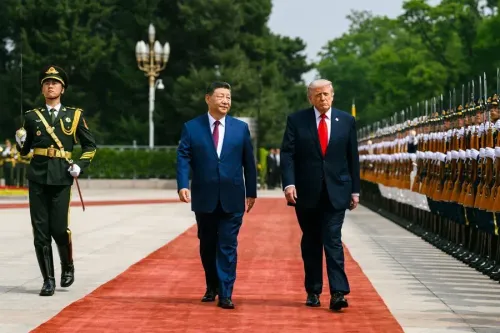
Taiwan has pressed the Trump administration to expedite delivery of a long-delayed $14 billion weapons package, warning that its capacity to deter Chinese aggression rests on maintaining military readiness. The appeal came on 28 September after a high-profile summit between President Donald Trump and Chinese President Xi Jinping in Washington yielded little public discussion on Taiwan's status.
Taiwan Sidelined at Trump-Xi Summit
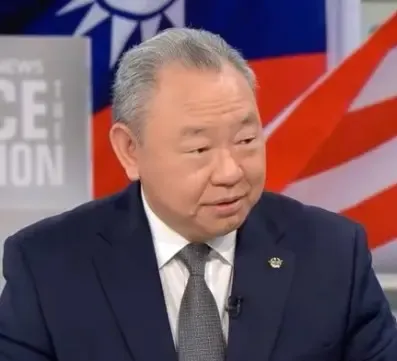
Alexander Yui, Taiwan's representative to the United States, said Taiwan was conspicuously absent from post-summit statements issued by both Washington and Beijing. Appearing on CBS's 'Face the Nation' on Sunday, Yui noted: 'It was not the main topic of discussion. As a matter of fact, during the released statements by both sides on the deliverables or the achievements, Taiwan does not figure in neither side of the papers.'
Trump acknowledged that Taiwan did come up during his talks with Xi but said the two leaders 'did not spend much time on the issue.' Beijing, for its part, described Taiwan as a 'foundational issue' in its relationship with Washington — a signal of how centrally it factors into China's strategic calculus even when it is not publicly foregrounded.
US Position Unchanged, Yui Says
Yui said the United States had reiterated its stance without modification despite Beijing's framing. 'The United States made it very clear that no change in position towards Taiwan,' he said. He also pointed to a meeting between Secretary of State Marco Rubio and the foreign ministers of Japan and South Korea ahead of Xi's visit, during which all three parties reportedly supported peace and stability across the Taiwan Strait and opposed coercion.
The Arms Backlog: What Is Holding It Up
The $14 billion weapons package has already been approved by Congress, and Taiwan has already paid for the arms, according to reports. Yet presidential sign-off has not materialised. Several Republican senators have also reportedly questioned why more than $1 billion in additional assistance remains undelivered.
US Ambassador to the United Nations Mike Waltz attributed the delays to strain on the American defence industrial base. 'There is a huge backlog of arms, and a lot of this is about our industrial base and being able to produce not only what they are requesting, but what the Europeans are requesting,' Waltz told a news network. He added that Washington must also account for US military requirements and competing international demands.
Waltz said the Trump administration had authorised more arms sales to Taiwan in its first year than the previous administration approved across its entire term, though he did not provide a timeline for presidential approval of the pending package.
Peace Through Strength: Taiwan's Argument
Yui framed the arms deal in deterrence terms, not provocative ones. 'This purchase or this sale actually is peace through strength — is the best way to avoid any conflict,' he said. 'The notion that China will not attack Taiwan is on the basis that Taiwan is strong.'
Taiwan is also reportedly increasing its own defence budget and seeking to shoulder a greater share of its security costs, with the United States remaining its principal weapons supplier. Yui further argued that Taiwan's strategic importance extends beyond geography, citing the island's dominance in advanced semiconductor production — chips that underpin artificial intelligence systems, servers, and critical global technology infrastructure.
The Broader Geopolitical Stakes
Taiwan governs itself as a de facto independent state, but Beijing claims the island as part of China and has not ruled out using force to assert control. The United States does not maintain formal diplomatic relations with Taipei but is legally committed under domestic law to helping Taiwan retain a credible self-defence capability. This comes amid a broader recalibration of US-China relations under the Trump administration, which has oscillated between economic confrontation and diplomatic engagement. How Washington resolves the arms delivery question will carry significant signal value for both Taipei and Beijing in the months ahead.
Point of View
But the combination of a stalled arms package, a warm summit, and no public reaffirmation of the US commitment creates exactly the ambiguity Beijing's strategists prefer. The defence-industrial-base explanation from Waltz is real but partial; political will determines sequencing, and no timeline has been offered. If the Trump administration is banking on a grand US-China deal that trades Taiwan concessions for economic wins, Taipei's public lobbying campaign suggests it is acutely aware of that risk — and is trying to foreclose it before the bargaining begins.
NationPress
28 Sept 2026
Frequently Asked Questions
What is the $14 billion arms deal Taiwan is pushing for?
It is a weapons package worth $14 billion that the US Congress has already approved and Taiwan has already paid for, but which is still awaiting presidential action from the Trump administration. Taiwan says the arms are essential to maintaining a credible deterrent against China.
Why has the arms delivery been delayed?
US Ambassador to the United Nations Mike Waltz attributed the delay to a backlog in the American defence industrial base, noting that the US must also meet requests from European allies and its own military. No presidential approval date for the $14 billion package has been given.
What happened with Taiwan at the Trump-Xi summit?
Taiwan's US representative Alexander Yui said the island did not appear in post-summit statements from either Washington or Beijing. President Trump confirmed Taiwan was discussed but said leaders did not spend much time on it.
Has the US changed its official position on Taiwan after the summit?
No. Yui said the United States reaffirmed that there was 'no change in position towards Taiwan' despite Beijing describing the island as a foundational issue in US-China relations.
Why does Taiwan's semiconductor industry matter to this debate?
Taiwan produces a large share of the world's most advanced semiconductors, which power artificial intelligence systems, servers, and critical technology infrastructure globally. Yui argued this makes Taiwan a strategically vital partner for the US beyond its military significance in the western Pacific.