Trump says Xi opposes Taiwan independence after China talks
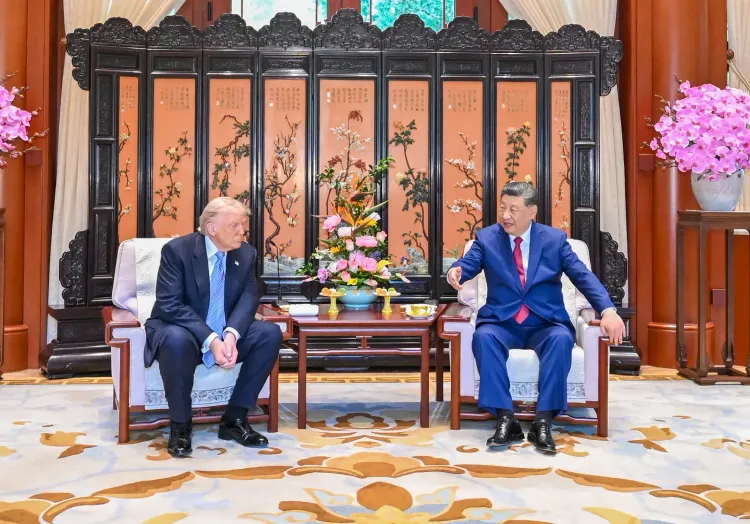
Synopsis
Trump's post-China debrief was anything but routine — he revealed Xi's direct warning against Taiwan independence, left U.S. military defence of Taiwan deliberately ambiguous, signalled a rethink on arms sales to Taipei, and cited a potentially record Boeing aircraft order. The simultaneous alignment on Iran and AI guardrails suggests a broader bilateral reset is underway, with Taiwan caught squarely in the middle.
Key Takeaways
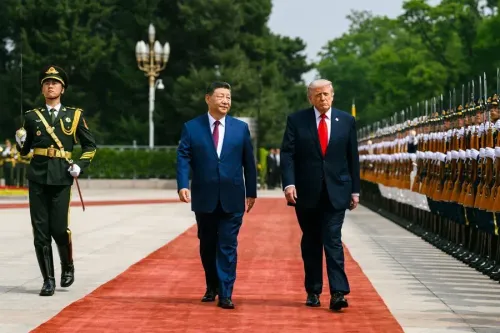
President Trump said Xi Jinping explicitly warned against any push for Taiwan independence during talks in China on 16 May .
Trump declined to confirm whether the U.S. would militarily defend Taiwan, saying only he knows the answer.
Trump's administration is reportedly reconsidering future arms sales to Taiwan .
Trump cited a major commercial deal including over 200 planes from Boeing , with a promise of 750 planes involving General Electric .
Xi reportedly expressed strong opposition to Iran acquiring nuclear weapons and backed reopening the Strait of Hormuz .
The two leaders discussed potential collaboration on AI guardrails for emerging technologies.
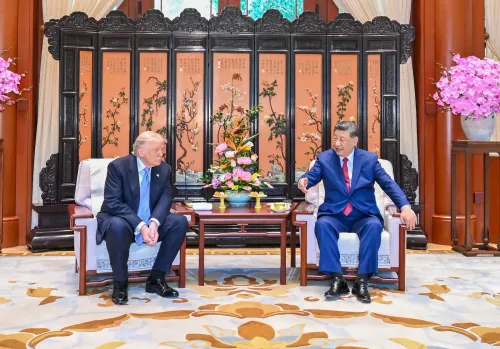
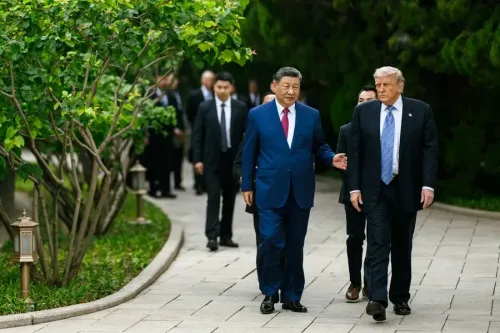
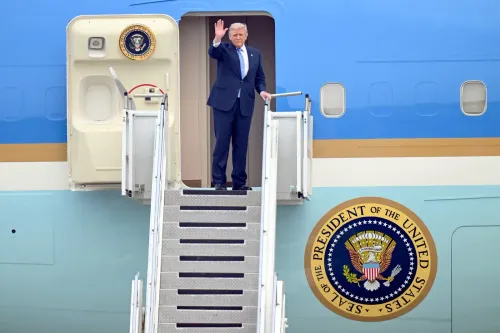
U.S. President Donald Trump said on Friday, 16 May that Chinese President Xi Jinping strongly opposes any move toward Taiwan independence, revealing that the two leaders reached what he described as a 'very good understanding' on Iran, trade, and artificial intelligence during his visit to China. Trump made the remarks to reporters aboard Air Force One while en route to Anchorage, Alaska.
What Trump Said About Taiwan
Trump confirmed that Taiwan emerged as a major subject during his discussions with Xi. According to Trump, Xi cautioned against any push for independence on the self-ruled island. 'He does not want to see a fight for independence because that would be a very strong confrontation,' Trump said, adding, 'I heard him out.'
Notably, Trump repeatedly declined to clarify whether Washington would militarily defend Taiwan in the event of a conflict with China. 'I don't want to say that,' he told reporters when pressed directly. 'There's only one person who knows that. You know who it is, me.' He also indicated his administration was reconsidering future arms sales to Taiwan, saying he would 'make a determination over the next fairly short period of time.'
Trade Deals and Boeing Aircraft Orders
Trump described the China visit as highly productive on the commercial front, claiming the two sides concluded major trade agreements. He specifically cited what he called a potentially record aircraft order involving Boeing and General Electric. 'We had a great stay. It was an amazing period of time,' Trump said. 'Got along, made a lot of great trade deals, including over 200 planes from Boeing, with a promise of 750 planes.'
This comes amid ongoing efforts by both governments to stabilise trade relations following years of tariff escalations and technology restrictions. Independent verification of the aircraft order figures was not immediately available.
Iran, Nuclear Weapons, and the Strait of Hormuz
Trump said Xi also expressed strong opposition to Iran acquiring nuclear weapons and favoured reopening the Strait of Hormuz, a critical global oil shipping route. 'He feels strongly they can't have a nuclear weapon,' Trump said. 'He wants them to open up the strait.'
Trump further claimed that Iran's military capabilities had been severely weakened following recent U.S. operations. 'We had a total military victory,' he said. 'We knocked out their entire Navy. We knocked out their entire Air Force.' He also said a ceasefire was agreed to partly 'as a favor to Pakistan,' referencing the country's field marshal and prime minister as 'terrific people.'
AI Guardrails and Broader Bilateral Agenda
On artificial intelligence, Trump said Washington and Beijing discussed the possibility of collaborating on 'guardrails' for emerging technologies. 'AI is fantastic,' he said. 'But it's also got some drawbacks.' The acknowledgement of shared AI governance interest marks a rare area of potential cooperation between the two powers amid broader strategic rivalry.
Trump additionally claimed that Xi praised his handling of the American economy and criticised former President Joe Biden, quoting Xi as saying: 'The U.S. was declining for the last four years... What President Trump has done in the last 15, 16 months has been virtually a miracle.' The claim could not be independently verified.
What Comes Next
The remarks raise significant questions about the future of U.S. policy on Taiwan — particularly on arms sales and the longstanding ambiguity around military defence commitments. Analysts will closely watch whether the commercial agreements cited by Trump translate into formal announcements, and whether the reported alignment on Iran and AI produces any concrete bilateral frameworks in the weeks ahead.
Point of View
But openly declining to confirm it after a Xi meeting sends a different signal entirely. The Boeing aircraft figures, unverified and potentially aspirational, follow a pattern of Trump announcing commercial wins before formal agreements are signed. What the meeting actually produced in writing, versus what was said on Air Force One, will matter far more in the weeks ahead.
NationPress
7 Oct 2026
Frequently Asked Questions
What did Xi Jinping tell Trump about Taiwan?
According to Trump, Xi Jinping warned against any push for Taiwan independence, saying it would lead to 'a very strong confrontation.' Trump said he heard Xi out but did not indicate he pushed back on the position.
Will the U.S. defend Taiwan militarily?
Trump repeatedly declined to answer directly when asked if Washington would defend Taiwan in a conflict with China. He said only he knows the answer, maintaining deliberate ambiguity on the long-standing U.S. policy question.
What trade deals did Trump announce after the China visit?
Trump claimed the visit produced major commercial agreements, including what he described as a potentially record aircraft order — over 200 planes from Boeing with a promise of 750 planes involving General Electric. Independent verification of these figures was not immediately available.
What did Trump and Xi agree on regarding Iran?
Trump said Xi expressed strong opposition to Iran acquiring nuclear weapons and favoured reopening the Strait of Hormuz. Trump also claimed a recent U.S. military operation had severely weakened Iran's naval and air capabilities.
What did Trump and Xi discuss on artificial intelligence?
The two leaders discussed the possibility of collaborating on 'guardrails' for emerging AI technologies, according to Trump. No formal framework or agreement was announced following the talks.