What Clarity Do US Lawmakers Seek on Taiwan from Trump Admin?
Synopsis
In a pivotal congressional hearing, US lawmakers are urging for a more defined stance from President Trump regarding Taiwan, amidst rising tensions with China. With national security at stake, the discourse centers on ensuring clarity and consistency in US policies for the self-ruled island's safety. This article dives into the critical discussions that could shape future relations.
Key Takeaways
US lawmakers are seeking clarity in Trump's Taiwan policy.
Concerns raised about the consistency of US approaches toward Taiwan.
The Taiwan Relations Act mandates US support for Taiwan's defense.
Escalating tensions between China and Taiwan are a significant issue.
Deterrence requires clarity and credibility in US policies.
Washington, Feb 12 (NationPress) US legislators are demanding increased clarity and consistency in President Donald Trump’s policies regarding Taiwan during a crucial congressional hearing focused on China's attempts to undermine the self-governed island.
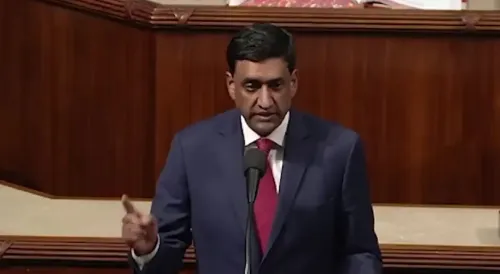
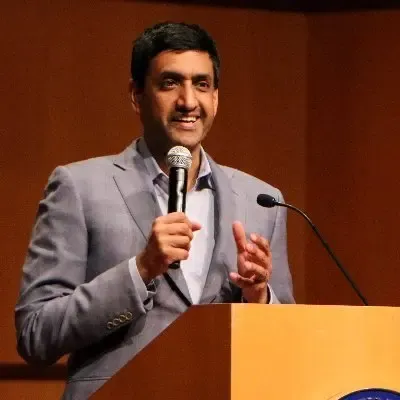
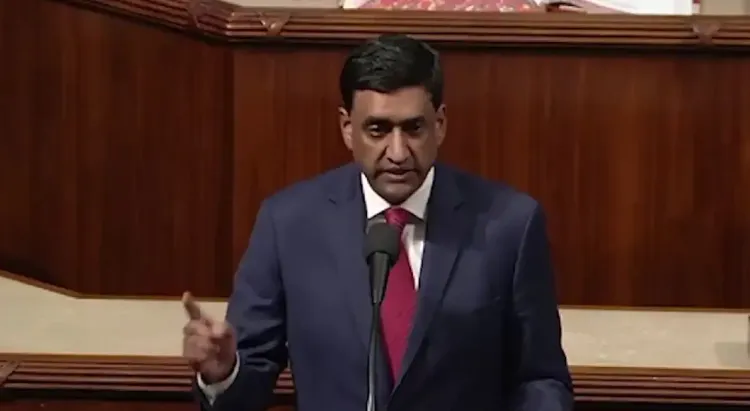
During a Select Committee hearing titled “Lies, Lawfare, and Leverage: The CCP’s Gaslighting and Manipulation to Marginalise Taiwan” on Wednesday (local time), Ranking Member Ro Khanna interrogated witnesses about whether the administration's strategy was sufficiently robust and predictable to deter Beijing.
“Do you have concerns regarding President Trump’s policy in his second term in terms of being clear and consistent enough to ensure Taiwan's security?” Khanna queried Shriley Kan, a founding member of the Advisory Board of the Global Taiwan Institute.
Kan responded, “There has been ongoing concern regarding the unpredictability of his policy on a daily basis. Whether the disruptions are beneficial or not raises the question: is he a statesman? A peacemaker? Or a madman? It is crucial to reiterate that the Taiwan Relations Act does not allow the president to unilaterally decide on matters of coercion or use of force.”
Khanna continued to probe, asking if the president should adopt a firmer stance in certain areas.
“Regarding strength, I disagree with the concept of packaging. We should not be discussing packages of arms sales. The eight different programs totaling $11 billion in arms sales to Taiwan should not have occurred,” Kan expressed.
Khanna also sought insights from Dr. Mira Rapp-Hooper, a Partner at The Asia Group.
“Do you feel President Trump has been consistent and clear enough to guarantee Taiwan's security during his second term?” he asked.
Rapp-Hooper replied, “It would benefit the United States to clarify its policy towards Taiwan with a definitive statement outlining that policy's elements.”
Julian Ku, the Maurice A. Deane Distinguished Professor of Constitutional Law at Hofstra University, proposed measures to strengthen deterrence.
“A rhetorical campaign affirming from the president himself that he is committed to maintaining peaceful stability across the Taiwan Strait and deterring any conflict would be beneficial,” he stated.
He added, “This administration has improved slightly in this regard, but the president's statements matter significantly. I would prefer he reaffirm that the ‘One China’ policy is indeed the United States' position, just as he did in his first term.”
Other Democratic representatives echoed these sentiments.
Congressman Seth Moulton emphasized the high stakes, stating, “What we discuss is deterrence—preventing a conflict that could lead not only to Taiwan losing its freedom and independence, costing millions of lives, but potentially leading to American casualties numbering in the hundreds of thousands or millions—a conflict that could escalate into World War III.”
He added, “I hope we can unite in a sincere, transparent, and bipartisan manner to bolster our deterrence posture towards China and strengthen the alliance between Taiwan and the United States.”
Congresswoman Kathy Castor criticized what she deemed mixed signals sent to allies, remarking, “In response, President Trump told her to cease provoking China. What message does that send to an ally like Japan?”
She later stated, “Clearly, when Trump urges ‘stop provoking China,’ it only serves to embolden Xi Jinping.”
Congresswoman Jill Tokuda underscored the importance that “Taiwan must not be treated as a mere bargaining chip in trade negotiations. Congress must take decisive action to reject the notion that Taiwan is on the negotiation table.”
Congressman Greg Stanton articulated, “Deterrence is not solely reliant on weaponry. It also hinges on clarity, consistency, and credibility in U.S. policy towards Taiwan. The PRC is observing every signal we emit.”
He expressed disappointment when Trump suggested Taiwan's status was “ultimately up to Xi Jinping,” criticizing the so-called “Donroe Doctrine” as “fueling speculation… implying that the United States seeks to dominate the Western Hemisphere while allowing the PRC to consolidate power in East Asia.”
“I hope this Committee can achieve bipartisan support in demanding more clarity in this administration’s policies to ensure Taiwan's security,” Khanna concluded.
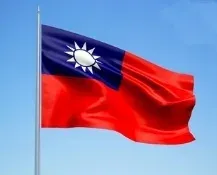
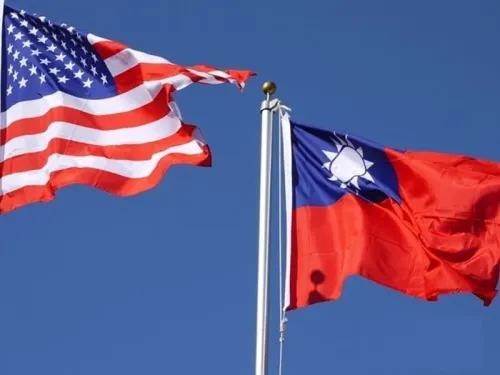
According to the Taiwan Relations Act of 1979, the United States maintains informal relations with Taiwan and is obligated to provide defensive arms. Washington officially recognizes Beijing under its “One China” policy but opposes any unilateral alterations to the status quo.
Tensions across the Taiwan Strait have escalated in recent years as China has increased military and diplomatic pressure on the island.
Point of View
It is essential to recognize the gravity of the situation. The tensions surrounding Taiwan are not just regional; they have global ramifications. The call for clarity from US lawmakers reflects a unified concern for national security and regional stability. It is imperative that the administration addresses these issues decisively to maintain peace and deter aggression.
NationPress
7 Oct 2026
Frequently Asked Questions
What is the Taiwan Relations Act?
The Taiwan Relations Act of 1979 establishes the unofficial relationship between the US and Taiwan, obligating the US to provide defensive arms to Taiwan.
Why are US lawmakers concerned about Taiwan?
Lawmakers are concerned about the need for a clear and consistent US policy on Taiwan to deter potential aggression from China and ensure Taiwan's security.
What role does President Trump play in Taiwan relations?
President Trump’s approach and statements regarding Taiwan are pivotal as they influence US policy and relations with both Taiwan and China.
How has China been pressuring Taiwan?
China has increased military and diplomatic pressures on Taiwan, which has raised tensions across the Taiwan Strait in recent years.
What implications could arise from unclear US policies on Taiwan?
Unclear US policies could embolden China, jeopardize Taiwan's security, and potentially lead to military conflict in the region.