Will Xi Take Action on Taiwan While Trump is in Office?
Synopsis
In a recent interview, President Trump asserts that Chinese President Xi Jinping will not act against Taiwan during his presidency, attributing this to American military strength and personal deterrence. Trump emphasizes strategic energy control and discusses future nuclear negotiations with China, painting a picture of US dominance on the global stage.
Key Takeaways
Trump asserts Xi won't act against Taiwan .
US military strength is a key deterrent .
Energy control is a strategic lever against China .
Potential for future nuclear negotiations with China .
International outcomes shaped by power dynamics .
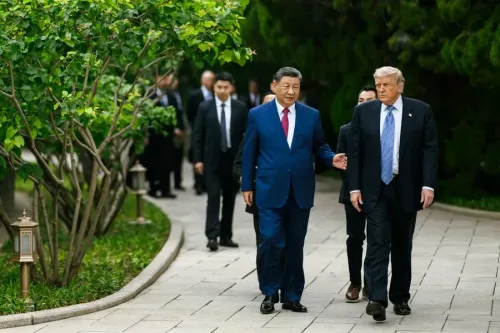
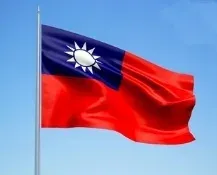
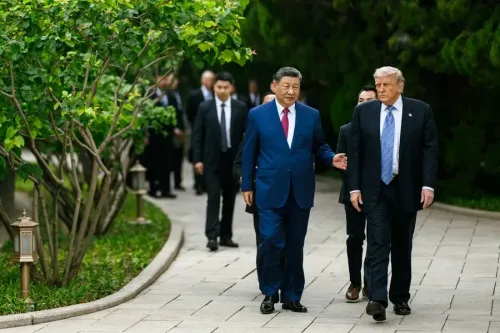
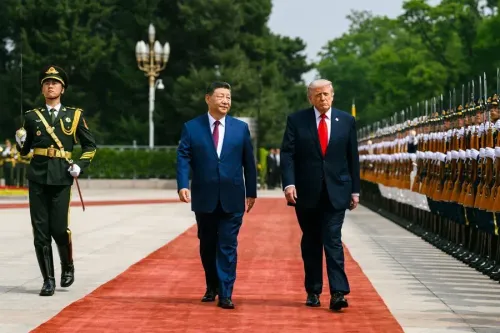
Washington, Jan 12 (NationPress) US President Donald Trump stated that Chinese President Xi Jinping will refrain from taking action against Taiwan during his presidency, claiming that personal deterrence, the strength of the American military, and economic influence are keeping Beijing in check.
Trump shared these insights in an interview with The New York Times, the transcript of which was published on Sunday.
“I don’t believe he will take action with me in office,” Trump remarked when questioned if China might apply the same reasoning used in Venezuela towards Taiwan.
While acknowledging that Xi views Taiwan as an integral part of China, referring to it as a “source of pride” for the Chinese leader, Trump maintained that he has communicated his strong disapproval of any aggressive moves. “I have made it clear to him that I would be quite displeased if he did that,” he noted, adding that any potential actions might be more likely “once we have a different president.”
Trump dismissed claims that US actions in other regions could set a precedent, arguing that China is not facing the same types of pressures he cited to rationalize American interventions. “You don’t have people streaming into China. You don’t have drugs flooding into China,” he pointed out, contrasting with the threats he believes the US encounters.
Throughout the interview, Trump consistently framed deterrence as a matter of power and leadership rather than through international organizations, asserting that China and Russia are unconcerned about NATO “aside from us.” He credited the resurgence of American influence to US military spending during his tenure, stating, “We’re greatly feared due to the fact that I enhanced the military.”
Furthermore, the president connected China to impending nuclear arms control discussions, expressing his belief that Beijing could be involved in future negotiations even as the existing US-Russia agreement nears its end. Trump reported having direct conversations with Xi regarding nuclear limitations, feeling that China “would be open to participating” in a broader agreement.
“If it expires, it expires,” Trump remarked about the current treaty, adding that he would prefer “a new and improved agreement.” He acknowledged that China has publicly resisted participating in such discussions but insisted, “China hasn’t really made any definitive statements about it” and maintained that Beijing could be part of a future deal.
Trump characterized energy as a strategic tool against China, claiming that US control over supply routes grants Washington significant economic power. He asserted that China could acquire oil “only from us or in the United States,” framing control over energy resources as an extension of American strength.
When responding to inquiries, Trump noted that outcomes on the global stage are determined by force, leverage, and leadership. “My own morals. My own mindset. That’s the only thing that can limit my actions,” he stated when asked what restrains his international decisions.
He suggested that China comprehends this dynamic. “He was impressed,” Trump said regarding Xi's reaction to recent US military activities, insisting that personal relationships and strength—not just treaties—are what prevent escalation.
Point of View
Our responsibility is to provide a comprehensive analysis of actions taken by influential leaders like President Trump. His assertions regarding China's intentions towards Taiwan and nuclear negotiations reveal the complex dynamics of international politics. Our commitment is to present unbiased information, ensuring readers understand the implications for national and global security.
NationPress
20 Sept 2026
Frequently Asked Questions
What did Trump say about Xi and Taiwan?
Trump stated that Xi will not take action against Taiwan during his presidency, citing personal deterrence and American military strength as key factors.
How does Trump view US military power?
Trump believes that the strength of the US military under his leadership has restored American influence and contributed to global deterrence.
What role does energy play in US-China relations?
Trump argues that US dominance in energy supply routes gives Washington significant economic leverage over China.
Is China willing to negotiate nuclear arms control?
Trump expressed confidence that China would be a willing participant in future nuclear negotiations, despite their public resistance.
What are Trump's views on international relations?
Trump emphasizes that outcomes on the world stage are determined by force, leverage, and leadership rather than solely by treaties.