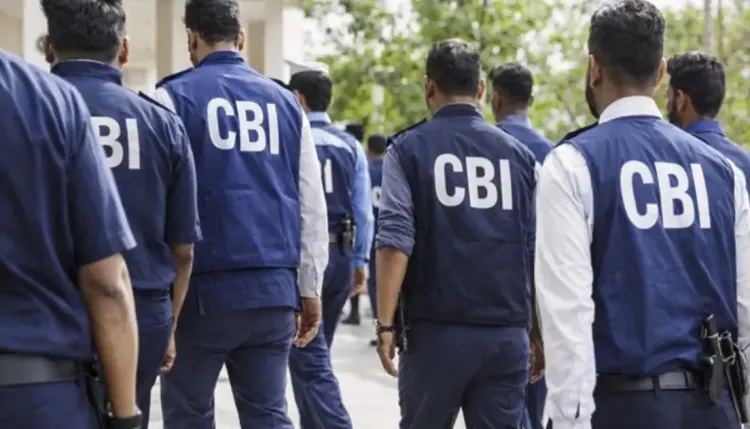
CBI court jails man 3 years for double ₹5 lakh car loan fraud in Kolhapur
Synopsis
A Kolhapur court has convicted a man who conspired with bank officials to take a ₹5 lakh car loan twice for the same vehicle — a case the CBI first registered in 2011. The over-a-decade journey to conviction highlights both the persistence of collusive banking fraud and the slow grind of India's financial crime justice system.
Key Takeaways
A Special CBI Court in Kolhapur sentenced Yasin K Shaikh to 3 years' Rigorous Imprisonment and a fine of ₹14,000 .
Shaikh fraudulently obtained a second ₹5 lakh 'Canmobile' loan from Canara Bank for a car he already owned, using forged documents.
The CBI registered the original case on 29 December 2011 based on a complaint from Canara Bank .
In a separate case, Kokku Gopinath , Inspector of Posts in Wanaparthy, Telangana , was arrested for accepting a bribe of ₹30,000 .
The Telangana case involves alleged extortion of ₹1.30 lakh and withholding of substitute salary dues from the complainant.
A Special CBI Court in Kolhapur, Maharashtra, on Monday sentenced Yasin K Shaikh to three years' Rigorous Imprisonment (RI) for conspiring with bank officials to fraudulently obtain a second car loan of ₹5 lakh for a vehicle he already owned. The court also imposed a fine of ₹14,000 in the bank fraud case, according to officials.
How the Fraud Was Carried Out
Shaikh allegedly presented false and forged documents to Canara Bank and concealed the fact that a loan had already been sanctioned for the purchase of the same vehicle. The fraudulent scheme involved availing a 'Canmobile' loan of ₹5 lakh — essentially securing financing twice for a car he already possessed.
The Central Bureau of Investigation (CBI) noted that the loan was sanctioned beyond the delegated financial powers of the public servants involved and in gross violation of bank guidelines. The accused had allegedly acted in conspiracy with bank officers to facilitate the fraudulent disbursal.
CBI Registration and Investigation
The CBI had registered the case on 29 December 2011, following a formal complaint from Canara Bank. The investigation established that Shaikh had suppressed material facts during the loan application process, enabling him to draw funds against an asset already financed.
Notably, this case took over a decade to reach sentencing — a timeline that reflects the broader challenge of prosecuting white-collar banking fraud through India's judicial system. The conviction, however, signals that such collusive fraud between borrowers and bank officials does not go unpunished.
Separate CBI Action: Telangana Postal Official Arrested for Bribery
In an unrelated case, the CBI arrested Kokku Gopinath, Inspector of Posts with the Wanaparthy Division in Telangana, for demanding and accepting a bribe of ₹30,000.
The CBI had registered the case on 7 May against Gopinath and unknown others for allegedly extorting ₹1.30 lakh from a complainant and for demanding a further bribe of ₹30,000 to release substitute salary dues owed to the complainant. Investigators laid a trap and caught Gopinath red-handed while accepting the bribe amount.
What These Cases Signal
Both cases underline the CBI's ongoing efforts to prosecute financial misconduct and corruption involving public servants and bank officials. The Kolhapur conviction in particular reinforces that collusive bank fraud — even involving relatively modest sums — can attract rigorous custodial sentences. With the Telangana arrest still at an early stage, further developments in that case are expected in the coming weeks.
Point of View
Precisely because the paper trail is deliberately obscured. That this case took over a decade from registration to sentencing is less a triumph than a cautionary note about India's financial crime adjudication timelines. The Telangana bribery arrest, meanwhile, points to a persistent structural problem: postal and public-service officials using salary disbursement as leverage for extortion. Both cases together suggest the CBI's enforcement net is wide, but the question of deterrence hinges on how quickly such convictions follow the crime.
NationPress
23 Sept 2026
Frequently Asked Questions
What did Yasin K Shaikh do to defraud Canara Bank?
Shaikh allegedly presented false and forged documents to obtain a second ₹5 lakh 'Canmobile' car loan from Canara Bank for a vehicle he already owned and had previously taken a loan for. He concealed the earlier loan sanction and conspired with bank officials to secure the fraudulent disbursal.
What sentence did the Kolhapur CBI court hand down?
The Special CBI Court in Kolhapur sentenced Shaikh to three years' Rigorous Imprisonment along with a fine of ₹14,000 in the bank fraud case.
When did the CBI register the Canara Bank fraud case?
The CBI registered the case on 29 December 2011, following a formal complaint from Canara Bank about the fraudulent loan obtained by Shaikh.
Who is Kokku Gopinath and why was he arrested?
Kokku Gopinath is an Inspector of Posts with the Wanaparthy Division in Telangana. He was arrested by the CBI after being caught red-handed accepting a bribe of ₹30,000, which he had demanded in exchange for releasing substitute salary dues owed to a complainant.
How much was allegedly extorted in the Telangana postal bribery case?
The CBI registered the case on 7 May, alleging that Gopinath and unknown others extorted a total of ₹1.30 lakh from the complainant and further demanded ₹30,000 as a bribe to release the complainant's substitute salary.