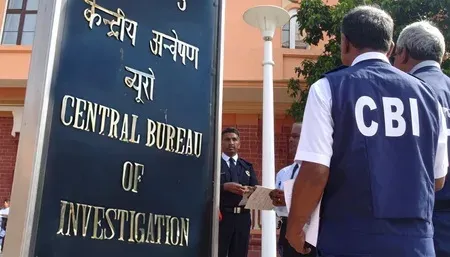
CBI court jails ex-Central Bank official, aide for Jammu home loan fraud
Synopsis
Two CBI special courts — in Jammu and Chennai — delivered convictions on the same day against former Central Bank of India branch managers and their private associates for housing loan fraud. The Chennai case alone caused losses of over ₹5.29 crore through 28 fake loans disbursed in 2006–07. Both cases took over 15 years from registration to verdict, spotlighting India's slow-burn financial fraud justice cycle.
Key Takeaways
A Special CBI Court in Jammu sentenced Rajinder Koul (ex-Senior Manager, Central Bank of India) and Sham Sunder Aggarwal to one year imprisonment each with a fine of ₹20,000 each for housing loan fraud.
Loans at the Talab Tillo Branch, Jammu were disbursed using fake and forged documents; the CBI chargesheet was filed on 22 September 2007 .
A Special CBI Court in Chennai sentenced Deepak V.
Sivaganesan to seven years of rigorous imprisonment each for a separate home loan fraud.
The Chennai fraud involved 28 housing loans sanctioned on forged documents between 2006 and 2007 , causing a loss of more than ₹5.29 crore to Central Bank of India.
Sree Sasthru Associates Kadanthetti Pvt Ltd was also fined ₹26,000 in the Chennai case.
Both cases took more than 15 years from CBI registration to final conviction.
A Special CBI Court in Jammu on Tuesday, 30 June sentenced a dismissed senior manager of Central Bank of India and a private individual to one year imprisonment each, along with a fine of ₹20,000 each, in a housing loan fraud case involving forged documents. The verdict closes a case that had been under trial since a chargesheet was filed in September 2007.
The Jammu Case: Fake Documents, Real Losses
Rajinder Koul, formerly a Senior Manager at Central Bank of India's Talab Tillo Branch in Jammu — and since dismissed from service — along with private individual Sham Sunder Aggarwal were convicted for irregularities in the disbursement of housing loans. According to the Central Bureau of Investigation (CBI), loans were sanctioned to applicants on the basis of fake and forged documents during Koul's posting at the branch. The CBI had registered the case following a complaint from Koul's seniors and filed a chargesheet on 22 September 2007. The court convicted both accused on Monday before pronouncing the sentence on Tuesday.
Separate Chennai Verdict: Seven Years for Two Accused
In a related but distinct case, a Special CBI Court in Chennai handed down significantly harsher sentences on the same day. Deepak V. Menon, then Senior Manager of Central Bank of India's Triplicane branch in Chennai, was sentenced to seven years of rigorous imprisonment and fined ₹65,000. B. Sivaganesan, Chief Managing Director of Sree Sasthru Associates Kadanthetti Pvt Ltd, received an identical seven-year sentence and was fined ₹1.17 lakh. The company itself was additionally fined ₹26,000.
The Chennai fraud involved the fraudulent sanctioning and disbursement of 28 housing loans between 2006 and 2007, based on forged and fabricated documents, resulting in a loss of more than ₹5.29 crore to Central Bank of India. The CBI had registered this case on 29 April 2009 after a complaint from the bank.
Pattern of Bank Fraud in Public Sector Lending
The twin verdicts arrive amid sustained CBI scrutiny of housing loan irregularities in public sector banks — a segment historically vulnerable to document forgery and collusion between branch-level officials and private intermediaries. Notably, both cases involve the same institution, Central Bank of India, and span a similar period of loan disbursement (2006–2007), suggesting systemic lapses at the branch level during that era.
The gap between case registration (2007 and 2009 respectively) and conviction (2025) also underscores the prolonged timelines typical of financial fraud trials in India, even under dedicated special courts.
What Happens Next
Both convicts in the Jammu case and the Chennai accused retain the right to appeal in higher courts. The CBI has not yet indicated whether additional accused in either case remain under investigation. The fines imposed, particularly in the Chennai case, are relatively modest compared to the ₹5.29 crore loss established by the court — a detail that critics of financial fraud sentencing norms are likely to flag.
Point of View
When it arrives, arrives slowly. Both cases took well over 15 years from registration to conviction, a timeline that blunts deterrence. The Chennai court's fine of ₹1.17 lakh on an individual whose fraud caused ₹5.29 crore in losses also raises a legitimate question about whether sentencing norms in bank fraud cases are calibrated to the scale of harm. Special CBI courts were created to accelerate such trials; the gap between intent and outcome deserves legislative attention.
NationPress
29 Sept 2026
Frequently Asked Questions
What is the Jammu Central Bank of India housing loan fraud case?
The case involves Rajinder Koul , a former Senior Manager at Central Bank of India's Talab Tillo Branch in Jammu, who allegedly disbursed housing loans using fake and forged documents. The CBI filed a chargesheet in September 2007, and a Special CBI Court convicted and sentenced him to one year imprisonment with a ₹20,000 fine on 30 June.
Who was convicted in the Chennai housing loan fraud case?
Deepak V. Menon , former Senior Manager of Central Bank of India's Triplicane branch, and B. Sivaganesan , Chief Managing Director of Sree Sasthru Associates Kadanthetti Pvt Ltd, were each sentenced to seven years of rigorous imprisonment. The company was separately fined ₹26,000.
How much did the Chennai housing loan fraud cost Central Bank of India?
The fraudulent sanctioning and disbursement of 28 housing loans between 2006 and 2007 caused a loss of more than ₹5.29 crore to Central Bank of India, according to the CBI.
When did the CBI register the Chennai bank fraud case?
The CBI registered the Chennai case on 29 April 2009 , following a complaint from Central Bank of India alleging that 28 housing loans were fraudulently sanctioned on the basis of forged and fabricated documents.
Can the convicted officials appeal the CBI court verdicts?
Yes. Convicts in both the Jammu and Chennai cases retain the right to appeal before higher courts. Neither the CBI nor the accused have publicly indicated their next legal steps as of the date of sentencing.