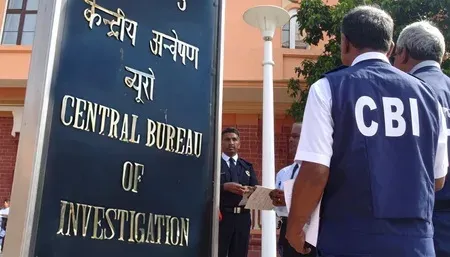
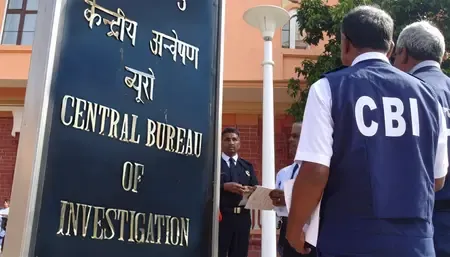
Chennai CBI court jails 3 for five years in ₹1.24 crore bank fraud case

Synopsis
A Chennai CBI court has jailed three people for five years each in a ₹1.24 crore fraud that used fictitious employees to siphon personal loans from SBI — a case registered in 2008 that took over 16 years to reach a verdict. The conviction is a rare closure in India's long-pending bank fraud docket.
Key Takeaways
A special CBI court in Chennai convicted Palpap Ichinichi Software International Ltd. and three individuals in a ₹1.24 crore bank fraud case on 23 May 2025 .
Senthil Kumar (MD & CEO), P.A.
Thanjai Chezian were each sentenced to five years of rigorous imprisonment .
The three convicts were collectively fined ₹11.7 lakh ; the company was separately fined ₹1.2 lakh .
Fraud involved fictitious employees used to obtain personal loans under SBI's Express Credit Scheme .
The case was registered by the CBI on 14 November 2008 — over 16 years before the verdict.
A fourth accused, G.
Vaidyanathan , died during trial; charges against him were abated by the court.
A special Central Bureau of Investigation (CBI) court in Chennai has convicted a private software firm, its top executive, and two individuals in a ₹1.24 crore bank fraud case involving fictitious employees and fraudulent personal loans. The verdict, delivered on Friday, 23 May 2025, brings to a close a case that was first registered more than 16 years ago.
The Convictions and Sentences
The court found three individuals guilty and sentenced each to five years of rigorous imprisonment. The convicted persons are P. Senthil Kumar, Managing Director and CEO of Palpap Ichinichi Software International Ltd., and private individuals P.A. Sasi Kumar and P. Thanjai Chezian. The trio was also collectively fined ₹11.7 lakh. The convicted company, M/s Palpap Ichinichi Software International Ltd., was separately fined ₹1.2 lakh.
How the Fraud Was Carried Out
According to investigators, the accused entered into a criminal conspiracy to fraudulently obtain personal loans under the State Bank of India's (SBI) Express Credit Scheme. Loans were allegedly sanctioned in the names of fictitious employees purportedly on the rolls of Palpap Ichinichi Software International Ltd., causing a wrongful loss of approximately ₹1.24 crore to the bank. The CBI registered the case on 14 November 2008, following a complaint filed by SBI's Chennai branch.
Timeline of the Case
The CBI filed its charge sheet on 11 December 2009, naming the company, its MD and CEO Senthil Kumar, and three private individuals — including G. Vaidyanathan, who passed away during the trial. Following his death, the court abated the charges against Vaidyanathan. The remaining accused faced trial, and after examination of evidence and hearing of arguments, the court pronounced its verdict convicting them.
Significance of the Verdict
This case is part of a broader pattern of CBI prosecutions targeting loan fraud schemes that exploited public sector banks through fictitious borrower identities. Notably, the Express Credit Scheme, designed to offer quick personal loans to salaried employees, was a recurring target for such conspiracies in the late 2000s. The conviction, while involving a relatively modest sum, underscores the CBI's sustained pursuit of long-pending bank fraud trials. With Indian courts and enforcement agencies under growing pressure to deliver timely verdicts in financial crime cases, this closure — over 16 years after registration — also reflects the systemic delays that continue to dog such prosecutions.
The sentenced convicts are expected to pursue legal remedies before higher courts, though no appeal had been formally reported as of the time of the verdict.
Point of View
But the mechanism — fictitious employees, a trusted quick-loan scheme, and insider-adjacent access — is a template that has been replicated at far larger scale. The real question this verdict raises is not whether three individuals are now in jail, but why it took the system this long to get there, and how many similar cases remain pending. Faster trial timelines in CBI courts are not a procedural luxury; they are a deterrent.
NationPress
27 Sept 2026
Frequently Asked Questions
Who was convicted by the Chennai CBI court in the bank fraud case?
The court convicted P. Senthil Kumar , Managing Director and CEO of Palpap Ichinichi Software International Ltd., along with private individuals P.A. Sasi Kumar and P. Thanjai Chezian . The company itself was also convicted and separately fined.
What was the sentence handed down by the CBI court?
Each of the three convicted individuals was sentenced to five years of rigorous imprisonment. They were also collectively fined ₹11.7 lakh, while the company was fined ₹1.2 lakh.
How was the ₹1.24 crore bank fraud carried out?
According to investigators, the accused conspired to obtain personal loans under SBI's Express Credit Scheme by submitting applications in the names of fictitious employees allegedly on the payroll of Palpap Ichinichi Software International Ltd., causing a wrongful loss of approximately ₹1.24 crore to the bank.
When was the CBI case first registered?
The CBI registered the case on 14 November 2008, following a complaint by the State Bank of India's Chennai branch. The charge sheet was filed on 11 December 2009, and the verdict came over 16 years later in May 2025.
What happened to the fourth accused, G. Vaidyanathan?
G. Vaidyanathan, who was named in the original charge sheet, passed away during the course of the trial. The court subsequently abated the charges against him, meaning the proceedings against him were formally dropped following his death.