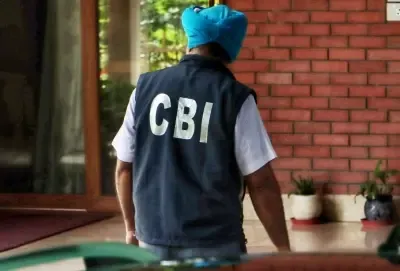
CBI court jails 11 in ₹7.91 crore Canara Bank fraud, two ex-officials convicted

Synopsis
A Special CBI court in Shimla has sentenced 11 people — including two former Canara Bank branch officials — to four years of rigorous imprisonment for a ₹7.91 crore fraud involving forged documents and unrealised foreign bills of exchange. The case, registered in 2012, took over 14 years to reach sentencing, spotlighting the slow pace of financial crime justice even when convictions are won.
Key Takeaways
A Special CBI court in Shimla sentenced 11 convicts to four years of rigorous imprisonment on 14 October 2026 .
Two former Canara Bank officials — D.S.S.
Ravindra (then Chief Manager) and C.S.
Verma (then Officer) at the Baddi branch — were among those convicted.
The fraud involved a ₹7 crore working capital loan, a ₹91 lakh term loan, and ₹4.87 crore in unrealised foreign bills of exchange.
A total fine of ₹19.75 lakh was imposed on all convicts, including M/s Colour Camp Industries and eight private individuals.
The case was registered on 8 May 2012 ; convictions were handed down on 30 September 2026 — more than 14 years after registration.
A Special CBI court in Shimla on Wednesday, 14 October 2026, sentenced 11 convicts — including two former Canara Bank officials and a private company — to four years of rigorous imprisonment in a bank fraud case involving allegedly fraudulent loans worth ₹7.91 crore. The court additionally imposed a cumulative fine of ₹19.75 lakh on all convicts, bringing a case registered more than 14 years ago to its legal conclusion.
The Two Bank Officials Convicted
The two public servants found guilty are D.S.S. Ravindra, then Chief Manager, and C.S. Verma, then Officer — both posted at Canara Bank's Baddi branch in Solan district, Himachal Pradesh at the time of the alleged offence. Their conviction underscores the Central Bureau of Investigation's (CBI) sustained focus on insider complicity in banking fraud.
How the Alleged Fraud Was Carried Out
According to the CBI, the accused allegedly entered into a criminal conspiracy between October 2008 and March 2009 to cheat the Baddi branch by using forged documents to secure loans. A working capital loan of ₹7 crore and a term loan of ₹91 lakh were sanctioned and disbursed in favour of M/s Colour Camp Industries Private Limited. The agency further alleged that foreign bills of exchange worth ₹4.87 crore, discounted by the bank for the company, were never realised from the importers, compounding losses to the lender.
All 11 Accused Named
The eight private individuals convicted alongside the company are Rakesh Narula, Sonal Narula, Sanjeev Bahal, Harbhajan Singh, Sukhdev Singh, Piara Singh, Suman Narula, and Sunil Kumar Goel. The case was originally registered on 8 May 2012 against the two bank officials, Rakesh Narula, M/s Colour Camp Industries, and other unknown persons.
Trial Timeline and Verdict
Following the investigation, the CBI filed a charge sheet before the Special Judge, CBI, Shimla. The court convicted all 11 accused on 30 September 2026 and pronounced the sentence on 14 October 2026. The gap of over 14 years between case registration and sentencing reflects the protracted nature of financial crime trials in India — a pattern that critics argue weakens deterrence even when convictions are ultimately secured.
Broader Context: Banking Fraud and Accountability
This verdict comes amid heightened regulatory and judicial scrutiny of bank fraud in India, with the CBI handling hundreds of cases involving alleged insider-borrower nexuses at public sector banks. The conviction of serving or former bank officials remains relatively rare, making this outcome notable. The involvement of forged documents and unrealised foreign bills of exchange mirrors the modus operandi seen in several other mid-sized fraud cases at public sector bank branches across the country.
Point of View
Leaving the insider-nexus angle legally unresolved. That the CBI secured guilty verdicts on both sides of the fraud equation matters for deterrence, even if the 14-year timeline from registration to sentencing blunts that message. The ₹7.91 crore involved is modest by the scale of headline bank frauds, but mid-tier branch-level fraud cumulatively represents a significant drain on public sector banks. The question is whether faster trials — not just eventual convictions — can change the risk calculus for would-be fraudsters inside the banking system.
NationPress
14 Oct 2026
Frequently Asked Questions
What is the Canara Bank fraud case for which 11 people were sentenced in Shimla?
It is a case in which 11 accused — including two former Canara Bank officials and a private company — allegedly conspired between October 2008 and March 2009 to fraudulently obtain loans worth ₹7.91 crore from Canara Bank's Baddi branch in Himachal Pradesh using forged documents. The CBI registered the case on 8 May 2012 and filed a charge sheet before the Special Judge, CBI, Shimla.
Who are the former Canara Bank officials convicted in the case?
The two convicted bank officials are D.S.S. Ravindra, then Chief Manager, and C.S. Verma, then Officer, both posted at Canara Bank's Baddi branch in Solan district, Himachal Pradesh at the time of the alleged fraud.
What sentence did the CBI court hand down?
The Special CBI court in Shimla sentenced all 11 convicts to four years of rigorous imprisonment on 14 October 2026. The court also imposed a total fine of ₹19.75 lakh on the convicts, which include the company M/s Colour Camp Industries, two public servants, and eight private individuals.
How did the alleged fraud take place?
According to the CBI, the accused allegedly used forged documents to secure a ₹7 crore working capital loan and a ₹91 lakh term loan in favour of M/s Colour Camp Industries Private Limited. Additionally, foreign bills of exchange worth ₹4.87 crore discounted by the bank were allegedly never realised from importers, causing further losses.
Why did the case take more than 14 years to conclude?
The case was registered in May 2012 and convictions were pronounced in September 2026 — a span of over 14 years — reflecting the lengthy nature of financial crime trials in India, which involve complex documentary evidence, multiple accused, and prolonged judicial proceedings. Critics argue such delays reduce the deterrent effect of eventual convictions.