Nepal PM Shah snubs India's Vikram Misri, US envoy in protocol row
Synopsis
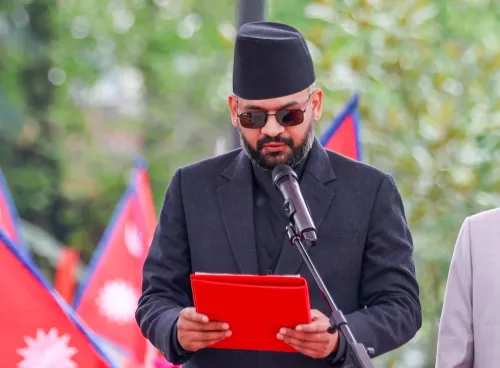
Nepal PM Balendra Shah's blanket refusal to meet India's Foreign Secretary Vikram Misri — who was reportedly coming to deliver a personal invitation from PM Modi — and US envoy Sergio Gor has ignited a domestic debate in Kathmandu. Critics warn his 'equal stature' protocol, however principled, risks alienating Nepal's closest and most powerful partners at a diplomatically delicate moment.
Key Takeaways
Nepal PM Balendra Shah declined to meet India's Foreign Secretary Vikram Misri , leading to the cancellation of Misri's planned two-day visit to Kathmandu .
Misri was reportedly carrying a personal invitation from PM Narendra Modi for Shah to visit New Delhi .
Shah also refused to meet US envoy Sergio Gor , who instead held meetings with Nepal's Foreign Minister and Finance Minister .
Shah's press aide cited a "too tight" schedule; analysts say he is deliberately avoiding officials below head-of-state or ministerial rank.
The dispute is partly linked to the Lipulekh-Kalapani-Limpiyadhura territorial row rooted in the 1816 Sugauli Treaty .
The Kathmandu Post editorial warned Shah not to let Nepal's "close friends feel offended" while pursuing a sovereignty-first protocol.
Nepal's Prime Minister Balendra Shah has deliberately declined to meet India's Foreign Secretary Vikram Misri and United States envoy Sergio Gor on separate occasions, triggering a sharp debate in Kathmandu over sovereignty, diplomatic protocol, and the risks of straining ties with two of the country's most consequential partners, according to reports.
The Misri Visit Cancellation
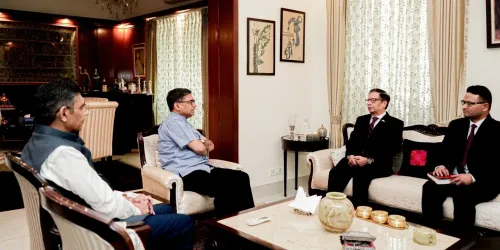
Misri's planned two-day visit to Kathmandu was postponed after it became clear that Shah would not grant him an audience. According to The Kathmandu Post editorial, Misri had made repeated requests for a meeting that went unanswered. The editorial noted that Misri "was coming to Nepal to officially invite Shah to visit India, on behalf of Indian Prime Minister Narendra Modi." An earlier understanding had reportedly been reached, with preparations underway in both Kathmandu and New Delhi for Shah's visit — before it was later revealed that the Nepali Prime Minister would not be making any foreign visits for a year.
The Lipulekh Shadow
Sections of Nepal's media noted widespread speculation that Shah's reluctance was linked to his policy of avoiding one-on-one meetings with foreign officials below ministerial rank, particularly amid simmering tensions over the Lipulekh border issue. A Tibet Tribune report claimed the refusal was directly connected to Nepal's objection to the India-China Kailash Mansarovar Yatra route via Lipulekh Pass. The broader territorial dispute centres on Nepal's claim that the high-altitude trijunction area of Lipulekh, Kalapani, and Limpiyadhura belongs to it under the 1816 Sugauli Treaty, while India maintains the territory lies within Uttarakhand and has been used for the Kailash Mansarovar Yatra since 1954.
The US Envoy and a Pattern of Selective Engagement
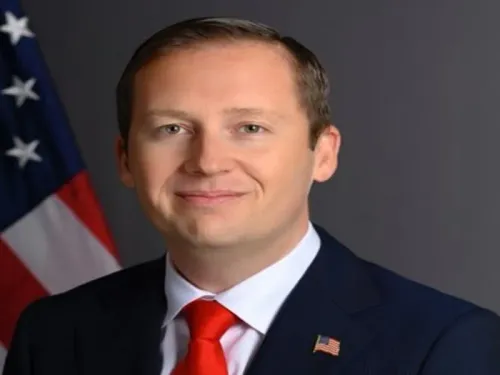
The pattern extended beyond India. Shah also reportedly refused to meet US envoy Sergio Gor, a position his office formally communicated. Gor instead held meetings with Nepal's Foreign Minister Shisir Khanal and Finance Minister Swarnim Wagle. An earlier report in The Kathmandu Post also noted that Shah had avoided meeting United States Assistant Secretary of State Samir Paul Kapur, reinforcing his stance of selective engagement with visiting foreign officials.
Cabinet Pushback and Shah's Firm Stand
The Kathmandu Post editorial revealed that cabinet members including Swarnim Wagle and Sisir Khanal had urged Shah to reconsider his position in both the Misri and Gor cases, but "Shah was firm on his stand." Shah's press aide Dipal Dahal attributed the refusals to the Prime Minister's "too tight" schedule, while local analysts argued Shah is consciously avoiding meetings with diplomats below head-of-state or ministerial rank as a deliberate diplomatic signal of parity.
Editorial Warning: Don't Offend Close Friends
The Kathmandu Post editorial offered a measured but pointed assessment: "Shah can, and should, refrain from meeting every foreign official who arrives in Nepal. Such casual meetings only degrade the image of the highest office in the land. Yet he should also be mindful that Nepal's close friends do not feel offended and the country's interests are not compromised in the process." The editorial warned that "India must understandably feel snubbed," adding that a "blanket refusal may not be a wise policy." Analysts in Kathmandu, as reported by the Khumbule news website, interpreted Shah's approach as an attempt to establish a new diplomatic protocol — though critics warned it risks unsettling Nepal's most important foreign partners at a sensitive time.
Point of View
And Nepal's geography makes that asymmetry existential. Cancelling a visit by India's Foreign Secretary, who was reportedly hand-carrying a Modi invitation, is not a neutral protocol decision; it is a message, and New Delhi will read it as one. The Lipulekh subtext makes it harder to dismiss as procedural. The real question is whether Shah has a strategy for what comes after the signal — or whether this is principled posturing without a plan for managing the fallout with the two partners Nepal can least afford to alienate.
NationPress
24 Sept 2026
Frequently Asked Questions
Why did Nepal PM Balendra Shah refuse to meet India's Foreign Secretary Vikram Misri?
Shah reportedly refused to meet Misri as part of his policy of not holding one-on-one meetings with foreign officials below ministerial rank. The refusal led to the cancellation of Misri's planned two-day visit to Kathmandu; his office cited a tight schedule, while analysts link the stance to the ongoing Lipulekh border dispute.
What was Vikram Misri's visit to Nepal about?
According to The Kathmandu Post editorial, Misri was travelling to Kathmandu to officially invite Nepal PM Shah to visit India on behalf of Prime Minister Narendra Modi. The visit was postponed after Shah declined to grant him an audience.
What is the Lipulekh border dispute between Nepal and India?
Nepal claims the high-altitude trijunction area of Lipulekh, Kalapani, and Limpiyadhura under the 1816 Sugauli Treaty, while India maintains the territory lies within Uttarakhand and has been used for the Kailash Mansarovar Yatra since 1954. The dispute has periodically strained bilateral ties.
Did Nepal PM Shah also refuse to meet the US envoy?
Yes, Shah reportedly refused to meet US envoy Sergio Gor, a position his office formally communicated. Gor instead met Nepal's Foreign Minister Shisir Khanal and Finance Minister Swarnim Wagle during his visit.
What did The Kathmandu Post editorial say about Shah's diplomatic approach?
The editorial cautioned that while Shah need not meet every visiting foreign official, a blanket refusal is not a wise policy. It warned that India must 'understandably feel snubbed' and urged Shah to ensure Nepal's close friends do not feel offended and the country's interests are not compromised.