Nepal's Foreign Minister Signals Delay in PM Balendra Shah's India Visit
Synopsis
Nepal's Foreign Minister, Shisir Khanal, hints that Prime Minister Balendra Shah's anticipated visit to India might take longer than expected, despite receiving a formal invitation from Narendra Modi. This development highlights the complexities within Nepal-India relations.
Key Takeaways
PM Balendra Shah's visit to India may take time.
Invitation received from Indian PM Narendra Modi.
40 bilateral mechanisms exist between Nepal and India.
India is a significant development partner for Nepal.
Climate change impacts discussed at the Indian Ocean Conference.
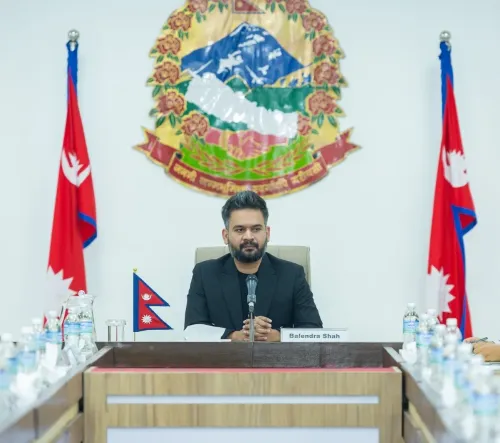
Kathmandu, April 13 (NationPress) Shisir Khanal, the Foreign Minister of Nepal, indicated on Monday that Prime Minister Balendra Shah's trip to India might require some time to materialize, despite having received an invitation from Indian Prime Minister Narendra Modi to visit the neighboring country.
Traditionally, incoming Nepali Prime Ministers prioritize India as their first destination abroad; however, this trend has been disrupted on occasion due to various circumstances, particularly when the relations between the two nations have faced challenges.
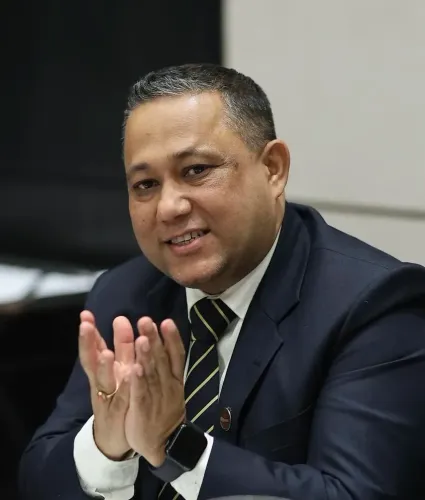
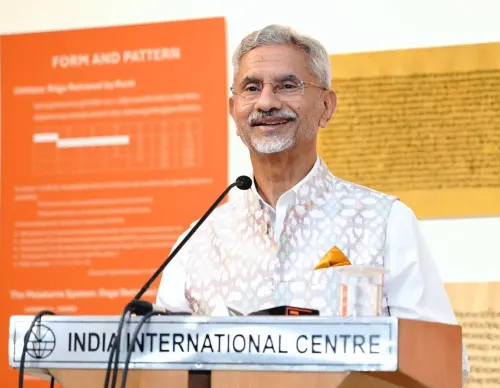
Upon his return to Nepal after participating in the Ninth Indian Ocean Conference (IOC) in Mauritius, Minister Khanal revealed that the invitation for Prime Minister Shah's visit to New Delhi was extended by Indian External Affairs Minister S. Jaishankar, and the Nepali premier has accepted it.
"The new administration has just been established, and it will first determine its priorities. Several technical frameworks between both nations will also be instrumental in shaping the agenda for discussions," the Nepalese Foreign Minister noted.
"There are approximately 40 bilateral frameworks in place that address various facets of our relationship. The political visit of Prime Minister Shah will proceed once these technical preparations are concluded."
These bilateral frameworks span from district levels to ministerial levels, encompassing security, water resources, irrigation, border management, boundary disputes, trade, commerce, and agriculture, among other areas.
Representatives from both countries involved in these frameworks meet on a regular basis, although many of the mechanisms have not convened recently.
India continues to be one of Nepal's foremost development partners.
In the fiscal year 2024-25, India emerged as the largest bilateral donor to Nepal, contributing $107.8 million.
Numerous development projects funded by India have been completed, while several others are currently underway.
During the Indian Ocean Conference, Foreign Minister Khanal underscored the significance of climate change and its repercussions on the Himalayan region and maritime areas.
"The well-being of the mountains and the oceans is interconnected," he remarked, emphasizing that the Hindu Kush Himalaya region is a vital source of fresh water for billions.
Highlighting the importance of the Indian Ocean for global trade and energy movements, the Nepali Foreign Minister asserted that ensuring its stability is a collective global responsibility.
He also expressed Nepal's grave concerns regarding threats such as maritime terrorism, piracy, and the illicit trafficking of drugs and humans.
"The Indian Ocean is pivotal for global trade and energy advancements. Its stability is a global obligation," Minister Khanal reiterated.
"Nepal is genuinely alarmed by threats like maritime terrorism, piracy, and the illegal trafficking of drugs and human beings, as these issues impact the lives of many, including Nepali citizens navigating these waters for their livelihoods."
He further stressed that the Hindu Kush Himalaya region is essential for providing fresh water to billions.
The glaciers and snowfields of Nepal nourish significant river systems that eventually flow into the Indian Ocean, linking the health of the mountains and oceans.
The Ninth Indian Ocean Conference (IOC) was organized collaboratively by India's Ministry of External Affairs, the Government of Mauritius, and the India Foundation.
Point of View
It's imperative to acknowledge the nuances of Nepal-India relations. While the invitation for PM Balendra Shah's visit signals a willingness to engage, the delay reflects the careful diplomatic navigation required in these complex ties.
NationPress
19 Sept 2026
Frequently Asked Questions
Why might PM Balendra Shah's visit to India be delayed?
The delay is attributed to the newly formed government's need to establish its priorities and complete the necessary technical preparations for discussions.
What is the significance of the invitation from PM Narendra Modi?
The invitation signifies a traditional diplomatic gesture, indicating India’s continued interest in strengthening bilateral relations with Nepal.
How many bilateral mechanisms exist between Nepal and India?
There are approximately 40 bilateral mechanisms that cover various aspects of the relationship, including trade, security, and water resources.
What role does India play in Nepal's development?
India is one of Nepal's largest bilateral donors, providing significant financial assistance for various development projects.
What issues did Foreign Minister Khanal raise during the Indian Ocean Conference?
He highlighted the impacts of climate change, the interdependence of mountain and ocean health, and concerns regarding maritime security threats.