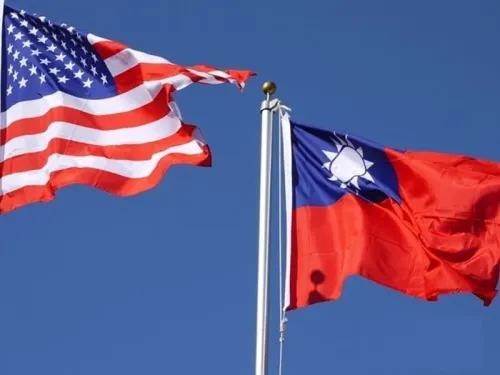
Should Taiwan Increase Its Defense Budget?

Synopsis
In a significant move, U.S. lawmakers have pressed Taiwan to boost its defense budget amid rising threats from China. This bipartisan effort highlights the need for Taiwan to enhance its military capabilities to deter increasing aggression from the People's Republic of China. The relationship between the U.S. and Taiwan is crucial for regional stability.
Key Takeaways
U.S. lawmakers are advocating for Taiwan to raise its defense budget.
The situation with the People’s Republic of China is increasingly tense.
Military readiness is crucial for Taiwan’s defense.
Bipartisan support in the U.S. underscores the importance of Taiwan’s security.
Strengthening defense capabilities is vital for regional stability.
Washington, Feb 19 (NationPress) A bipartisan coalition of prominent U.S. legislators has called upon Taiwan’s authorities to substantially enhance their defense budget, cautioning that inadequate funding for a supplementary defense budget could undermine efforts to deter PRC “aggression”.
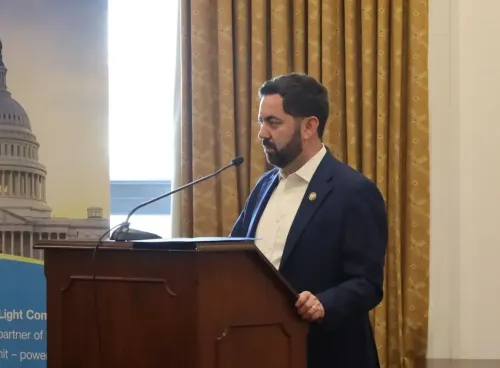
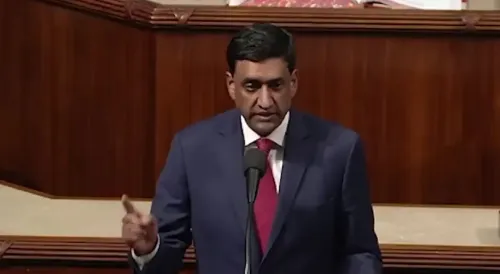
Leading this initiative are U.S. Senators Jim Risch, the chair of the Senate Foreign Relations Committee, Pete Ricketts, and Chris Coons, alongside Representatives Young Kim and Ami Bera. They sent a bipartisan, bicameral letter to Taiwan’s Legislative Yuan leadership, which garnered signatures from 37 members of the U.S. Senate and House of Representatives.
This letter, directed to Speaker Han Kuo-yu, Chair Cheng Li-wun, Chair Huang Kuo-chang, and Caucus Whip Ker Chien-ming, articulated the lawmakers’ concerns regarding the ongoing discussions in the Legislative Yuan about only partially funding a supplementary budget proposal aimed at bolstering Taiwan’s defensive capabilities.
According to the letter, “The United States shares a strong and enduring partnership with the people of Taiwan,” emphasizing a relationship founded on shared democratic values, robust economic connections, and a collective commitment to Indo-Pacific peace and stability.
Referencing the Taiwan Relations Act, the lawmakers reaffirmed the U.S. commitment to Taiwan’s security and its ability to defend itself against coercion, highlighting ongoing security cooperation, including expanded training, enhanced interoperability, and arms sales.
However, they cautioned that the threat from the People’s Republic of China (PRC) towards Taiwan has escalated dramatically.
“Xi Jinping is mobilizing every aspect of the PRC’s national power to assert control over Taiwan, employing illegal, coercive, aggressive, and deceptive tactics that undermine Taiwan’s resolve,”
the letter stated.
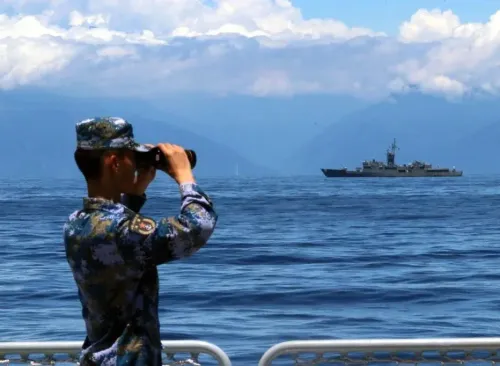
The lawmakers mentioned actions such as frequently operating within Taiwan’s Air Defense Identification Zone, increasing crossings of the median line, harassing fishing vessels, and severing undersea cables. They also referenced “large-scale People’s Liberation Army exercises in October 2024, April 2025, and December 2025,” which they claimed demonstrate preparations for a blockade or invasion.
“Faced with this worsening threat landscape, both the U.S. and Taiwan must intensify their efforts to deter PRC aggression,” the letter asserted.
“The U.S. must tackle the significant backlog in arms deliveries to Taiwan. We are committed to working collaboratively to ensure Taiwan receives the necessary capabilities promptly. Additionally, we need Taiwan to enhance its efforts alongside us.”
While praising Taiwan for its strides in strengthening military readiness, reserve forces, and asymmetric defense capabilities, the lawmakers warned that “without substantial increases in Taiwan’s defense spending at levels indicated in President Lai’s proposed special budget, this progress will be inadequate.”
They acknowledged the complexities surrounding government funding discussions, stating that “Legislators must reflect the will of our constituents and ensure taxpayer funds are utilized effectively.” However, they added, “We also bear the responsibility to finance our militaries at levels that respond to the critical threats we encounter.”
“Therefore, we hope you will endorse a robust, multi-year special defense budget and ensure annual funding levels that are appropriate for the moment, clearly signaling Taiwan’s determination to defend itself,” the letter concluded.
This appeal arises amid escalating tensions across the Taiwan Strait and growing apprehension in Washington regarding China’s military modernization and coercive tactics against Taipei.
Point of View
It is crucial to recognize the strategic implications of U.S. lawmakers urging Taiwan to enhance its defense budget. This development reflects the escalating tensions in the region and the need for Taiwan to assert its sovereignty amid growing threats from China. The call for increased military spending underscores the ongoing commitment of the U.S. to support its allies in maintaining peace and stability in the Indo-Pacific region.
NationPress
19 Sept 2026
Frequently Asked Questions
Why are U.S. lawmakers urging Taiwan to increase its defense budget?
U.S. lawmakers are urging Taiwan to increase its defense budget to strengthen its military capabilities and deter increasing aggression from the People's Republic of China.
What is the significance of the bipartisan letter sent to Taiwan's leadership?
The bipartisan letter highlights the unity among U.S. lawmakers regarding Taiwan's defense and emphasizes the shared commitment to democratic values and regional stability.
How does the U.S. support Taiwan's defense efforts?
The U.S. supports Taiwan's defense through security cooperation, including arms sales, training, and enhanced interoperability.
What threats are posed by the People's Republic of China to Taiwan?
The PRC poses threats through military maneuvers, coercive actions, and aggressive tactics aimed at undermining Taiwan's sovereignty and will to resist.
What are the implications of Taiwan's defense spending for regional stability?
Increased defense spending by Taiwan would signal a commitment to its sovereignty and deter potential aggression from China, contributing to regional stability in the Indo-Pacific.