Giriraj Singh hails Jeevika women reviving Bhagalpur silk
Synopsis
Union Textiles Minister Giriraj Singh on August 10, 2026, praised 'Jeevika Didis' — Bihar's rural women self-help group members — for reviving Bhagalpur's GI-tagged silk through skill training, design upgrades, and market linkages, framing their work as a model of skill-led self-reliance and heritage preservation.
Key Takeaways
Union Textiles Minister Giriraj Singh highlighted the role of 'Jeevika Didis' in reviving Bhagalpur silk on August 10, 2026 .
JEEVIKA (Bihar Rural Livelihoods Promotion Society) was launched in 2007 with World Bank support to organise rural women into self-help groups.
Bhagalpuri silk received a Geographical Indication (GI) tag in 2011 to protect its traditional identity.
Women artisans are receiving training in design, quality, and market linkages to raise incomes and access new buyers.
The initiative combines the Ministry of Textiles' handloom agenda with Bihar's state livelihoods mission as a replicable model.
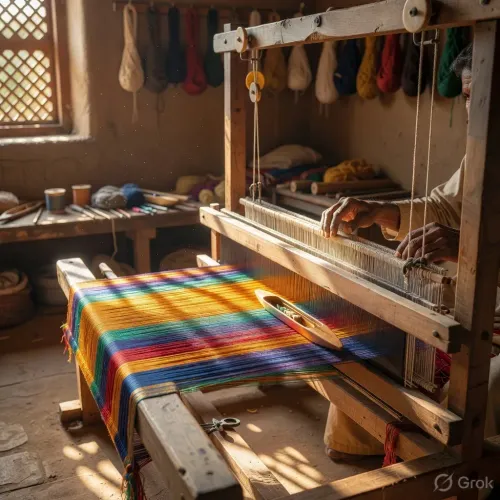
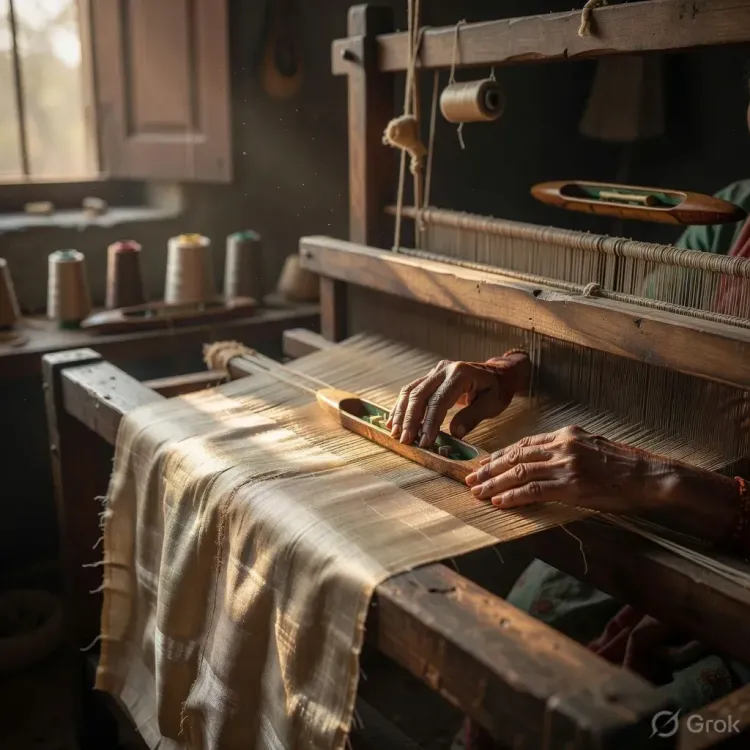
In the ancient weaving lanes of Bhagalpur, Bihar, a quiet revolution is being stitched together — one silk thread at a time. Union Textiles Minister Giriraj Singh on Monday, August 10, 2026, spotlighted the 'Jeevika Didis' — rural women self-help group members — whose skill and determination are giving new life to one of India's most storied handloom traditions.
Posting on X, the Minister wrote: 'Bhagalpur silk ko nayi pehchaan dene mein Jeevika Didiyon ki mehnat aur kaushal ek nayi misal ban raha hai' — 'The hard work and skill of the Jeevika Didis in giving Bhagalpur silk a new identity is becoming a new example.' He added that through training, better design, quality improvement, and market linkages, women are not only raising their incomes but carrying Bhagalpur's rich silk heritage to new markets and new generations. His closing line framed the moment as a national vision: 'Skill to self-reliance, heritage to development — this is the picture of an empowered India.'
What JEEVIKA built — and why it matters for silk
JEEVIKA, formally the Bihar Rural Livelihoods Promotion Society, was launched in 2007 with World Bank backing specifically to organise rural women into self-help groups and connect them to skill training and income opportunities. Over nearly two decades, it has become one of Bihar's most significant poverty-reduction platforms, with women's collectives at its core. For Bhagalpuri silk — which earned a Geographical Indication (GI) tag in 2011 to protect its distinct identity — the challenge has always been the gap between the loom and the market. Traditional weavers, often working in small household clusters, struggled to access design upgrades, quality certification, and urban or export buyers. JEEVIKA's model of organising women artisans into collectives, layering in training and design support, and then building buyer linkages directly addresses that structural gap.Skill training meets silk heritage in Bihar's rural economy
The convergence of a livelihoods mission with a GI-tagged craft cluster is not accidental. The Ministry of Textiles, under which Giriraj Singh operates, has pushed to align central handloom and handicraft schemes with state-level missions in regions like Bhagalpur. The logic is straightforward: women artisans gain incomes, the craft gains institutional backing, and a heritage product reaches consumers who might otherwise turn to mass-manufactured alternatives. Bhagalpur's silk — often called 'Tussar silk' — is prized for its natural texture and earthy tones. It is woven primarily in and around Bhagalpur district, which has historically been Bihar's textile heartland. Connecting these weavers to contemporary design sensibilities and organised retail or export channels is precisely what the Minister's post celebrates. The road forward points to deeper integration: expanded JEEVIKA training cohorts, stronger buyer-linkage programmes, and potentially greater Ministry of Textiles support for Bhagalpur as a model cluster where women's empowerment and craft preservation reinforce each other. When a silk saree woven in rural Bihar reaches a buyer in Delhi or abroad, two stories travel with it — a woman's livelihood and a civilisation's craft. That, Singh's post suggests, is the real weave.Point of View
Spotlighting Bhagalpur silk also carries clear political resonance in a state where rural women's collectives have become a significant electoral constituency. More broadly, the post reflects a central government strategy of rebranding traditional handloom sectors not as welfare recipients but as engines of self-reliance, a framing that fits the 'Vocal for Local' and 'Atmanirbhar Bharat' narrative arcs. Whether the on-ground training and market-linkage infrastructure matches the ministerial optimism is the question that will define Bhagalpur silk's next chapter.
NationPress
10 Aug 2026
Frequently Asked Questions
Who are the Jeevika Didis mentioned by Giriraj Singh?
Jeevika Didis are women members of rural self-help groups organised under JEEVIKA, Bihar's World Bank-supported livelihoods mission launched in 2007. They work in skill-based livelihoods including silk weaving in Bhagalpur.
What is Bhagalpur silk and why is it special?
Bhagalpur silk, often called Tussar silk, is a handloom fabric woven in and around Bhagalpur district in Bihar. It received a Geographical Indication (GI) tag in 2011 to protect its distinct natural texture and traditional craft identity.
What is JEEVIKA and what does it do for women artisans?
JEEVIKA (Bihar Rural Livelihoods Promotion Society) is a Bihar government programme launched in 2007 with World Bank support. It organises rural women into self-help groups and provides skill training, market linkages, and income opportunities, including in the silk weaving sector.
What did Giriraj Singh say about Bhagalpur silk?
On August 10, 2026, Union Textiles Minister Giriraj Singh said the hard work and skill of Jeevika Didis is becoming a new example of giving Bhagalpur silk a new identity, with women raising incomes while carrying the silk heritage to new markets and new generations.
How does the Ministry of Textiles support Bhagalpur silk weavers?
The Ministry of Textiles has promoted convergence between central handloom schemes and state livelihoods missions like JEEVIKA to provide skill training, design upgrades, quality support, and buyer linkages for traditional clusters like Bhagalpur.