Giriraj Singh: NIFT, Textiles Ministry train Jeevika Didis in Bihar
Synopsis
Union Textiles Minister Giriraj Singh on 14 June 2026 spotlighted a joint NIFT Patna–Ministry of Textiles programme training Jeevika Didi women in Begusarai, Bihar, in industrial garment manufacturing, advancing Skill India and Atmanirbhar Bharat goals.
Key Takeaways
NIFT Patna's Begusarai Extension Centre and the Ministry of Textiles are jointly running a readymade garment manufacturing training programme for rural women.
Beneficiaries are Jeevika Didis — women enrolled in Bihar's JEEViKA self-help group network, which has operated since 2007 .
Trainees are learning to operate modern industrial sewing machines , making them eligible for formal garment-sector employment.
The initiative aligns with the Skill India Mission (launched 2015 ) and the broader Atmanirbhar Bharat push for domestic textile manufacturing.
Begusarai is both the location of the training centre and the Lok Sabha constituency of Minister Giriraj Singh .
A successful pilot could lead to replication of NIFT extension centres across other Bihar districts.
Union Textiles Minister Giriraj Singh on Sunday, 14 June 2026 highlighted a joint initiative by the NIFT Patna Begusarai Extension Centre and the Ministry of Textiles to provide specialised readymade garment manufacturing training to Jeevika Didis — women members of Bihar's rural self-help groups — reinforcing the government's push for female economic self-reliance in eastern India.
Context
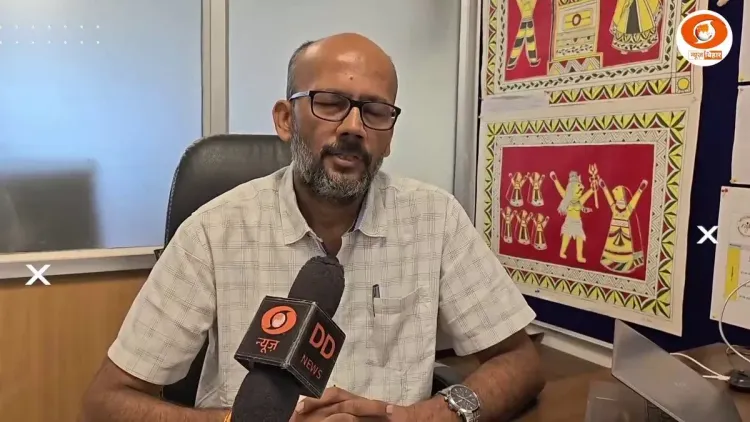
Posting in Hindi on 14 June 2026, the minister said the training programme is proving to be 'a key pillar in strengthening women's self-reliance in rural areas' (ग्रामीण क्षेत्रों में महिला आत्मनिर्भरता को मजबूत करने के लिए एक मुख्य आधार). He noted that women are learning to operate modern industrial sewing machines and thereby gaining access to employment. The post was accompanied by a video documenting the training in progress.
The Begusarai district, which is also Giriraj Singh's own Lok Sabha constituency, hosts the extension centre of NIFT Patna — one of several outreach nodes the institute has established to carry vocational garment education beyond its main campus into tier-2 districts of Bihar.
Policy Backdrop
JEEViKA — the Bihar Rural Livelihoods Promotion Society project — has been organising rural women into self-help groups since 2007, initially with World Bank assistance. The programme built a large grassroots network of Jeevika Didis across Bihar's villages, creating a ready pool of women who can be channelled into skill-linked livelihood programmes.
The Skill India Mission, launched in 2015, set the national framework for scaling such vocational training and linking trainees to industry. The Ministry of Textiles has since sought to integrate NIFT's technical infrastructure with state livelihood missions — particularly in eastern India — to shift garment-manufacturing employment toward states like Bihar rather than concentrating it in traditional western and southern clusters.
The NIFT Act of 1986 and subsequent campus expansions established the legal and institutional basis for regional centres. The Begusarai extension represents the latest step in that decentralisation, combining central skill infrastructure with an existing state-run women's network.
Stakeholders and Impact
The direct beneficiaries are rural women enrolled through JEEViKA self-help groups in and around Begusarai. By acquiring proficiency on modern industrial machines, trainees become eligible for formal employment in garment units — a pathway that can meaningfully raise household incomes in one of Bihar's more industrially aspirational districts.
The initiative also serves the Atmanirbhar Bharat goal of expanding domestic textile and apparel manufacturing capacity. Integrating women's SHG networks with NIFT-certified training could create a replicable model for other Bihar districts and, potentially, other eastern states where similar livelihood missions operate.
What's Next
Observers will watch for placement and earnings data from the Begusarai training batches as a measure of real-world impact beyond the skilling stage. The Ministry of Textiles budget allocations for skill programmes in upcoming Union Budgets will indicate how aggressively the Centre plans to scale this model. A successful Begusarai pilot could accelerate proposals to open NIFT extension centres in other Bihar districts, deepening the state's role in India's readymade garment supply chain.
Point of View
Highlighting a programme in his own constituency carries an obvious political dividend, but the policy logic is sound: eastern India has a large, underemployed female workforce and proximity to growing apparel export corridors. The real test will be whether trainees translate certification into sustained employment and income gains, a gap that has historically undermined skill-programme credibility. If placement data is robust, this model could become a template for Textiles Ministry interventions across Bihar and Jharkhand.
NationPress
13 Sept 2026
Frequently Asked Questions
What is the NIFT Begusarai Extension Centre?
It is an outreach centre of the National Institute of Fashion Technology's Patna campus, located in Begusarai district of Bihar, set up to deliver vocational garment and fashion technology training to students and women's groups in tier-2 areas beyond the main campus.
Who are Jeevika Didis?
Jeevika Didis are women members of self-help groups formed under Bihar's JEEViKA project — the Bihar Rural Livelihoods Promotion Society — which has been organising rural women for economic empowerment since 2007, initially with World Bank support.
What training are Jeevika Didis receiving at the NIFT Begusarai centre?
They are receiving specialised training in readymade garment manufacturing, including learning to operate modern industrial sewing machines, to make them employment-ready in the formal apparel sector.
How does this programme connect to Skill India and Atmanirbhar Bharat?
The programme is part of the Skill India Mission framework launched in 2015, which aims to link vocational training to industry employment. It also advances the Atmanirbhar Bharat goal of expanding domestic textile and apparel manufacturing capacity, particularly in eastern India.
Why is Giriraj Singh involved in this initiative?
Giriraj Singh is the Union Minister of Textiles, which oversees NIFT and national textile skill programmes. Begusarai is also his own Lok Sabha constituency, making the centre's progress a matter of both ministerial responsibility and local political interest.