Giriraj Singh Inaugurates Jeevika Bhawan in Begusarai's Navkothi
Synopsis
Union Textiles Minister Giriraj Singh inaugurated a Jeevika Bhawan in Navkothi, Begusarai on 25 September 2026 and held a dialogue with SHG members, praising their near-zero loan NPAs and reaffirming the government's commitment to women's economic empowerment through Bihar's flagship Jeevika programme.
Key Takeaways
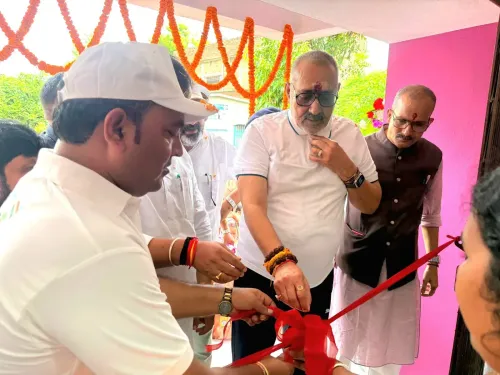
Jeevika Bhawan was inaugurated in Navkothi block, Begusarai on 25 September 2026 by Union Textiles Minister Giriraj Singh .
Minister Singh held a direct dialogue with Jeevika Diidiyaan (SHG members) after the inauguration.
He highlighted 'negligible NPA' and strong loan repayment as evidence of members' discipline and integrity.
Bihar's Jeevika project began as a World Bank -supported pilot in 2007 and is now a statewide programme under the National Rural Livelihoods Mission.
Official data shows Bihar's SHG repayment rates consistently above 95 percent .
A dedicated Jeevika Bhawan provides permanent infrastructure for meetings, loan disbursements, and skill training.
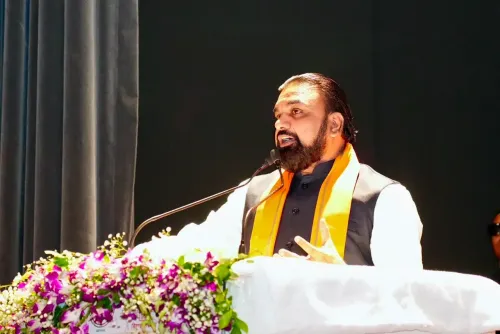
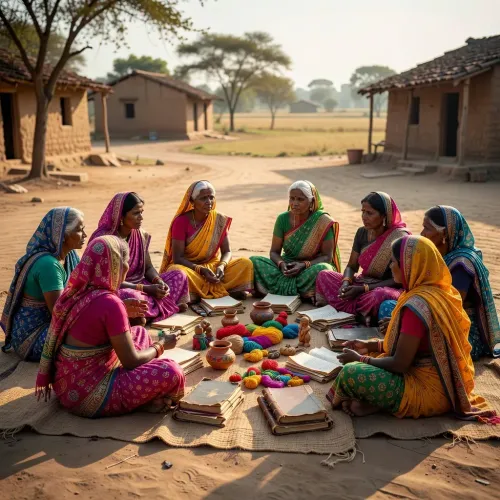
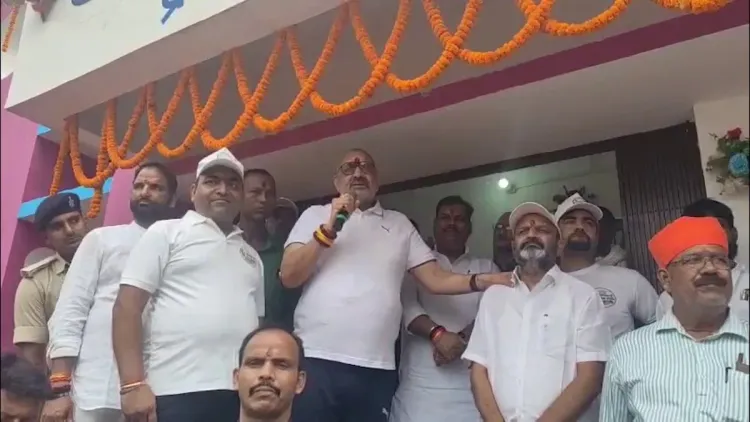
In Navkothi, Begusarai, a building became a statement on Friday, 25 September 2026 — that rural women who repay every rupee of their loans deserve a house of their own. Union Textiles Minister Giriraj Singh inaugurated the Jeevika Bhawan and sat down for a wide-ranging conversation with the self-help group members — the Jeevika Diidiyaan — who keep Bihar's flagship livelihood mission running from the ground up.
Posting on X after the event, Minister Singh wrote that the government is 'continuously working to economically empower women through Jeevika and make them self-reliant.' He specifically highlighted what he called the 'better loan repayment and negligible NPA' among Jeevika members, calling it a reflection of their 'hard work, responsibility, and honesty.' The government's resolve, he added, is that these women continue to get 'opportunities and a strong platform to move forward.'
Jeevika's long road from World Bank pilot to statewide force
Bihar's Jeevika project was born in 2007 as a World Bank-supported pilot — a modest experiment in organising rural women into self-help groups and linking them to formal banking. It grew into one of the largest state-level implementations under the National Rural Livelihood Mission, which the Centre launched in 2011 to scale the SHG model across India. Begusarai, Giriraj Singh's own constituency, sits squarely inside that arc of expansion.
The numbers behind Jeevika tell the story plainly. Official data from Bihar's SHG network consistently show repayment rates above 95 percent — among the highest for any rural microcredit programme in the country. That near-zero NPA figure is not just a financial metric; it is the reason banks extend fresh credit cycles and governments keep building infrastructure like the Navkothi Bhawan.
What a Jeevika Bhawan actually means on the ground
Until now, many SHG clusters met in borrowed spaces — school verandas, panchayat halls, members' courtyards. A dedicated Jeevika Bhawan gives the groups a permanent address: a venue for weekly meetings, loan disbursements, record-keeping, and skill-training sessions. It is the kind of physical anchor that separates a community programme that endures from one that quietly fades when official attention moves on.
The rollout of Bhawans across districts follows a deliberate playbook — combine the discipline of microcredit with durable community assets, and the model compounds. Begusarai's Navkothi block is the latest addition to that chain.
The larger bet on women-led financial inclusion
The Jeevika model is Bihar's most visible answer to a stubborn reality: rural women in the state have historically had the least access to formal credit and the least say in household financial decisions. Two decades of SHG bank-linkage work have begun to shift that calculus. Minister Singh's emphasis on 'negligible NPA' is also a pointed political argument — that investing in women's groups is not charity but sound fiscal policy. When borrowers repay, the cycle expands.
What to watch next: whether additional Bhawans get sanctioned in the coming budget cycle, and whether the Centre moves to integrate Jeevika's network with skill-training or market-linkage schemes under its own ministries — including Textiles, where Minister Singh would have direct leverage.
Point of View
Making it easier to justify scaling public investment. As Union Textiles Minister, Singh has an institutional interest in connecting Jeevika's large female workforce base to cluster-level textile and handicraft schemes, suggesting a potential policy convergence worth watching. The Bhawan inauguration also follows the established playbook of converting programme credibility into physical, visible assets that outlast political cycles.
NationPress
25 Sept 2026
Frequently Asked Questions
What is Jeevika in Bihar?
Jeevika is Bihar's state-level rural livelihoods programme that organises poor rural women into self-help groups, links them to bank credit, and promotes economic self-reliance. It began as a World Bank-supported pilot in 2007 and operates under the National Rural Livelihoods Mission framework.
What is a Jeevika Bhawan?
A Jeevika Bhawan is a dedicated community building for self-help groups, providing a permanent space for weekly meetings, loan disbursements, record-keeping, and skill-training sessions. Giriraj Singh inaugurated one in Navkothi, Begusarai on 25 September 2026.
Why is NPA important for Jeevika self-help groups?
A low or negligible Non-Performing Asset ratio means SHG members are repaying their loans on time. This track record makes banks willing to extend larger, fresh credit cycles, allowing the programme to grow without government guarantees on every loan.
What did Giriraj Singh say about Jeevika Diidiyaan?
Giriraj Singh said the better loan repayment and negligible NPA among Jeevika Diidiyaan reflects their hard work, responsibility, and honesty, and reaffirmed the government's commitment to providing them opportunities and a strong platform to move forward.
How does Jeevika relate to the National Rural Livelihoods Mission?
Bihar's Jeevika project was a precursor model that informed the National Rural Livelihoods Mission launched by the Centre in 2011. Jeevika now operates as the Bihar state implementation of that national framework, scaling women's SHGs with bank linkages across all districts.