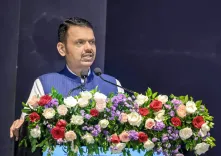
CM Siddaramaiah backs Rahul Gandhi's attack on Amit Shah over youth protest crackdown

Synopsis
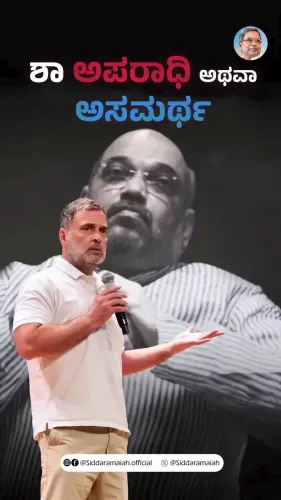
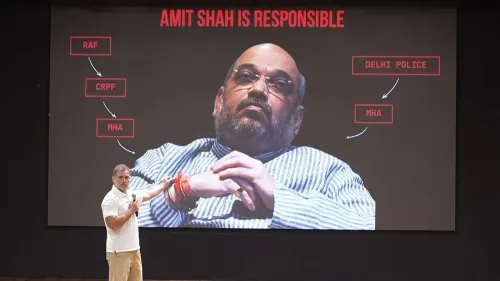
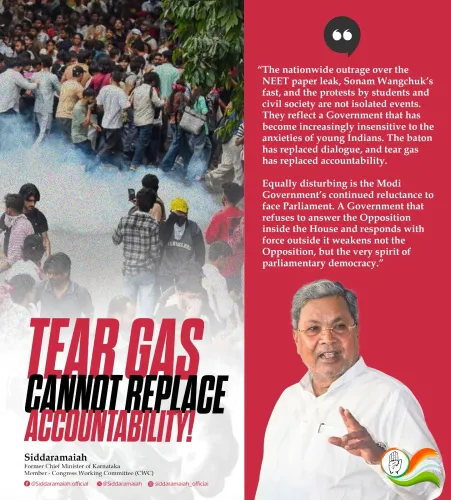
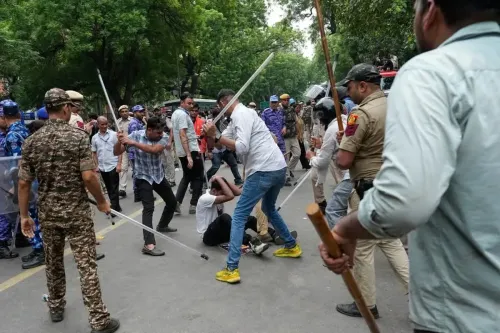
Karnataka CM Siddaramaiah amplified Rahul Gandhi's public argument that Home Minister Amit Shah bears direct responsibility for the use of force against peaceful youth protesters — framing him as either culpable for ordering it or incompetent for not knowing.
Key Takeaways
Karnataka Chief Minister Siddaramaiah publicly endorsed Rahul Gandhi 's written argument targeting Home Minister Amit Shah on 10 August 2026 .
The central charge: if Shah authorised force against peaceful youth protesters, he is culpable; if he was unaware, he is incompetent.
Congress has a documented pattern of holding the Home Ministry accountable for protest policing, dating back to the 2019–2020 CAA-NRC demonstrations .
Siddaramaiah's endorsement carries institutional weight as a sitting Chief Minister, not merely a party spokesperson.
The Ministry of Home Affairs had not issued a public response at the time of publication.
The exchange is expected to surface in the next parliamentary session as Congress presses the accountability argument.
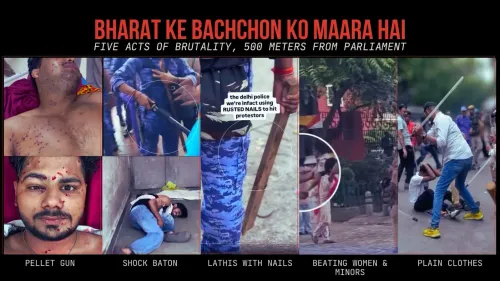
A sharp political broadside landed on Monday, 10 August 2026, when Karnataka Chief Minister Siddaramaiah threw his weight behind Rahul Gandhi's public indictment of Union Home Minister Amit Shah — framing the central government's response to peaceful youth protests as a test of accountability that Shah has already failed.
Siddaramaiah's post did not mince words. 'If he authorised it, he is culpable. If he did not know, he is incompetent,' he wrote, echoing Gandhi's binary directly — a formulation designed to leave Shah no rhetorical exit. The post amplified Gandhi's argument that young Indians demanding fairness and accountability have been met with what both leaders describe as brutal force.
The 'culpable or incompetent' frame — and why it cuts
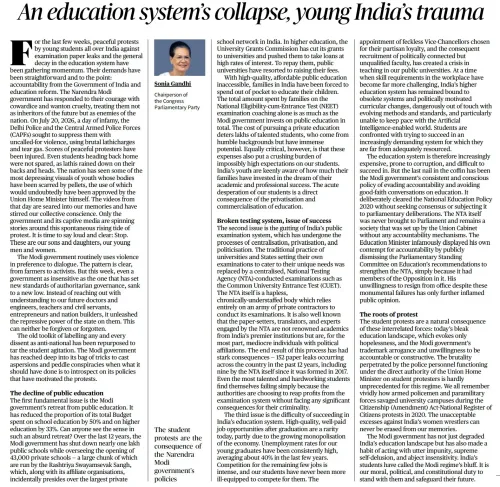
The phrase is borrowed directly from Gandhi's own public writing, which Siddaramaiah urged followers to read in full. The rhetorical structure is deliberate: it forecloses the standard ministerial defence of plausible deniability. Either the Home Minister directed the response, or he failed in his duty of oversight. Congress has deployed this framing before — most visibly during the 2019–2020 CAA-NRC protests, when the party repeatedly held the Home Ministry responsible for police action against demonstrators.
What makes the current iteration notable is the coordinated amplification. A sitting Chief Minister publicly seconding a senior opposition leader's attack on a Union minister signals party discipline and a deliberate communication strategy — not an off-the-cuff reaction.
Siddaramaiah's role in the Congress accountability offensive
As Chief Minister of a Congress-governed state, Siddaramaiah occupies a particular position in these exchanges. He is simultaneously a state executive — responsible for his own law-and-order apparatus — and a senior party voice pushing back against New Delhi's handling of national security matters. That dual role gives his endorsement more institutional weight than a backbencher's retweet.
The broader pattern is well-established: Congress-ruled states and the BJP-led Centre have traded accountability charges over protest policing for years, with each cycle tending to intensify when students or young demonstrators are at the centre of the incident. The specific protest referenced in Gandhi's article and Siddaramaiah's post falls after this reporter's verified knowledge window, but the political architecture around it is entirely familiar.
What the Ministry of Home Affairs has not said
As of publication, no official response from the Ministry of Home Affairs or Amit Shah's office has addressed the claims in Gandhi's article or Siddaramaiah's amplification. That silence — or its eventual breaking — will determine how far this exchange travels into the next parliamentary session. Congress has signalled it intends to press the issue. The government's counter-move is the next variable to watch.
The country deserves answers, Siddaramaiah wrote. Whether it gets them is now a question of political will — and parliamentary arithmetic.
Point of View
Siddaramaiah elevates the charge from partisan noise to executive-level indictment. This fits a longer Congress strategy of using state governments as megaphones for federal accountability demands, a dynamic that has sharpened since the party returned to power in Karnataka in 2023. Whether the BJP responds substantively or dismisses the charge as political theatre will reveal how seriously the ruling party reads the political cost of silence on protest policing.
NationPress
10 Aug 2026
Frequently Asked Questions
What did Siddaramaiah say about Amit Shah and the youth protests?
Siddaramaiah said that if Home Minister Amit Shah authorised force against peaceful youth protesters, he is culpable, and if he did not know about it, he is incompetent — echoing an argument made by Rahul Gandhi in a public article.
What is the 'culpable or incompetent' argument against Amit Shah?
The phrase, originally from Rahul Gandhi's writing, argues that a Home Minister cannot escape responsibility for police action during protests: either he ordered it and is culpable, or he was unaware and is therefore incompetent in his oversight role.
Why is Siddaramaiah backing Rahul Gandhi on this issue?
Siddaramaiah is a senior Congress leader and Karnataka's Chief Minister. His amplification of Gandhi's argument reflects coordinated party messaging holding the BJP-led central government accountable for its handling of youth-led protests.
Has the Ministry of Home Affairs responded to Congress's protest crackdown allegations?
As of publication on 10 August 2026, no official response from the Ministry of Home Affairs or Amit Shah's office had addressed the specific claims raised by Rahul Gandhi's article or Siddaramaiah's post.
Is this the first time Congress has blamed the Home Ministry for protest policing?
No. Congress has a documented pattern of holding the Home Ministry responsible for police action against protesters, most prominently during the 2019–2020 CAA-NRC demonstrations across India.