CM Siddaramaiah Backs Sonia Gandhi's Article on Education Crisis
Synopsis
Karnataka Chief Minister Siddaramaiah condemned the Modi government's response to student unrest over exam failures and rising costs, amplifying a Congress Parliamentary Party Chairperson Sonia Gandhi article that frames India's public education system as being in systemic collapse.
Key Takeaways
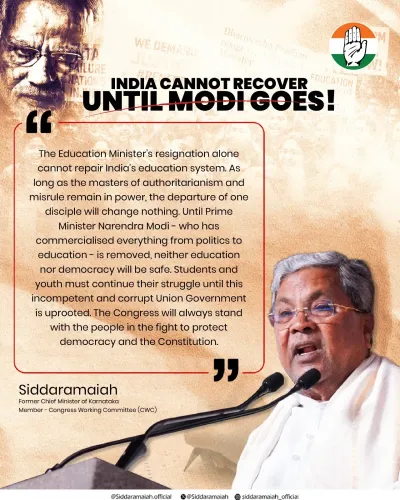
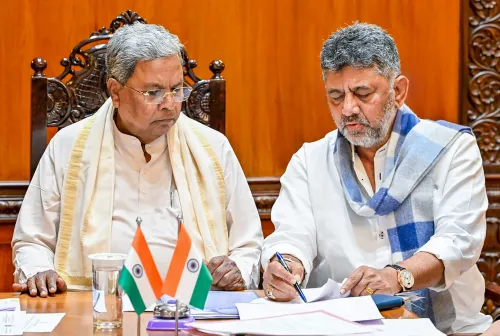
Karnataka Chief Minister Siddaramaiah posted on July 25, 2026 criticising the Modi government's handling of India's education crisis.
He cited declining public investment, rising fees, costly coaching, and repeated paper leaks as drivers of student anger.
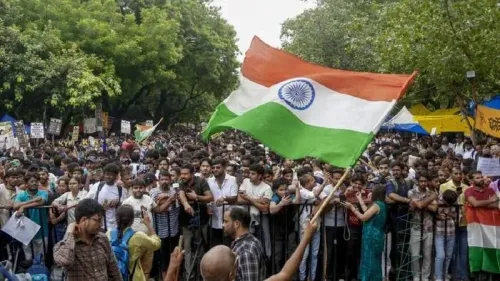
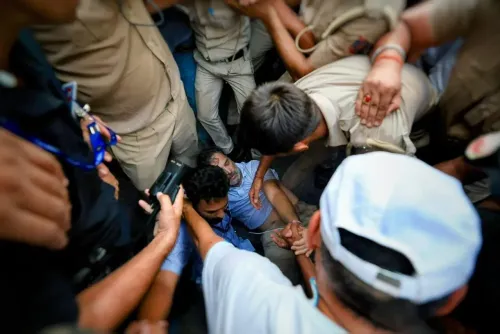
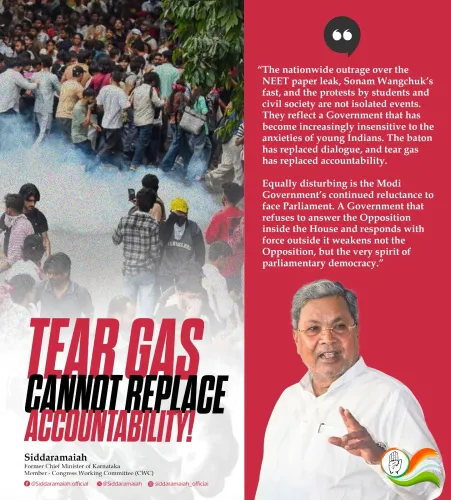
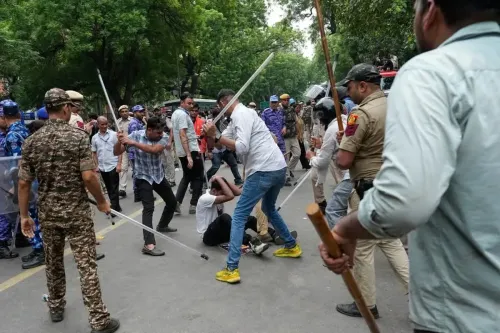
He alleged the government responded to protests with police force rather than dialogue or accountability.
He flagged the closure of public schools and the shift of universities toward loan-based financing as structural problems.
He urged followers to read an article by Smt.
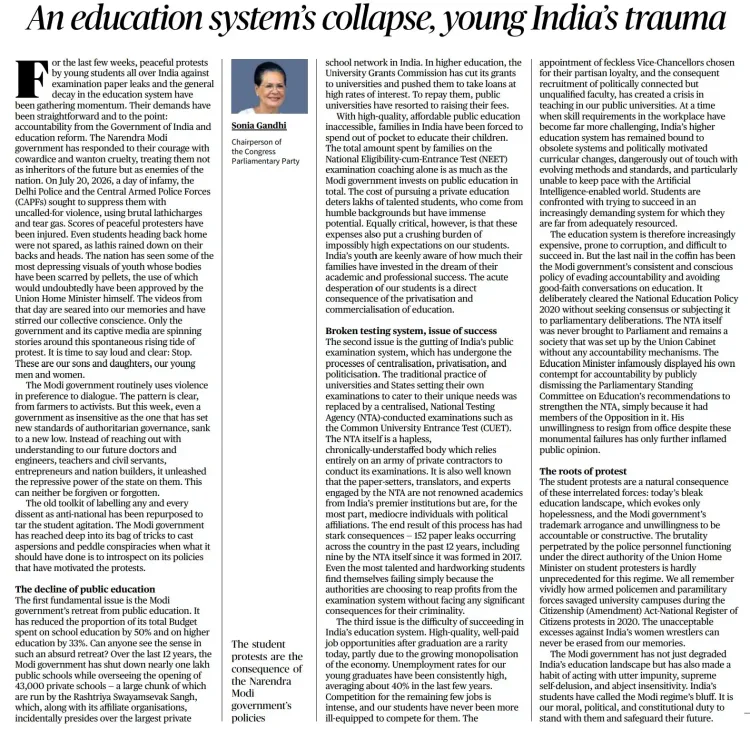
Sonia Gandhi , Chairperson of the Congress Parliamentary Party , on the collapse of India's education system.
The post was tagged to @INCIndia and @INCKarnataka , indicating a coordinated Congress messaging effort.
Karnataka Chief Minister Siddaramaiah on Friday, July 25, 2026, sharply criticised the Modi government's handling of India's education system, urging citizens to read an article by Congress Parliamentary Party Chairperson Smt. Sonia Gandhi on what he called the collapse of public education and the trauma faced by Indian youth.
Context
In his post, Siddaramaiah argued that student protests across India are not without cause, pointing to a combination of declining public investment, rising fees, expensive coaching industries, and repeated examination paper leaks. He stated that the central government had responded 'not with accountability and dialogue, but with police force.' The post tagged @INCIndia and @INCKarnataka, signalling a coordinated Congress communication effort.
The Chief Minister described the root causes as 'years of privatisation, commercialisation, political interference and neglect,' and summarised student demands as affordable public education, credible examinations, equal opportunity, and accountability.
Policy Backdrop
India's education governance has been a contested federal domain for decades. The Right to Education Act, 2009, passed under the UPA government, guaranteed free and compulsory education to children aged 6 to 14. The National Education Policy 2020, approved by the Modi government, restructured school and higher education with emphasis on flexibility and multidisciplinary learning.
Centralised testing through mechanisms such as NEET, introduced nationwide from 2016, has been a recurring flashpoint. Reports of irregularities in high-stakes national examinations have fuelled student agitation and sharpened opposition criticism of the central government's examination administration framework.
Sonia Gandhi, as Chairperson of the Congress Parliamentary Party and a veteran figure in national policy, has been among the most prominent voices raising concerns about education equity. Her article, which Siddaramaiah urged followers to read, addresses what Congress frames as a systemic collapse in public education.
Stakeholders and Impact
The groups most directly affected, as identified in Siddaramaiah's post, are students from poor and middle-class families — described as 'lakhs of talented students' being left behind by rising costs and a shrinking public education infrastructure. The closure of public schools and the shift of universities toward loan-dependent financing are cited as structural drivers of this exclusion.
The post reflects a broader Congress strategy of positioning the party as the defender of public education against what it characterises as the central government's push toward privatisation. Karnataka, governed by Congress since 2023, has used state education policy as a point of contrast with the BJP-led central government.
What's Next
Attention will now turn to whether the Union Ministry of Education responds formally to these opposition critiques, and whether Karnataka announces state-level budget measures on school education to back the Congress narrative with concrete action. Parliamentary debates on education allocations in the upcoming session are expected to serve as the next major arena for this political confrontation.
With student unrest over examination integrity and education costs showing no sign of abating, the pressure on both the central and state governments to demonstrate accountability on education policy is likely to intensify ahead of future electoral cycles.
Point of View
Amplifying a senior party leader's written argument to maximise reach across state and national audiences. By framing student protests as the inevitable product of central government policy failures — privatisation, commercialisation, examination mismanagement — Congress is attempting to own the education equity narrative ahead of future electoral contests. The invocation of Sonia Gandhi, still the Congress Parliamentary Party's most authoritative voice, lends institutional weight to what could otherwise be dismissed as routine opposition criticism. Whether this translates into concrete policy differentiation in Karnataka's own education budget will determine whether the messaging has substance behind it.
NationPress
22 Oct 2026
Frequently Asked Questions
Why did CM Siddaramaiah criticise the Modi government on education?
Siddaramaiah argued that the Modi government responded to student protests over exam paper leaks, rising fees, and declining public investment with police force rather than accountability or dialogue, and that its policies have pushed education toward privatisation at the expense of poor and middle-class students.
What did Sonia Gandhi write about India's education system?
Sonia Gandhi, as Chairperson of the Congress Parliamentary Party, wrote an article describing what she characterised as the collapse of India's education system and the trauma being experienced by the country's youth, which Siddaramaiah publicly urged citizens to read.
What is NEET and why are students protesting against it?
NEET is India's centralised national entrance examination for medical admissions, introduced nationwide from 2016. Students and opposition parties have raised concerns about repeated reports of paper leaks and irregularities that they say undermine the fairness and credibility of the examination.
What are students demanding according to Siddaramaiah?
According to Siddaramaiah's post, students are demanding affordable public education, credible examinations, equal opportunity, and accountability from the government.
How does Karnataka's Congress government differ from the Centre on education policy?
Karnataka, governed by Congress since 2023, has positioned itself as an advocate of expanded public education funding and equity, in contrast to what it characterises as the BJP-led central government's push toward privatisation, loan-based university financing, and centralised examination systems.