CM Siddaramaiah calls for electoral reform, proportional representation debate
Synopsis
Karnataka Chief Minister Siddaramaiah on 11 August 2026 called for comprehensive electoral reform, citing money, caste, religion and muscle power as corrupting influences, and urged an open debate on proportional representation and political funding transparency.
Key Takeaways
Karnataka Chief Minister Siddaramaiah publicly called for electoral reform on 11 August 2026 via a post on X and an accompanying op-ed.
He identified money, caste, religion and muscle power as the four main corrupting forces in Indian elections.
Siddaramaiah argued the first-past-the-post system can produce large majorities that do not reflect the overall popular vote.
He called for openness to proportional representation as an alternative electoral model.
The Law Commission's 170th Report (1999) and the 2002 Constitutional Review Commission had raised similar concerns; recommendations remain largely unimplemented.
Siddaramaiah framed the push as a cross-party democratic imperative , not a Congress-specific agenda.
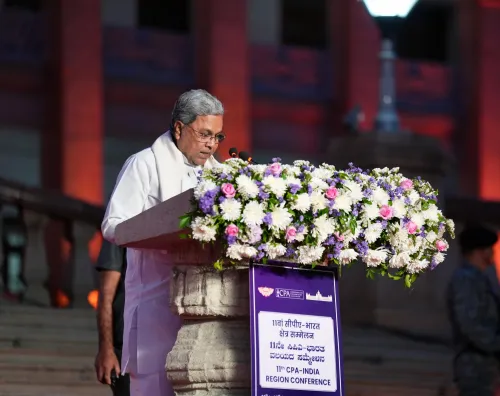
Money buys votes. Caste and religion mobilise them. Muscle power protects them. And the honest candidate — the one who cannot afford any of it — simply steps aside. Karnataka Chief Minister Siddaramaiah put that uncomfortable truth at the centre of a public intervention on Tuesday, 11 August 2026, calling for a fundamental rethink of how India conducts its elections.
Writing in an op-ed published in a leading national daily, and amplifying the argument on X, Siddaramaiah laid out a multi-pronged critique: the spiralling cost of campaigning, the unchecked influence of money, caste and religion, and a first-past-the-post system that can hand sweeping parliamentary majorities to parties that won a minority of the popular vote.
The cost of democracy — and who it prices out
'The rising cost of campaigning keeps many honest and capable people out of public life,' Siddaramaiah wrote, identifying what reformers have long called the entry-barrier problem. When contesting a seat requires crores in campaign spending, electoral politics becomes a market — one that systematically filters out candidates who lack either personal wealth or the backing of moneyed interests.
The concern is not new. The Law Commission of India's 170th Report (1999) flagged candidate disclosure norms, campaign expenditure limits and the menace of muscle power as urgent priorities. More than two and a half decades later, the legislative follow-through remains incomplete.
First-past-the-post and the representation gap
Siddaramaiah also trained his sights on the electoral architecture itself. India's first-past-the-post system — inherited from the Westminster model — awards a seat to whoever wins a plurality, even if the winner secured, say, 30 per cent of votes in a crowded field. The result: a party can sweep a legislature while the majority of voters chose someone else.
The National Commission to Review the Working of the Constitution (2002) examined this distortion and suggested exploring elements of proportional representation. Siddaramaiah is now pushing that conversation back into public view, arguing that 'we must be open to discussing alternatives such as proportional representation.'
Funding opacity and the transparency deficit
Political funding sits at the heart of the corruption-elections nexus. Successive parliamentary committee reports have recommended greater disclosure and accountability in how parties raise and spend money. Those recommendations, Siddaramaiah noted, are 'still pending' — a pointed reminder that the political class has repeatedly deferred the reforms that would constrain its own financing.
His framing is deliberately cross-partisan: 'Electoral reform is not about benefiting one party. It is about strengthening democracy itself.' Whether that framing holds up to scrutiny — given that proportional representation tends to benefit smaller and regional parties — will itself become part of the debate he is seeding.
The Karnataka Chief Minister's call lands at a moment when political funding transparency has been under intense national scrutiny. His challenge now is to move the conversation from op-ed to legislation — the graveyard where most Indian electoral reform proposals have quietly expired.
Point of View
He signals that the Congress is willing to challenge structural features of the system itself, not just its conduct. The proportional representation argument is particularly sharp: it reframes the debate from 'clean elections' to 'fair representation,' a distinction that could attract regional parties wary of winner-takes-all outcomes. The real test is whether this op-ed moment translates into a concrete legislative push, or whether it remains a talking point that flatters the reformer without binding the party.
NationPress
25 Sept 2026
Frequently Asked Questions
What electoral reforms did CM Siddaramaiah demand?
Siddaramaiah called for action on political funding transparency, limits on campaign spending, curbs on the influence of money, caste, religion and muscle power, and an open debate on replacing or supplementing the first-past-the-post system with proportional representation.
What is proportional representation and why is it being discussed in India?
Proportional representation is an electoral system where a party's share of seats in a legislature closely mirrors its share of the popular vote. In India's current first-past-the-post system, a party can win a large majority of seats with a minority of votes; reformers argue proportional representation would make outcomes fairer.
What did the Law Commission say about electoral reforms in India?
The Law Commission of India's 170th Report (1999) recommended reforms on candidate disclosure, campaign expenditure limits and measures against muscle power. Many of those recommendations have not been enacted into law.
Has India considered proportional representation before?
Yes. The National Commission to Review the Working of the Constitution (2002) examined the first-past-the-post system and suggested exploring proportional representation elements. The idea has periodically surfaced across party lines but has not advanced to legislation.
Why does the cost of elections matter for democracy?
High campaign costs act as a barrier to entry, effectively excluding honest or less-wealthy candidates from contesting elections. This concentrates political power among those who can raise large sums, increasing the influence of money over electoral outcomes.