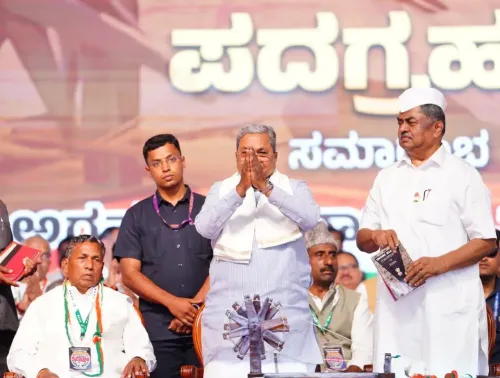
CM Siddaramaiah Backs Anti-Superstition Law, Cites Reason

Synopsis
Karnataka Chief Minister Siddaramaiah on June 17, 2026, publicly reaffirmed his government's anti-superstition law, stating that a progressive society must be built on reason and dignity rather than fear or blind belief. The post underlines his administration's rationalist and social-reform agenda.
Key Takeaways
Siddaramaiah declared on June 17, 2026 that a progressive society cannot be built on fear, superstition, or blind belief.
He cited the Karnataka Prevention of Inhuman Evil Practices and Black Magic Act as central to his governing philosophy.
The anti-superstition bill was first introduced in the Karnataka Assembly in December 2014 during his earlier term.
The law targets practices such as human sacrifice and ritual branding carried out in the name of religion.
The legislation is grounded in Article 51A of the Indian Constitution, which promotes scientific temper as a fundamental duty.
Rural households and marginalised communities are identified as the primary beneficiaries of the Act's protections.
Karnataka Chief Minister Siddaramaiah on Wednesday, June 17, 2026, reaffirmed his government's commitment to rationalist governance, invoking the state's anti-superstition law as a cornerstone of his political philosophy. The senior Indian National Congress leader said a progressive society cannot be built on fear or blind belief and called on Karnataka to move forward with 'courage, compassion and reason.'
Context
Posting under the hashtag #MyPrinciplesInPractice, Siddaramaiah stated plainly: 'A progressive society cannot be built on fear, superstition or blind belief. My politics has always stood for reason, dignity and scientific thinking.' The remarks were accompanied by a reference to the state's anti-superstition legislation, which he described as designed 'to protect people from exploitative and inhuman practices carried out in the name of belief.'
The post comes as the Chief Minister has been publicly articulating the ideological underpinnings of his administration, framing social-reform laws not merely as policy but as expressions of a governing philosophy rooted in constitutional values.
Policy Backdrop
The Karnataka Prevention of Inhuman Evil Practices and Black Magic Act was first tabled in the state Assembly in December 2014 during Siddaramaiah's earlier term as Chief Minister. The legislation targets practices such as human sacrifice, ritual branding, and other exploitative acts conducted under the guise of religious belief.
The law draws its philosophical grounding from Article 51A of the Indian Constitution, which lists the promotion of scientific temper, humanism, and the spirit of inquiry among the fundamental duties of citizens. Southern Indian states have been at the forefront of such social-reform legislation, and the Act is frequently cited as one of the more comprehensive statutes of its kind in the country.
The Congress party has consistently positioned such measures as part of a broader agenda of constitutional rationalism, often in contrast to what it characterises as conservative religious mobilisation by rival political formations.
Stakeholders and Impact
The primary beneficiaries of the anti-superstition law are rural households and individuals — particularly women and those from marginalised communities — who are most vulnerable to exploitative ritual practices. Advocates of the legislation argue that codifying prohibitions against such practices gives law-enforcement agencies a clearer mandate to act.
Religious and community organisations have at times contested provisions of the Act, raising questions about the boundary between prohibited exploitation and legitimate religious practice. The debate reflects a wider national tension over the state's role in regulating faith-based conduct.
What's Next
The Chief Minister's public restatement of his commitment to the law signals that the Karnataka government is unlikely to dilute its provisions. Observers will watch for follow-up action in the form of enforcement guidelines, state-level awareness campaigns, or responses to any legal challenges that specific provisions of the Act may face in coming Assembly sessions.
The statement also sets a political tone ahead of broader legislative activity in Karnataka, suggesting that social-reform legislation will remain a defining pillar of the Siddaramaiah administration's identity and electoral messaging.
Point of View
Not merely a policy reminder. By invoking 'reason, dignity and scientific thinking' as the pillars of his politics, he is drawing a sharp contrast with parties that lean on religious identity as an electoral resource. The anti-superstition law becomes, in this framing, a proxy for a larger argument about what kind of state Karnataka should be. This kind of values-anchored communication reflects a Congress strategy of reclaiming the constitutional rationalism narrative in states where it governs, using social-reform credentials to shore up its progressive base ahead of future electoral cycles.
NationPress
19 Sept 2026
Frequently Asked Questions
What is the Karnataka anti-superstition law?
The Karnataka Prevention of Inhuman Evil Practices and Black Magic Act prohibits exploitative rituals such as human sacrifice and branding conducted in the name of religion or belief. It was first introduced in the Karnataka Assembly in December 2014 by the Siddaramaiah government.
Why did Siddaramaiah post about the anti-superstition law?
Siddaramaiah used the post to reaffirm his rationalist political philosophy, stating that his politics has always stood for reason, dignity, and scientific thinking. The post was tagged under the hashtag #MyPrinciplesInPractice, suggesting it is part of a broader series articulating his governance values.
Which article of the Indian Constitution supports scientific temper?
Article 51A of the Indian Constitution lists the promotion of scientific temper, humanism, and the spirit of inquiry among the fundamental duties of every Indian citizen, providing the constitutional basis for laws like Karnataka's anti-superstition Act.
Who benefits from Karnataka's anti-superstition law?
The law primarily protects rural households and marginalised communities, particularly women, who are most vulnerable to exploitative practices carried out under the guise of religious or supernatural belief.
What will happen next with the Karnataka anti-superstition law?
Following Siddaramaiah's public reaffirmation, observers expect the government to pursue stricter enforcement, awareness campaigns, and legislative responses to any court challenges that specific provisions of the Act may face in upcoming Karnataka Assembly sessions.