CM Siddaramaiah Defends Karnataka's Fight for Federal Funds

Synopsis
Karnataka Chief Minister Siddaramaiah on June 19, 2026, defended his government's assertive demands for delayed central funds and drought relief, framing the push as a constitutional federal duty. The statement comes as the 16th Finance Commission's recommendations loom and Centre-state fiscal tensions persist across opposition-ruled states.
Key Takeaways
Siddaramaiah posted on June 19, 2026 , stating that Karnataka's push for central funds and drought relief is a federal duty, not confrontation.
Karnataka has faced delays in its 'rightful share of funds, grants and drought relief' from the Union Government , according to the Chief Minister.
The 15th Finance Commission framework covering 2021–26 underpins the devolution formula at the centre of the dispute.
Drought relief in India flows through the National Disaster Response Fund , requiring state declarations and central approval before disbursement.
The 16th Finance Commission's recommendations and the 2026–27 Union Budget are the next key milestones that could resolve or intensify the standoff.
Karnataka farmers are the most direct stakeholders, as delayed central assistance constrains state spending on crop relief and rural welfare.
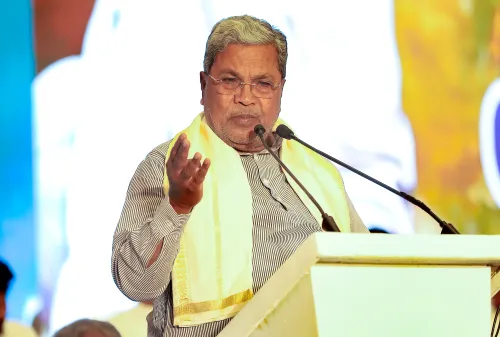
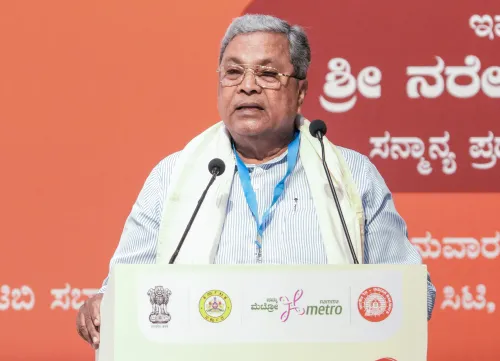
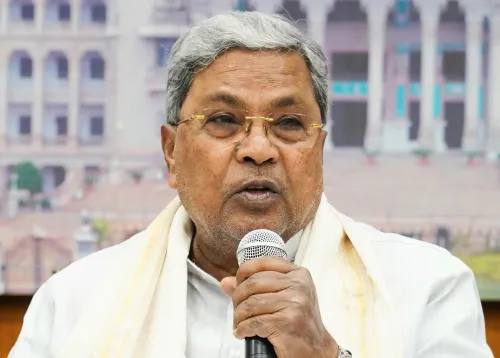
Karnataka Chief Minister Siddaramaiah on Friday, June 19, 2026, publicly defended his government's assertive stance toward the Union Government, framing the state's demands for funds, grants, and drought relief not as confrontation but as constitutional duty. The post, shared on X under the hashtag #MyPrinciplesInPractice, signals that the Congress-ruled southern state intends to keep pressing New Delhi on fiscal transfers and disaster assistance.
Context
Siddaramaiah wrote, 'Standing up for Karnataka is not confrontation. It is responsibility.' The statement comes amid a broader pattern of friction between opposition-governed states and the Union Government over the timing and quantum of central fund releases. In the post, he asserted that his government had taken 'the State's case firmly before the Union Government and the country' after Karnataka's share of funds, grants, and drought relief was delayed.
The Chief Minister anchored his position in a principled argument: 'Federalism means fairness. Protecting Karnataka's rights with dignity is a duty we owe to our people.' The framing is deliberate — positioning the state's demands as a constitutional obligation rather than political opposition.
Policy Backdrop
Karnataka's fiscal grievances have roots in the devolution framework established by the 15th Finance Commission, whose report covering 2021–26 set the formula for tax devolution and grant-in-aid to states. Karnataka has, under successive governments, periodically raised concerns about shortfalls in central transfers — particularly during drought years and following the rollout of the Goods and Services Tax.
Drought relief flows primarily through the National Disaster Response Fund and additional central assistance, both of which require state declarations and central scrutiny before disbursement. Delays in these channels have historically been a flashpoint between state governments and New Delhi, regardless of which party holds power at the Centre.
The 16th Finance Commission, whose recommendations are expected by late 2025, will set the devolution architecture for the next five-year cycle. Karnataka's public posturing ahead of that framework — and any supplementary drought relief provisions in the 2026–27 Union Budget — gives this statement added policy weight.
Stakeholders and Impact
Karnataka's farmers are the most immediate stakeholders in the drought relief dispute, as delayed central assistance directly affects state capacity to fund input subsidies, crop insurance payouts, and rural employment programmes. The state government's ability to bridge any funding gap depends partly on its own fiscal headroom and partly on timely central transfers.
More broadly, the exchange reflects a structural tension in Indian federalism: states bear the administrative burden of welfare delivery but depend on the Centre for a significant share of their revenues. When opposition-ruled states raise these grievances publicly, it simultaneously serves a governance purpose and a political one — keeping accountability visible to voters.
What's Next
The 16th Finance Commission's final report and the 2026–27 Union Budget's supplementary provisions for drought-affected states will be the next concrete milestones to watch. If Karnataka's pending claims are addressed in those processes, the current tension could ease; if not, Siddaramaiah's government is signalling it will continue to make its case publicly. The broader question — how the Centre-state fiscal compact is rebalanced for the next commission cycle — will shape not just Karnataka but every state navigating similar pressures.
Point of View
Insulating the Congress government from charges of being obstructionist. The hashtag '#MyPrinciplesInPractice' suggests a deliberate personal-branding exercise ahead of what could be a contentious 16th Finance Commission cycle. The timing also fits a broader Congress strategy of making Centre-state fiscal equity a national narrative, with Karnataka serving as the most visible case study. Whether the framing shifts actual policy outcomes or remains rhetorical positioning will depend on the Centre's response in the coming budget and commission deliberations.
NationPress
18 Sept 2026
Frequently Asked Questions
Why is Karnataka demanding funds from the central government?
Karnataka says its rightful share of central tax devolution, grants, and drought relief has been delayed by the Union Government. Chief Minister Siddaramaiah has publicly pressed New Delhi to release these dues, citing the state's constitutional entitlement under the Finance Commission framework.
What is the National Disaster Response Fund and how does drought relief work in India?
The National Disaster Response Fund is a central pool from which the Union Government releases disaster assistance to states. States must first declare a drought, submit memoranda, and undergo central team assessments before funds are disbursed, a process that can take several months.
What did the 15th Finance Commission decide for Karnataka?
The 15th Finance Commission's 2020 report set Karnataka's share of central tax devolution and grant-in-aid for the period 2021 to 2026. Karnataka has at times argued that the devolution formula disadvantages more prosperous, higher tax-contributing states like itself.
When will the 16th Finance Commission submit its recommendations?
The 16th Finance Commission's recommendations were expected by late 2025 and will set the fiscal devolution framework for the next five-year cycle, making its findings critical for states like Karnataka that have raised concerns about the current formula.
Is Centre-state fiscal tension unique to Karnataka under Siddaramaiah?
No. Multiple opposition-ruled states across India have raised similar concerns about delays in central transfers and disaster relief. Karnataka itself has flagged such issues under successive governments, making this a structural feature of Indian federalism rather than a party-specific dispute.