CM Siddaramaiah Reviews Karnataka Drought Relief, Water Supply
Synopsis
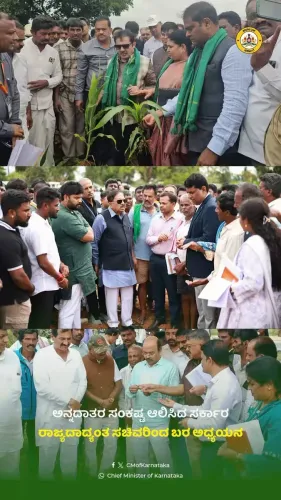
Chief Minister Siddaramaiah on 19 July 2026 chaired a video conference with all district commissioners across Karnataka, directing officials to use the FRUITS platform to ensure crop insurance and relief reach every small farmer, guarantee safe drinking water in all villages and wards, and open fodder banks to protect livestock from the ongoing drought.
Key Takeaways
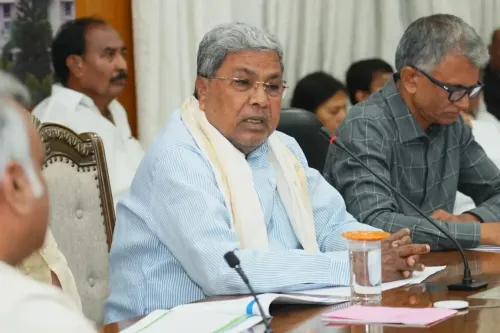
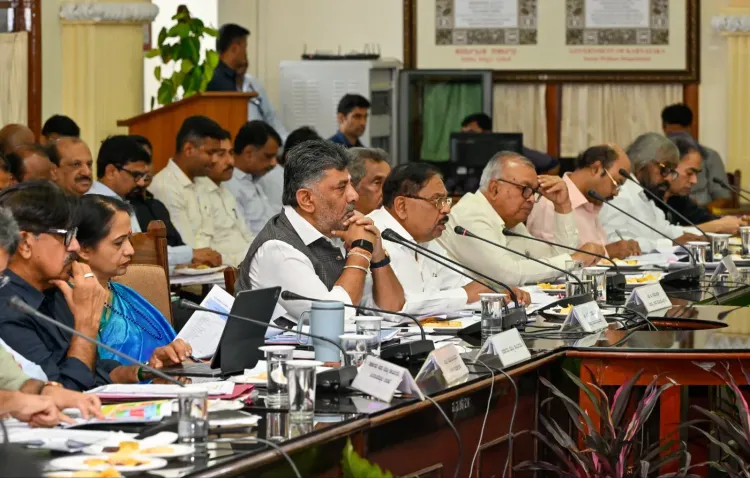
CM Siddaramaiah chaired a video conference on 19 July 2026 with all district commissioners and zilla panchayat CEOs on drought, water, fodder, agriculture, and employment.
Officials directed to use the FRUITS software to ensure no small or marginal farmer is denied crop insurance or relief due to negligence or technical failure.
Drinking water declared the first and primary priority ; tankers and hired private borewells to be deployed immediately where local sources are absent, with mandatory quality checks before distribution.
Fodder banks and goshalas to be opened immediately wherever needed; not a single head of livestock should die of hunger or thirst.
Existing water sources must be protected from contamination; public awareness campaigns on rainwater harvesting to be launched.
Ground-level administrative machinery directed to act swiftly so that ordinary citizens do not bear the brunt of drought severity.
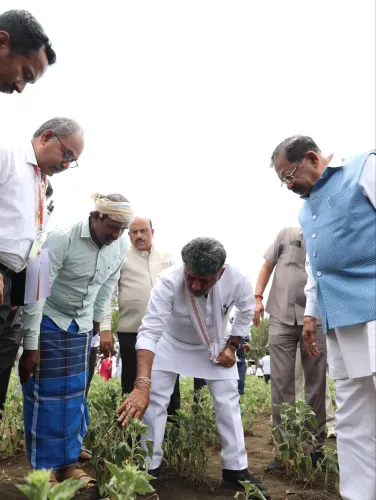
The Chief Minister's Office of Karnataka on Sunday, 19 July 2026 shared directives issued by Chief Minister Siddaramaiah following a video conference he conducted with all district commissioners and chief executive officers of zilla panchayats across the state on the subjects of drought conditions, drinking water, livestock fodder, agricultural activities, and employment.
Context
The CM's directives, shared in Kannada, instructed officials to ensure that complete details of small and marginal farmers are maintained through the FRUITS (Farmer Registration and Unified Beneficiary Information System) software, so that every eligible beneficiary at the grassroots level receives relief without exception. The post stated: 'Adhikarigala bejavaabdaariyadinda athava taantrika lopadinda yaavude obba raitanige belavime sigade iruvudu... sthiti udbhavisalebaaradu' — meaning no farmer should be denied crop insurance or relief due to official negligence or technical failure.
Officials were also directed to motivate a greater number of farmers to enrol in crop insurance and to complete crop damage surveys immediately and in accordance with rules.
Policy Backdrop
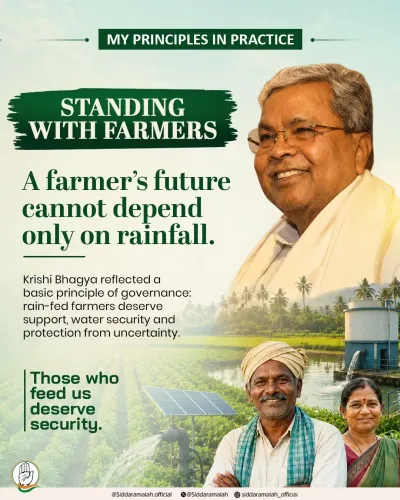
Karnataka has periodically declared droughts in several districts during years of monsoon deficit, including 2016, 2019, and 2023. The state uses the FRUITS digital platform to maintain farmer records and link them to central and state schemes, including the Pradhan Mantri Fasal Bima Yojana — the national crop insurance programme launched in 2016 to improve coverage for small and marginal farmers.
Successive state administrations have combined digital farmer databases with field surveys to ensure timely insurance claims and emergency relief deployment, a pattern that the current directives continue.
Drinking Water and Livestock
The CM declared drinking water to be the 'first and primary priority', directing that no village or urban ward in the state should face a shortage. Where local water sources are unavailable, officials were told to immediately arrange supply through private borewells on hire or through tankers — but with a mandatory quality check before distribution to prevent contaminated water from causing the spread of communicable diseases. Existing water sources must be protected from contamination, and public awareness on rainwater harvesting must be raised to prevent wastage.
On livestock, the directives were equally firm: fodder banks and goshalas (cattle shelters) must be opened immediately wherever needed, and 'not a single head of livestock in the state should die of hunger or thirst.' All government relief measures must reach people directly, with district administration acting swiftly at the ground level to shield ordinary citizens from the severity of the drought.
What's Next
Attention will now turn to district-level implementation: completion timelines for crop damage surveys, processing of insurance claims in drought-affected taluks, and operational reports on tanker deployment and fodder bank openings. The CM's directive that administrative machinery must 'hold people's hands' signals that the government intends to monitor ground-level execution closely in the weeks ahead.
Point of View
They push district machinery toward measurable deliverables — completed crop surveys, tanker deployments, open fodder banks — while politically, they signal that the Congress-led government is visibly engaged with agrarian distress ahead of what could be a prolonged dry spell. The explicit invocation of the FRUITS platform reflects a broader state strategy of tying digital beneficiary records to physical relief delivery, reducing the scope for leakages that have historically plagued drought relief in Karnataka. The zero-tolerance language on livestock deaths and contaminated water raises the accountability bar for district officers, but the real test will be whether monitoring mechanisms exist to enforce it. If implementation lags, the directives themselves become a political liability rather than an asset.
NationPress
18 Oct 2026
Frequently Asked Questions
What is the FRUITS software used in Karnataka?
FRUITS stands for Farmer Registration and Unified Beneficiary Information System, a Karnataka government digital platform that maintains comprehensive records of farmers — especially small and marginal ones — to ensure they are correctly identified and linked to state and central relief schemes, including crop insurance.
What did CM Siddaramaiah say about drinking water during the drought?
CM Siddaramaiah declared drinking water the 'first and primary priority', directing officials to ensure no village or urban ward faces a shortage. Where local sources are unavailable, private borewells on hire or tankers must be deployed immediately, but water quality must be tested before distribution to prevent the spread of disease.
What is the Pradhan Mantri Fasal Bima Yojana and how does it apply to Karnataka farmers?
Pradhan Mantri Fasal Bima Yojana is a central government crop insurance scheme launched in 2016 to provide financial support to farmers whose crops are damaged by natural calamities. Karnataka implements it for small and marginal farmers, using the FRUITS database to identify eligible beneficiaries.
What steps did the Karnataka government order for livestock protection during the drought?
The CM directed officials to immediately open fodder banks and goshalas (cattle shelters) wherever needed across the state, with an explicit directive that not a single head of livestock should die of hunger or thirst due to the drought.
Why did CM Siddaramaiah hold a video conference with district commissioners?
The video conference was convened to review the state's response to drought conditions across Karnataka, covering drinking water supply, livestock fodder, crop insurance for farmers, agricultural activities, and employment, and to issue direct operational instructions to all district commissioners and zilla panchayat chief executive officers.