CM Hemant Soren's Aakanksha Scheme Lifts Jharkhand Govt School Students
Synopsis
The Jharkhand CMO on 19 July 2026 spotlighted the Aakanksha programme under CM Hemant Soren and JEPC, aimed at fulfilling the educational aspirations of government school children across the state, particularly from rural and tribal communities.
Key Takeaways
The Chief Minister's Office of Jharkhand announced on 19 July 2026 that the Aakanksha programme is actively fulfilling aspirations of government school students.
Jharkhand Education Project Council (JEPC) is the nodal implementing agency for the initiative.
The scheme operates under the leadership of Chief Minister Hemant Soren of the JMM .
Jharkhand , formed in 2000 , has a large tribal population for whom government schools are the primary means of education.
The state has a policy lineage dating to Sarva Shiksha Abhiyan (2001) and the RTE Act (2009) , later unified under Samagra Shiksha .
Upcoming state budget allocations and JEPC rollout updates will be key indicators of the programme's scale and continuity.
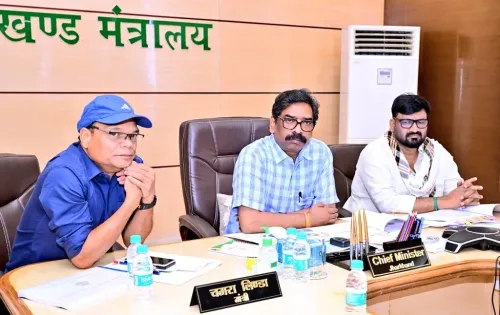
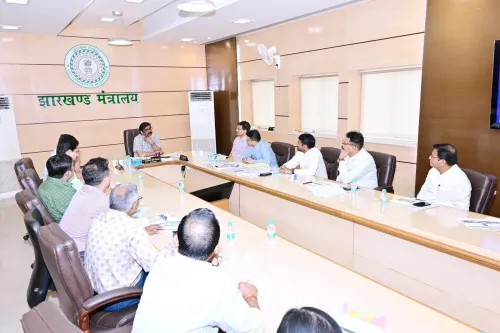
The Chief Minister's Office of Jharkhand on Sunday, 19 July 2026 highlighted how the Aakanksha initiative, implemented under the aegis of Jharkhand Education Project Council (JEPC), is fulfilling the aspirations of children enrolled in state government schools under the leadership of Chief Minister Hemant Soren.
The post, shared by the official CMO handle, stated in Hindi: 'Mukhyamantri Shri Hemant Soren ke kushal netritva mein Aakanksha se puri ho rahi hai sarkari school ke bachon ki aakanksha' — meaning, 'Under the able leadership of Chief Minister Hemant Soren, the aspirations of government school children are being fulfilled through Aakanksha.'
Context
The Aakanksha programme is positioned as a flagship education intervention channelled through JEPC, the nodal body responsible for implementing elementary and secondary education schemes across Jharkhand's government school network. The CMO's communication underscores the state government's intent to showcase tangible outcomes for students from rural and tribal communities who depend almost entirely on the public school system. The announcement comes at a time when Jharkhand, an eastern Indian state formed in 2000 with a sizeable tribal population, continues to grapple with challenges of learning outcomes, school retention, and infrastructure gaps in its government-run institutions.Policy Backdrop
Jharkhand's education policy architecture has evolved over more than two decades. The state adopted Sarva Shiksha Abhiyan (SSA) from 2001 to push universal elementary education, and subsequently implemented the Right of Children to Free and Compulsory Education Act, 2009 across its government schools from 2010 onwards. These central frameworks were later subsumed under Samagra Shiksha, with JEPC serving as the principal implementing agency at the state level. Hemant Soren, representing the Jharkhand Mukti Morcha (JMM), has consistently positioned tribal welfare and public service delivery — including education access — as central planks of his administration. State-level schemes layered atop central programmes have been a recurring feature of successive governments in Jharkhand, aiming to address the specific socio-economic vulnerabilities of its student population.Stakeholders and Impact
The primary beneficiaries of the Aakanksha programme are children enrolled in Jharkhand government schools, a population drawn predominantly from rural and tribal households with limited access to private coaching or supplementary education. For these families, the quality and ambition of public school programmes directly determines their children's future opportunities. JEPC functions as the operational backbone, coordinating with district education offices and school management committees to roll out scheme components. Improvements in enrolment, retention, and learning outcomes at government schools have broader implications for Jharkhand's human development indices, which have historically lagged behind national averages.What's Next
Attention will now turn to JEPC's on-ground implementation reports and the state's forthcoming budget allocations for school infrastructure and teacher recruitment. The next assembly session is expected to provide a clearer picture of financial commitments behind schemes like Aakanksha. Sustained progress in learning outcomes for government school students will be the ultimate measure of whether the programme lives up to its name — and the aspirations it promises to fulfil.Point of View
A domain where the Hemant Soren government has sought to distinguish itself from predecessors by foregrounding tribal and rural beneficiaries. Framing a scheme through the wordplay of 'Aakanksha' — meaning aspiration — fulfilling 'aakanksha' is a calculated communication choice that links political leadership directly to grassroots outcomes. At a broader level, this fits a pattern visible across several state governments of using social media to amplify scheme visibility ahead of budget cycles and potential electoral messaging. The real test, however, lies in verifiable data on enrolment, retention, and learning levels from JEPC — metrics that will determine whether the programme's optics translate into durable policy impact.
NationPress
18 Oct 2026
Frequently Asked Questions
What is the Aakanksha scheme in Jharkhand?
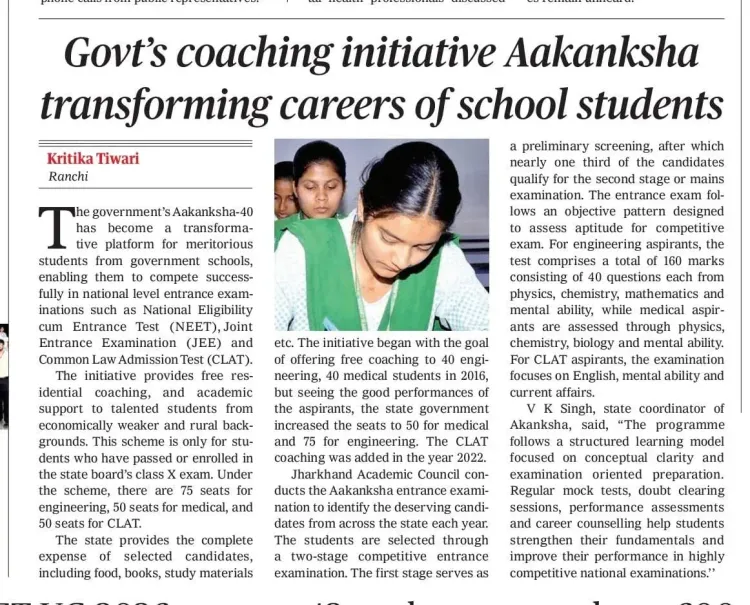
Aakanksha is an education programme implemented by the Jharkhand Education Project Council (JEPC) aimed at fulfilling the aspirations of children studying in government schools, particularly from rural and tribal communities across the state.
Who is Hemant Soren?
Hemant Soren is the Chief Minister of Jharkhand, representing the Jharkhand Mukti Morcha (JMM). His administration has prioritised tribal welfare and public education delivery as key policy areas.
What does JEPC do in Jharkhand?
JEPC, or Jharkhand Education Project Council, is the nodal state agency responsible for implementing elementary and secondary education programmes, including central schemes like Samagra Shiksha, across government schools in Jharkhand.
What is the history of government school education in Jharkhand?
Jharkhand adopted Sarva Shiksha Abhiyan from 2001 for universal elementary education and rolled out the Right to Education Act from 2010. These were later merged into Samagra Shiksha, with JEPC as the implementing body.
Which communities benefit most from Jharkhand government school schemes?
Children from rural and tribal families benefit most, as they rely almost entirely on the government school network. Jharkhand has a large tribal population for whom public education is the primary pathway to economic and social mobility.