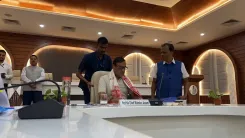
Karnataka CM's Office Begins Drought Tour, Formal Declaration Soon
Synopsis
The Chief Minister's Office of Karnataka announced a government field tour across drought-hit regions including Kalyana Karnataka on 7 July 2026, stating that a formal drought-affected area declaration will follow a thorough on-ground review, activating statutory relief for farmers and rural households.
Key Takeaways
The Chief Minister's Office of Karnataka confirmed a field tour on 7 July 2026 to assess drought conditions across the state.
Kalyana Karnataka — six northern districts historically prone to monsoon deficits — is among the regions covered in the tour.
The government pledged to formally notify drought-affected areas 'soon' after completing its ground-level review, following prescribed statutory procedures.
Formal drought notification under the Karnataka Land Revenue Rules activates crop-loss compensation, MGNREGA expansion, and land revenue waivers.
The state can subsequently seek central assistance from the NDRF and SDRF once the formal declaration is in place.
Similar drought assessment tours and notifications were conducted in 2019 and 2023 , establishing a procedural precedent.
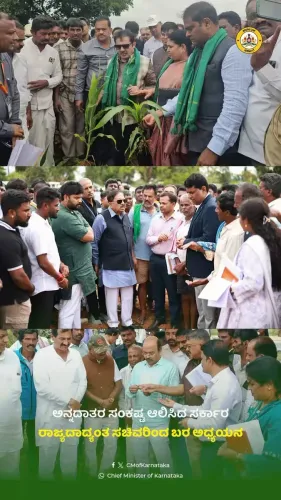
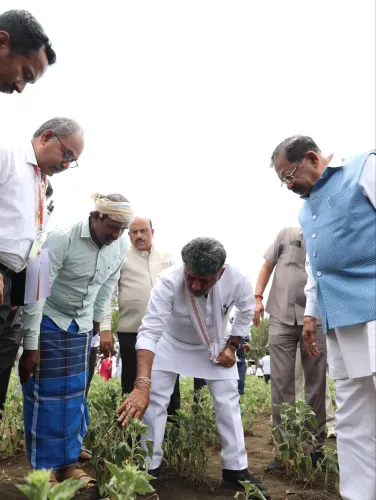
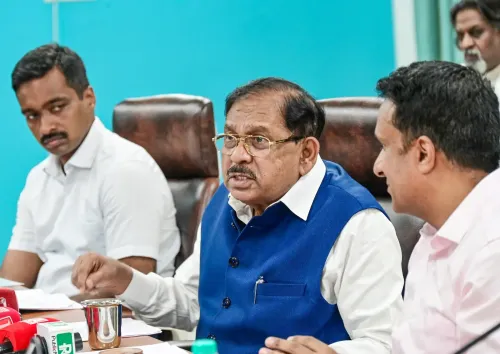
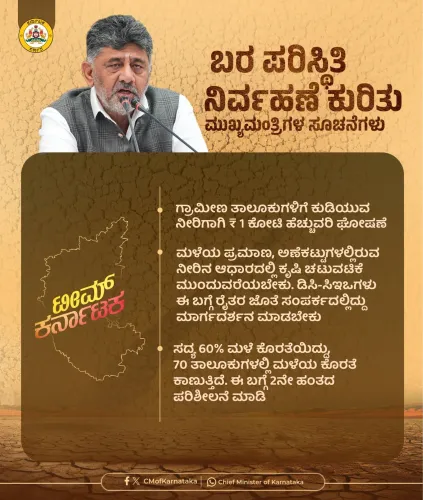
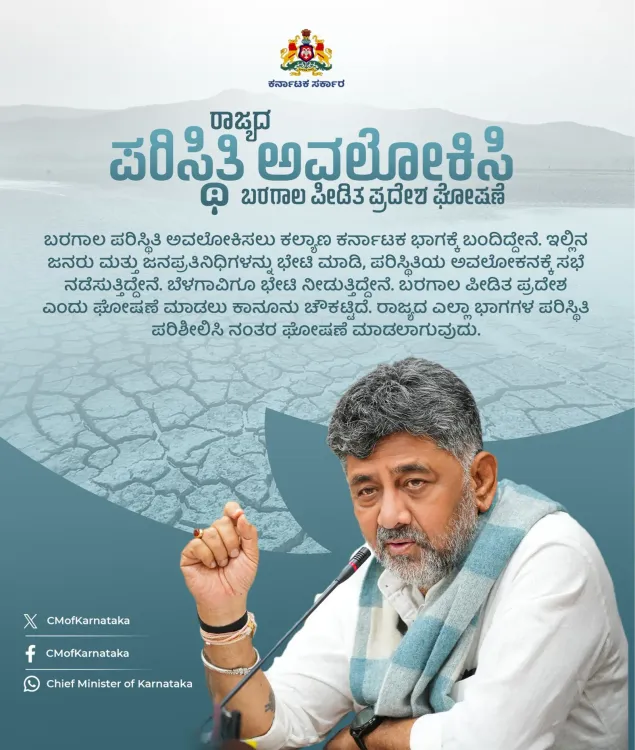
The Chief Minister's Office of Karnataka announced on Tuesday, 7 July 2026 that the state government has undertaken a field tour across drought-affected regions, including Kalyana Karnataka, to assess conditions on the ground and hear grievances from affected residents. The government pledged that a formal declaration of drought-affected areas will follow a thorough review, in accordance with prescribed statutory procedures.
The post, shared in Kannada, stated: 'ರೈತರ ಮತ್ತು ಸಾರ್ವಜನಿಕರ ಹಿತ ಕಾಯಲು ನಮ್ಮ ಸರ್ಕಾರ ಬದ್ಧ' ('Our government is committed to protecting the interests of farmers and the public'). It confirmed that tours had been undertaken to observe drought conditions spreading across various parts of the state, including Kalyana Karnataka, and to listen to people's grievances directly.
Context
The Kalyana Karnataka region — comprising six districts in northern Karnataka historically part of the former Hyderabad state — is among the most drought-prone zones in the state, characterised by lower average rainfall and limited irrigation coverage. The current monsoon season has seen deficits severe enough to prompt the state executive to conduct field visits rather than rely solely on administrative reports.
The government stated that after a 'complete and thorough review of the actual situation,' it will move swiftly to notify drought-affected areas under the relevant rules. This phrasing signals that the formal notification process, which requires assessment of crop-loss data and revenue records, is imminent.
Policy Backdrop
Karnataka has a documented history of periodic drought notifications, with similar assessment tours and formal taluk-level declarations carried out in 2019 and 2023 under the Karnataka Land Revenue Rules. These notifications are not merely symbolic — they activate a cascade of statutory relief measures including crop-loss compensation for farmers, expansion of MGNREGA work opportunities in rural areas, and waiver of land revenue dues.
Once drought-affected taluks are formally notified, the state government can also approach the Centre for additional financial assistance from the National Disaster Response Fund (NDRF) and the State Disaster Response Fund (SDRF). The field tour is thus a procedural prerequisite, not merely a public-relations exercise.
Stakeholders and Impact
The primary stakeholders are farmers and rural households across the drought-affected districts, who face crop failures, drinking-water shortages, and loss of livestock fodder. The Kalyana Karnataka region, which includes districts such as Bidar, Kalaburagi, Yadgir, Raichur, Koppal, and Vijayanagara, has historically lagged in development indicators, making drought years especially damaging to livelihoods.
Agricultural labourers who depend on seasonal crop cycles are equally vulnerable, as failed harvests reduce demand for farm labour. The government's commitment to hear public grievances directly during the tour suggests an intent to capture ground-level distress beyond what official crop-cutting experiments may record.
What's Next
The immediate next step is the formal government order notifying drought-affected taluks, which will specify the extent of crop damage and trigger the release of relief funds. Following notification, a cabinet decision on the relief package — covering input subsidies, compensation amounts, and MGNREGA wage enhancements — is expected.
The state is also likely to submit a memorandum to the Union government requesting central assistance, a standard step after formal drought declaration. How quickly the government moves from field assessment to notification and disbursement will be closely watched by farming communities across northern and central Karnataka.
Point of View
' the CMO is also pre-empting criticism that relief is being delayed or politicised. The move fits a broader pattern across Indian states of using visible field inspections to signal executive responsiveness during agrarian distress. The real test will be the speed and scale of the relief package that follows the formal notification, particularly whether input subsidies and MGNREGA wages reach the most marginalised farmers in the northern dry belt.
NationPress
6 Oct 2026
Frequently Asked Questions
What is the Karnataka government doing about the drought in 2026?
The Karnataka government has undertaken field tours across drought-affected regions including Kalyana Karnataka to assess ground conditions and hear public grievances, and has committed to formally notifying drought-affected taluks under statutory rules soon after completing the review.
What is Kalyana Karnataka and why is it drought-prone?
Kalyana Karnataka is a region of six northern Karnataka districts — Bidar, Kalaburagi, Yadgir, Raichur, Koppal, and Vijayanagara — historically part of the former Hyderabad state. The region receives lower average rainfall and has limited irrigation coverage, making it particularly vulnerable to monsoon deficits.
What happens after Karnataka declares drought-affected areas?
Once the government formally notifies drought-affected taluks under the Karnataka Land Revenue Rules, it can release crop-loss compensation for farmers, expand MGNREGA work in rural areas, waive land revenue dues, and submit a memorandum to the Union government requesting central assistance from the NDRF and SDRF.
Has Karnataka declared drought before?
Yes. Karnataka conducted similar drought assessment tours and formally notified affected taluks in both 2019 and 2023, establishing a procedural precedent for the current round of field inspections and impending declaration.
Which farmers benefit from Karnataka's drought declaration?
Farmers who have suffered crop losses in formally notified taluks are eligible for input subsidies and compensation payments. Agricultural labourers and rural households in affected areas also benefit through expanded MGNREGA employment opportunities and waiver of land revenue.