Karnataka Govt Moves Drought Relief to Farmers Without Waiting for Centre
Synopsis
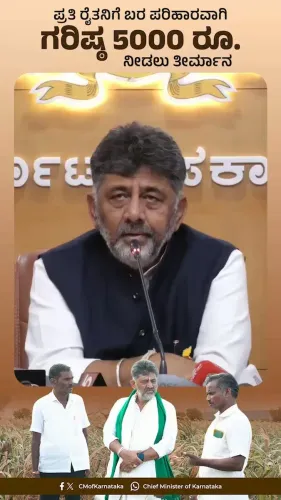
The Chief Minister's Office of Karnataka announces that the state government is disbursing the first instalment of drought relief to affected farmers through direct cash transfers, using state resources rather than waiting for central government funds, amid severe crop damage across the state.
Key Takeaways
The Chief Minister's Office of Karnataka announced on 5 November 2026 that drought relief is being disbursed to farmers from state resources.
The government explicitly stated it is not waiting for central grants before releasing funds to affected farmers.
Relief is being delivered via direct cash transfer to farmers' bank accounts, with the first instalment already in process.
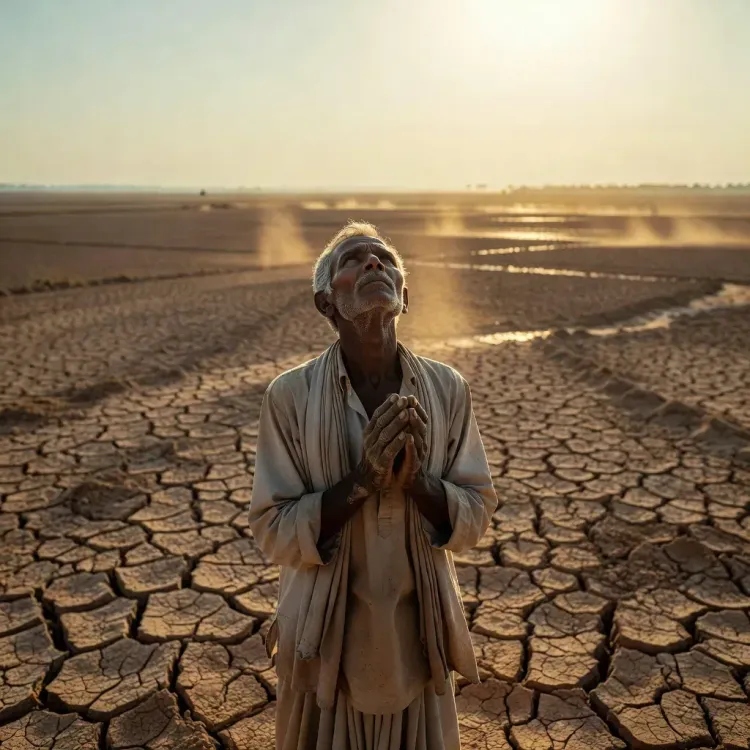
The state is responding to severe drought that has caused widespread crop damage and financial losses across Karnataka.
Subsequent instalments are expected as part of a phased disbursement structure.
Karnataka has historically used the State Disaster Response Fund for drought relief while also seeking central assistance under the NDRF.
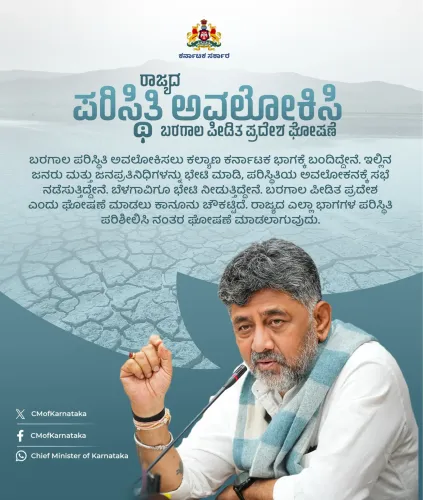
When the rains fail and crops wither, the question is never whether a government cares — it is whether it acts. On Thursday, 5 November 2026, the Chief Minister's Office of Karnataka signalled that the state is not waiting for New Delhi to move first: drought relief funds are already flowing directly into farmers' bank accounts from the state's own resources, with the first instalment of the disbursement process now underway.
The post, written in Kannada, declares the government's intent plainly: 'Annadatana kanneeru oresalu rajya sarkara dittha hejje' — 'A bold step by the state government to wipe the tears of the food-provider.' It states that rather than waiting for central grants, the state has announced drought relief from its own treasury, and that direct cash transfers to affected farmers' accounts are being processed swiftly.
Severe drought, state funds, and the choice to act now
Karnataka has periodically battled severe drought across multiple districts, drawing on the State Disaster Response Fund while simultaneously seeking supplementary central support under the National Disaster Response Fund — a pattern that stretches back to major drought declarations in 2016 and 2019. The government's move this time to front-load relief from state coffers, without anchoring the timeline to central approvals, reflects both urgency and a political signal of self-reliance.
The post describes widespread crop damage and financial losses as the backdrop, calling the restoration of 'courage, hope, and light' in farmers' lives the government's primary goal. The use of the word 'annadata' — literally 'one who gives food', a culturally resonant term of respect for farmers — underscores the register the government is reaching for: not bureaucratic dispatch, but solidarity.
Direct cash transfers as the delivery mechanism
Direct benefit transfer — the method being used here — has become the dominant channel for farmer relief across India's drought-prone states, reducing leakage and shortening the gap between announcement and impact. Karnataka's deployment of this mechanism for drought compensation follows a broader national pattern where state governments use digital payment rails to demonstrate accountability alongside speed.
The government notes that subsequent instalments are anticipated, suggesting a phased disbursement structure. Watchers will now focus on whether formal requests for additional central assistance follow, and how quickly subsequent tranches reach beneficiaries on the ground.
Cooperative federalism's stress test
India's disaster response architecture is built on a two-tier model: states respond first from their own funds, then seek reimbursement or top-up from the centre. When a state government explicitly highlights that it is not waiting for central funds, it is making both a welfare statement and a political one — asserting fiscal agency in a moment of distress. It is a move that resonates loudly in an agrarian state where nearly every election hinges on rural credibility.
Farmers caught between failed monsoons and uncertain relief timelines rarely have the luxury of waiting for inter-governmental processes to resolve. Karnataka's decision to move with its own resources is the kind of commitment that gets tested — and remembered — in the fields long before it is debated in assemblies.
Point of View
Without waiting for central approval, is a pointed assertion of state fiscal agency within India's cooperative federalism framework. It follows a pattern seen in other opposition-ruled states that have used self-funded welfare delivery to signal governance competence ahead of electoral cycles. The explicit messaging around 'not waiting for the centre' also reflects the ongoing tension between state and central governments over disaster fund timelines. How quickly subsequent instalments follow will determine whether this remains a political statement or becomes a credible policy legacy.
NationPress
5 Nov 2026
Frequently Asked Questions
Why is Karnataka giving drought relief without waiting for central funds?
The Karnataka government has stated it is using state resources to immediately disburse drought relief rather than wait for central grants, aiming to deliver faster support to crop-damaged farmers through direct cash transfers.
How will Karnataka farmers receive drought relief money?
Relief is being transferred directly into farmers' bank accounts through a direct benefit transfer mechanism, with the first instalment already being processed.
Which farmers are eligible for Karnataka drought relief 2026?
The relief targets farmers affected by the severe drought currently impacting Karnataka, who have suffered significant crop damage and financial losses. Specific district and eligibility details are expected to be detailed by the government separately.
What is the State Disaster Response Fund used for in Karnataka?
The State Disaster Response Fund is a state-level reserve used to finance immediate disaster relief, including drought compensation, before or alongside any additional central government support under the National Disaster Response Fund.
Will Karnataka also request central government drought relief?
Karnataka has not ruled out seeking central government support — the state has historically filed for central assistance under the National Disaster Response Fund during major droughts. Any formal central request is being watched as a next step.