Karnataka releases ₹2,500 drought relief to farmers across 226 taluks
Synopsis
Karnataka has formally ordered the release of ₹2,500 per farmer as the first drought relief instalment across 226 of its 240 taluks — one of the state's widest drought declarations. But with opposition leaders and farmer groups calling the flat payout a 'pittance' and demanding ₹25,000 per acre, the political battle over the adequacy of the relief is far from over.
Key Takeaways
The Karnataka government on 29 October 2026 formally ordered release of ₹2,500 per farmer as the first instalment of drought relief.
226 of 240 taluks in Karnataka have been declared drought-affected, covering an estimated 45–50 lakh farmers .
Total state allocation is approximately ₹1,250 crore , disbursed from the State Disaster Response Fund without waiting for NDRF funds from the Centre.
Relief will be auto-credited via direct benefit transfer using FRUITS software and Kharif crop survey data — no separate application needed.
Sunil Kumar and opposition leader R.
Ashoka criticised the amount as inadequate, demanding ₹25,000 per acre instead of a flat payout.
Critics allege 17 conditions attached to eligibility could exclude a significant number of genuinely drought-affected farmers.
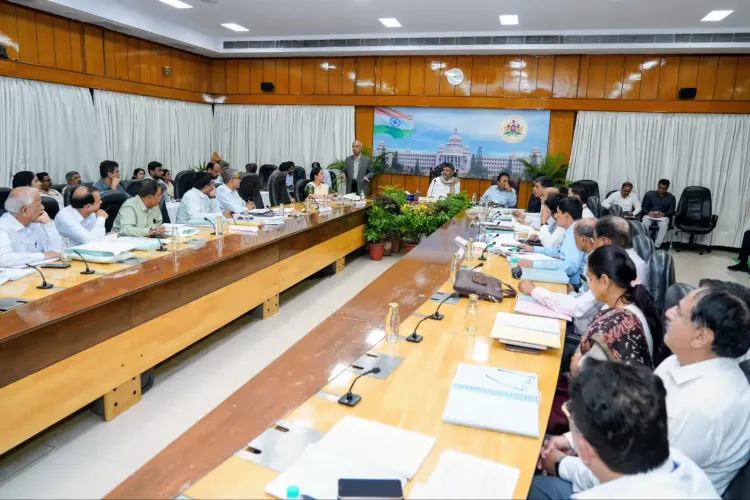
The Karnataka government on Thursday, 29 October 2026, formally issued an order sanctioning the release of ₹2,500 as the first instalment of drought relief to farmers in 226 drought-declared taluks across the state. The move follows an assurance made during a recent special legislative session to extend financial assistance to farmers hit by inadequate rainfall.
Key Developments
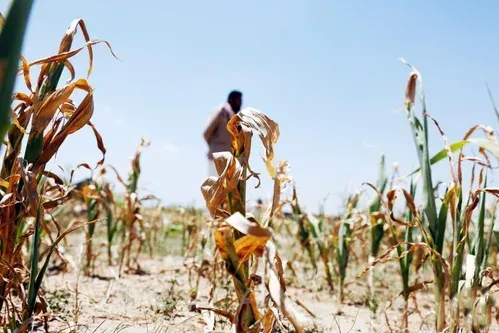
Of Karnataka's 240 taluks, a staggering 226 have been officially declared drought-affected — one of the widest drought declarations in the state's recent history. Rather than wait for funds under the National Disaster Response Fund (NDRF) from the Centre, the state government has opted to disburse the first instalment from its own State Disaster Response Fund (SDRF), reflecting both the urgency of the crisis and the friction in Centre-state disaster fund flows.
The total state allocation for the measure is estimated at around ₹1,250 crore, covering an estimated 45 lakh to 50 lakh drought-affected farmers. The relief is structured as a flat, one-time payment per farmer family.
How Farmers Will Receive the Money
Eligible beneficiaries will not need to file separate applications. The government has said identification will be done directly using data from the Farmer Registration and Unified Beneficiary Information System (FRUITS) software maintained by the e-governance department, cross-referenced with the Kharif crop survey database. The relief will be credited directly to bank accounts through a direct benefit transfer (DBT) mechanism.
Opposition Criticism and Farmer Demands
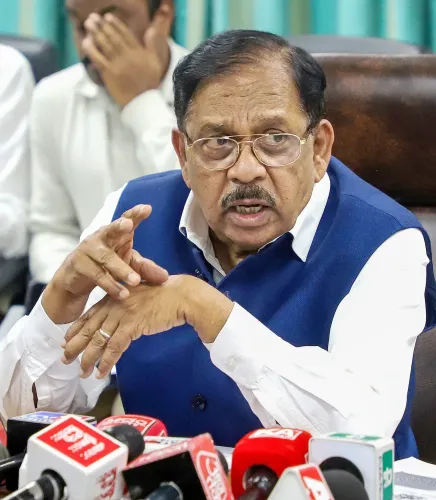
The announcement has drawn sharp criticism from the political opposition and farmer organisations. V. Sunil Kumar, Bharatiya Janata Party (BJP) MLA from Karkala and former Karnataka minister, said: 'The state government is resorting to a cruel mockery of farmers suffering from drought under the pretext of providing relief. By imposing 17 conditions to grant ₹2,500 in compensation, the government has exposed its commitment to the farming community.'
Kumar further argued that after officially declaring 226 taluks drought-hit, providing relief without discrimination was the government's duty — especially given the assurance extended on the floor of both Houses of the legislature. 'Failing to honour that assurance would amount to a breach of the privileges of the legislature,' he said. He added that if the government genuinely intended to help, it should extend compensation to all eligible farmers without any conditions, or else 'admit that this is all a zero-balance government can afford to do.'
Opposition leader R. Ashoka and associated farmer and youth groups have also called the ₹2,500 figure a 'pittance', demanding per-acre compensation of ₹25,000 instead of a flat per-farmer payout — ten times the announced amount.
Background and Context
The drought relief measure was first announced in late September 2026 during the tenure of then Chief Minister Siddaramaiah. The gap between announcement and formal order has itself been a point of friction, with farmers and opposition leaders pressing the government to act swiftly. This comes amid a broader agrarian distress narrative in Karnataka, where below-normal monsoon rainfall has impacted kharif sowing and crop yields across a majority of districts. Notably, the NDRF release from the Centre remains pending — a recurring flashpoint in Centre-state fiscal relations during natural disasters.
What Happens Next
The government's use of FRUITS data and the Kharif survey database to auto-identify beneficiaries is aimed at speeding up disbursal, but critics argue the reported 17 conditions attached to eligibility could exclude a significant share of affected farmers. Civil society groups and farmer organisations are expected to continue pressing for a higher, per-acre compensation model. How quickly the DBT credits reach beneficiaries — and how many are ultimately covered — will be the real measure of the scheme's impact.
Point of View
500 flat payout is less a solution and more a political signal — the government needed to show movement after its own legislature-floor assurance, yet the amount covers barely a fraction of a season's crop loss. The ten-fold gap between what farmers are demanding (₹25,000 per acre) and what is being offered exposes the state's fiscal constraints as much as its priorities. Equally significant is the NDRF dimension: Karnataka is drawing on its own SDRF precisely because Centre-state disaster fund disbursals are slow, a structural fault line that repeatedly delays relief at the worst possible moment. The reported 17 eligibility conditions are the real story — if they thin out the beneficiary pool, the headline ₹1,250 crore spend becomes a far smaller actual transfer to the farmers who need it most.
NationPress
29 Oct 2026
Frequently Asked Questions
What is the ₹2,500 drought relief announced by the Karnataka government?
It is a flat, one-time payment of ₹2,500 per farmer family, disbursed as the first instalment of drought relief to farmers in 226 drought-declared taluks across Karnataka. The measure was first announced in late September 2026 and formally ordered on 29 October 2026, with funds drawn from the State Disaster Response Fund.
How many farmers are covered under Karnataka's drought relief scheme?
An estimated 45 lakh to 50 lakh drought-affected farmers across the 226 drought-declared taluks are eligible. The total state allocation is approximately ₹1,250 crore.
Do farmers need to apply separately to receive the ₹2,500 relief?
No. The Karnataka government has clarified that farmers do not need to submit separate applications. Beneficiaries will be identified automatically using data from the FRUITS software and the Kharif crop survey database, and the amount will be credited directly to their bank accounts via direct benefit transfer.
Why are farmers and the opposition criticising the ₹2,500 relief amount?
Farmer organisations and opposition leaders, including BJP's V. Sunil Kumar and R. Ashoka, have called ₹2,500 a 'pittance' and demanded per-acre compensation of ₹25,000 instead of a flat per-farmer payout. Critics also allege that 17 attached eligibility conditions could exclude many genuinely affected farmers.
Why did Karnataka use its own funds instead of waiting for NDRF money from the Centre?
The state government chose to disburse the first instalment from its own State Disaster Response Fund to provide immediate assistance rather than wait for the National Disaster Response Fund to be released by the Union government, which can be a slower process. The NDRF release from the Centre reportedly remains pending.