Karnataka drought: ₹2,500 released to 50 lakh farmers, state seeks ₹12,000 crore from Centre
Synopsis
With 217 of Karnataka's 240 taluks declared drought-hit and nearly all crops destroyed in Vijayanagara district, the state has disbursed ₹2,500 to 50 lakh farmers from its own pocket — even as it waits for New Delhi to release its NDRF share. Deputy CM Parameshwara's warning that the government is 'prepared to borrow' to fund relief captures the fiscal tightrope Karnataka is walking.
Key Takeaways
Karnataka has released ₹2,500 each to approximately 50 lakh drought-hit farmers as a first instalment, spending around ₹1,250 crore from state funds.
217 of 240 taluks in Karnataka have been declared drought-affected; Vijayanagara district saw approximately 98% of crops destroyed.
The state has sought ₹10,000 crore to ₹12,000 crore in drought relief from the Centre; the total relief figure could rise to ₹18,000–₹20,000 crore if losses reach ₹60,000 crore .
Under NDRF norms, each farmer is entitled to ₹8,500 in relief; the Centre has not yet released its share.
A 60-month loan repayment moratorium has been granted to affected farmers; crop insurance payouts are also being expedited.
BJP and JD(S) leaders declined to join a planned delegation to the Centre, drawing a sharp response from Deputy CM Parameshwara .
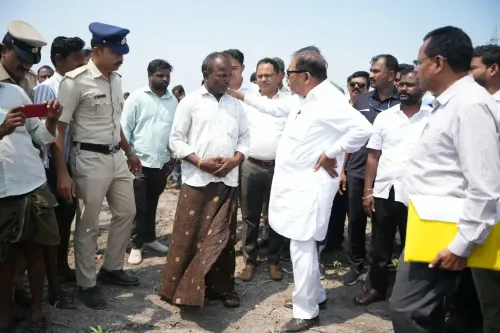
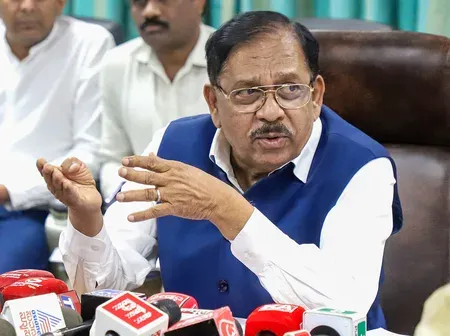
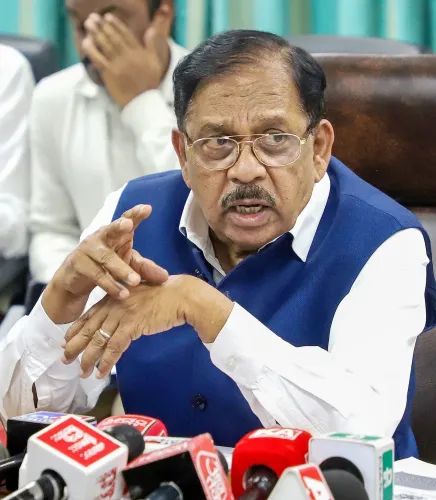
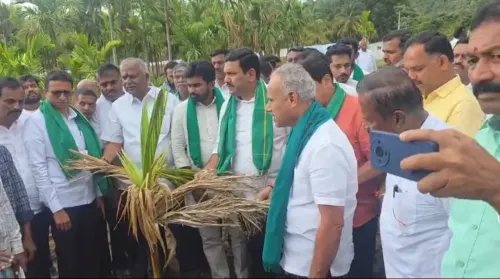
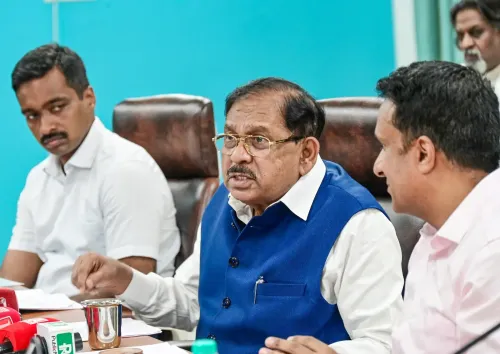
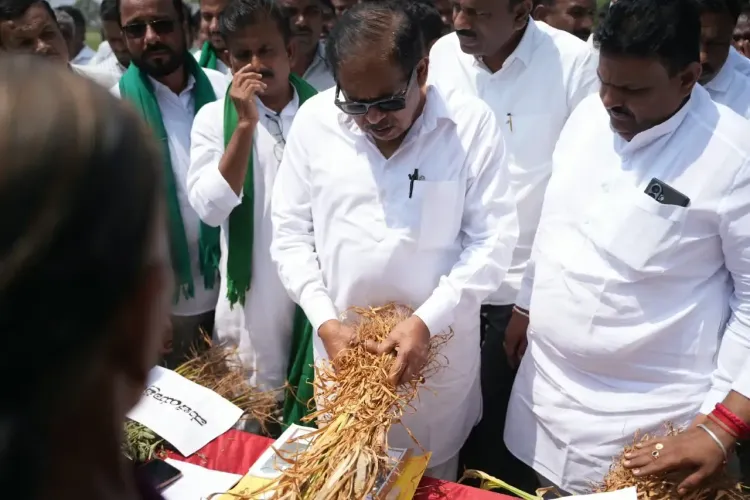
Karnataka Deputy Chief Minister G. Parameshwara on Thursday, 8 October 2026, said the state's drought situation was becoming increasingly severe, with the government releasing a first instalment of ₹2,500 each to approximately 50 lakh affected farmers from its own funds, even as it awaits a relief package of ₹10,000 crore to ₹12,000 crore from the Centre. Parameshwara made the remarks while inspecting drought-hit farmland at Gunnal village in Yelburga taluk, Koppal district.
Scale of the Drought Crisis
Of Karnataka's 240 taluks, a staggering 217 have already been formally declared drought-affected. The situation is reported to be most acute in North Karnataka, particularly in the districts of Ballari, Vijayanagara, Koppal, Raichur, and Vijayapura, which Parameshwara described as more severely hit than the Mysuru region.
During recent field visits to Vijayapura and Ballari, officials found that approximately 98 per cent of crops in Vijayanagara district had been destroyed. The Deputy Chief Minister noted that even the crops that survived the drought were unlikely to yield a viable harvest. Drought-induced migration has already begun in several villages, with communities such as the Lambani Tanda settlement reportedly preparing to leave in search of employment. Officials have been directed to provide work through the rural employment guarantee scheme to check this outward movement.
Relief Released and Funds Sought
Under the Centre's National Disaster Response Fund (NDRF) norms, each farmer is eligible for a total relief of ₹8,500, comprising both Centre and state shares. Since the Centre has not yet released its share, the Karnataka government decided to disburse ₹2,500 per farmer from state funds as an immediate first instalment. The state has already spent around ₹1,250 crore on this disbursement.
Parameshwara acknowledged that the amount was insufficient given the scale of losses but stressed that it was intended as urgent, bridge-gap relief. The state has submitted a crop-loss assessment of approximately ₹46,000 crore based on losses reported across 177 taluks. Should the drought persist, Parameshwara warned, total losses could approach ₹60,000 crore — at which point the state may seek between ₹18,000 crore and ₹20,000 crore from New Delhi.
Centre's Response and Political Friction
Three central teams have already visited different parts of Karnataka to assess the situation, and the state expects relief to be disbursed based on their reports. A delegation led by Chief Minister D.K. Shivakumar and Parameshwara, along with Opposition leaders, had been planned to meet the Centre and press for greater assistance. However, Bharatiya Janata Party (BJP) and Janata Dal (Secular) (JD(S)) leaders indicated they would not participate in the delegation.
Parameshwara appealed across party lines: 'This is not the time for politics; this is the time to stand with farmers. MPs from Karnataka should put pressure on the Centre irrespective of party affiliation.' He called on all elected representatives to prioritise farmer relief over political considerations.
Additional Measures for Farmers
The state government has put in place a range of supplementary measures. A 60-month moratorium on loan repayment has been provided to drought-hit farmers, with banks formally notified about the arrangement, including provisions related to interest liabilities. The government is also actively pursuing crop insurance payouts, having held discussions with insurance companies regarding pending claims and examining issues related to farmers' premium contributions.
Further support includes diesel subsidies, electricity subsidies, and coverage under the state's guarantee schemes. On the acute question of groundwater, Parameshwara disclosed that levels had fallen sharply, with some areas in the state failing to yield water even after drilling to 500 feet, and certain locations in his own region requiring drilling to 1,800 feet without success.
The Deputy Chief Minister also said the Centre would be requested to intervene on maize prices, as farmers in several North Karnataka districts were facing hardship due to low market prices alongside reduced yields, and called on the Union Government to ensure adequate Minimum Support Price (MSP) support.
Government's Commitment
Parameshwara was categorical that the government would not leave farmers to fend for themselves. 'Under no circumstances will we abandon farmers. If necessary, the government is prepared even to borrow money to provide relief,' he said. He also rejected allegations that the state's guarantee schemes had triggered a fiscal crisis, noting that Karnataka had spent around ₹52,000 crore on them over the past three years without suspending any government programme.
With central assessment teams having completed their visits and a potential delegation to New Delhi in the pipeline, the scale of federal relief that Karnataka ultimately receives will be the defining factor in how the state navigates what is shaping up to be one of its worst droughts in recent memory.
Point of View
While Opposition parties refuse to join a cross-party delegation to the Centre. Karnataka's crop-loss assessment of ₹46,000 crore — potentially climbing to ₹60,000 crore — dwarfs what NDRF norms are calibrated to cover, exposing a structural gap in India's disaster-relief architecture that recurs every severe drought cycle. The 60-month loan moratorium and diesel subsidies are sensible but downstream fixes; the upstream question — why groundwater depletion is so acute that 1,800-foot drilling yields nothing — speaks to a water-governance failure that seasonal relief cannot address.
NationPress
8 Oct 2026
Frequently Asked Questions
How much drought relief has Karnataka given to farmers so far?
Karnataka has released ₹2,500 each to approximately 50 lakh drought-affected farmers as a first instalment, spending around ₹1,250 crore from state funds. The Centre has not yet released its share under NDRF norms, which entitle each farmer to a total of ₹8,500.
How many taluks in Karnataka are drought-affected?
As of 8 October 2026, 217 of Karnataka's 240 taluks have been officially declared drought-affected. The situation is worst in North Karnataka districts such as Ballari, Vijayanagara, Koppal, Raichur, and Vijayapura.
How much money has Karnataka sought from the Centre?
Karnataka has sought between ₹10,000 crore and ₹12,000 crore from the Centre based on a crop-loss assessment of around ₹46,000 crore across 177 taluks. If total losses reach ₹60,000 crore, the state may seek up to ₹18,000–₹20,000 crore.
What other relief measures has the Karnataka government announced for farmers?
Beyond the ₹2,500 cash instalment, the government has granted a 60-month loan repayment moratorium, is pursuing crop insurance payouts, and is providing diesel and electricity subsidies. Steps are also underway to generate rural wage employment to prevent drought-induced migration.
Why did BJP and JD(S) refuse to join the delegation to the Centre?
BJP and JD(S) leaders indicated they would not participate in the planned all-party delegation to seek drought relief from the Centre, though no detailed public reason was given. Deputy CM Parameshwara criticised the move, saying this was 'not the time for politics' and urging all Karnataka MPs to press New Delhi regardless of party affiliation.