Karnataka seeks ₹20,585 crore NDRF drought relief from Centre amid 35% rain deficit
Synopsis
Karnataka has recorded its second-worst monsoon since 1956, with a 35% rainfall deficit devastating 57.93 lakh hectares of crops and triggering a ₹20,585 crore relief demand to the Centre. Deputy CM Parameshwara's letters to Modi, Shah and Chouhan also challenge the Centre's use of decade-old agricultural census data — a dispute that could cost Karnataka farmers over ₹1,669 crore in underpaid relief.
Key Takeaways
Karnataka Deputy CM G.
Parameshwara has written to PM Modi , HM Amit Shah , and Agriculture Minister Shivraj Singh Chouhan seeking ₹20,585.73 crore in NDRF drought relief.
The state recorded a 35% rainfall deficit in the 2026 southwest monsoon — the second-lowest since 1956 and seventh-lowest since 1901 .
226 taluks have been declared drought-hit; crop damage spans 57.93 lakh hectares with a total economic loss of ₹62,481.88 crore .
Livelihood assistance of ₹12,146.99 crore is sought for 61.91 lakh small and marginal farmers at ₹327 per day for 60 days .
The state has contested the Centre's use of 2015-16 agricultural census data, warning it could cause a relief shortfall of ₹1,669.50 crore .
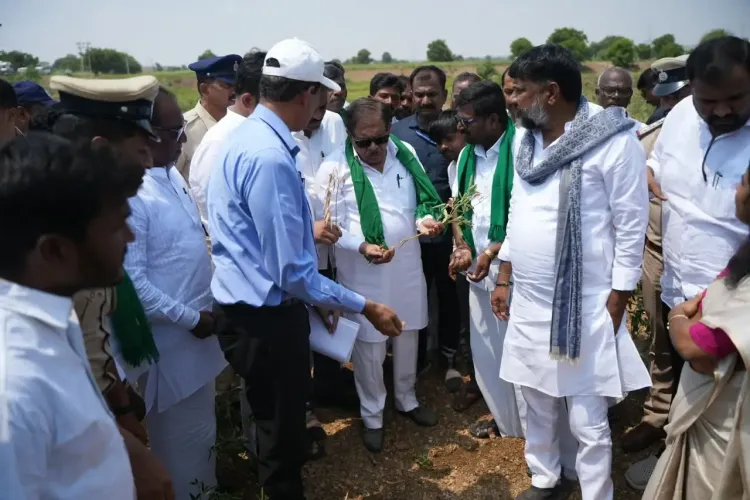
The Inter-Ministerial Central Team (IMCT) visited Karnataka from 3–6 October 2026 ; the state has urged early submission of its report to the High-Level Committee.
Karnataka Deputy Chief Minister and Revenue Minister G. Parameshwara has written separate letters to Prime Minister Narendra Modi, Union Home Minister Amit Shah, and Union Agriculture Minister Shivraj Singh Chouhan, urging the Centre to urgently sanction and release over ₹20,585 crore under the National Disaster Response Fund (NDRF) to address a severe drought gripping the state. The letters, dispatched from Bengaluru on 22 October 2026, come as 226 taluks across Karnataka have been formally declared drought-hit.
Scale of the Drought
Karnataka recorded a 35 per cent rainfall deficit during the 2026 southwest monsoon season, receiving only 551 mm against a normal of 852 mm. According to Parameshwara, this makes it the second-lowest monsoon rainfall since 1956 and the seventh-lowest since 1901 — a sobering statistical marker that underlines the severity of the crisis.
Crop damage has been reported across 57.93 lakh hectares, comprising 53.92 lakh hectares of agricultural crops and 4.01 lakh hectares of horticultural crops. The total economic loss, calculated on the basis of agricultural input costs, has been pegged at ₹62,481.88 crore.
Breakdown of the Relief Demand
The state's comprehensive memorandum places the central assistance requirement at ₹20,585.73 crore, broken down as follows: ₹6,128.70 crore as input subsidy for crop losses; ₹12,146.99 crore as livelihood assistance for 61.91 lakh small and marginal farmers, calculated at ₹327 per day for 60 days; ₹1,727 crore for drinking water supply; and ₹583.04 crore for animal husbandry and livestock protection.
The state has additionally sought ₹427.20 crore under the PM POSHAN scheme to provide nutritious meals to schoolchildren in drought-affected taluks during summer vacations, and a further ₹70.96 crore under the Supplementary Nutrition Programme for vulnerable beneficiaries.
Disputes Over Outdated Data
Parameshwara flagged a significant methodological concern: the Centre's continued reliance on agricultural Census data from 2015-16 to determine input subsidies. He argued that calculations based on decade-old figures could result in a shortfall of around ₹1,669.50 crore in relief for Karnataka. The state has urged the Centre to instead use its updated Farmers Registration and Unified Beneficiary Information System (FRUITS) database for accurate beneficiary identification. A revision of existing norms governing input subsidies — in keeping with rising agricultural production costs and the period covered by the 16th Finance Commission — has also been called for.
Livestock and Infrastructure Needs
Beyond crop losses, the state has sought assistance to establish 476 cattle camps and 583 fodder banks to protect livestock. Drinking water supply disruptions across drought-hit taluks have been flagged as requiring immediate central intervention, with ₹1,727 crore earmarked for that purpose alone.
What the Government Said
Parameshwara invoked the principle of cooperative federalism, asserting that 'farmers' welfare transcends political and administrative boundaries' and that the Centre and states must work in coordination. He referred to the visit of the Inter-Ministerial Central Team (IMCT) to Karnataka from 3 to 6 October to assess the situation on the ground, and urged the Centre to expedite the team's recommendations to the High-Level Committee for swift sanction and release of funds. This comes amid mounting pressure on the state government to deliver relief to farming communities ahead of the rabi sowing season.
Point of View
585 crore demand is large but not without basis — a 35% rainfall deficit affecting over 57 lakh hectares is a genuine agrarian emergency, not a fiscal manoeuvre. What is politically sharper is Karnataka's challenge to the Centre's use of 2015-16 census data: a decade-old baseline that effectively deflates relief entitlements for farmers whose costs have risen sharply since. The FRUITS database dispute is a microcosm of a wider federalism tension — states generating better real-time data but remaining bound by Centre-set norms. With the 16th Finance Commission in play, Karnataka's push to revise input subsidy norms could have precedent-setting implications for how drought relief is calculated nationally.
NationPress
22 Oct 2026
Frequently Asked Questions
Why has Karnataka demanded ₹20,585 crore from the Centre?
Karnataka has demanded ₹20,585.73 crore in central assistance under the NDRF following a severe drought triggered by a 35% monsoon rainfall deficit in 2026. The demand covers crop input subsidies, livelihood support for 61.91 lakh small and marginal farmers, drinking water supply, and livestock protection across 226 drought-declared taluks.
How bad is Karnataka's drought in 2026?
Karnataka received only 551 mm of rainfall against a normal of 852 mm during the 2026 southwest monsoon season — a 35% deficit that makes it the second-lowest monsoon since 1956 and the seventh-lowest since 1901. Crop damage has been recorded across 57.93 lakh hectares, with a total economic loss estimated at ₹62,481.88 crore.
What is the dispute over the 2015-16 agricultural census data?
Karnataka has flagged that the Centre uses agricultural census data from 2015-16 to calculate input subsidies for crop losses, which the state argues is outdated. Parameshwara stated that this could result in a shortfall of around ₹1,669.50 crore in relief for Karnataka, and has urged the Centre to use the state's FRUITS database instead for accurate beneficiary identification.
Who has Karnataka's Deputy CM written to, and what has he asked?
Deputy CM G. Parameshwara has written separately to Prime Minister Narendra Modi, Home Minister Amit Shah, and Agriculture Minister Shivraj Singh Chouhan. He has urged all three to expedite the examination of Karnataka's relief memorandum and ensure that the Inter-Ministerial Central Team's findings are placed before the High-Level Committee without delay.
What assistance has Karnataka sought for livestock and schoolchildren?
Karnataka has sought funds to establish 476 cattle camps and 583 fodder banks under its ₹583.04 crore livestock protection request. It has also sought ₹427.20 crore under PM POSHAN for nutritious meals for schoolchildren in drought-hit taluks during summer vacations, and ₹70.96 crore under the Supplementary Nutrition Programme for vulnerable beneficiaries.