Kishan Reddy: India-Poland to Double Trade, Launch Defence Dialogue

Synopsis
PM Modi and Polish PM Donald Tusk agreed to double bilateral trade by 2030, launch a Defence Industry Dialogue for co-production, bring Poland into the CDRI, and establish a counter-terrorism dialogue — marking a major step-up in India-Poland ties.
Key Takeaways
Trade doubling target: India and Poland agreed to double bilateral trade by 2030 , with specific focus on MSMEs and investment opportunities.
CDRI membership: Poland formally joined India's Coalition for Disaster Resilient Infrastructure , expanding the climate-resilience platform's European footprint.
Defence Industry Dialogue: A new institutional mechanism to enable joint development, co-production, and defence technology collaboration between the two countries.
Counter-terrorism dialogue: Both sides committed to structured cooperation on information-sharing, capacity-building, and collective security.
Strategic context: Poland's NATO-adjacent posture and large defence modernisation programme make it a priority partner for India's Atmanirbhar Bharat defence push.
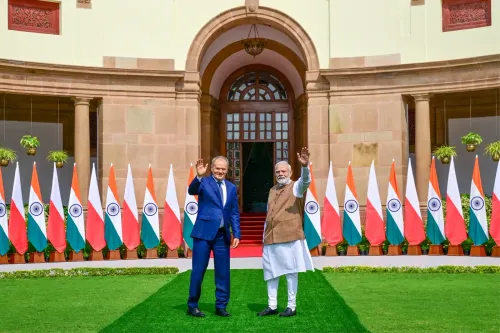
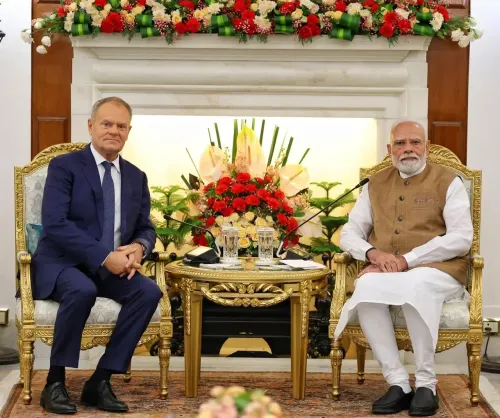
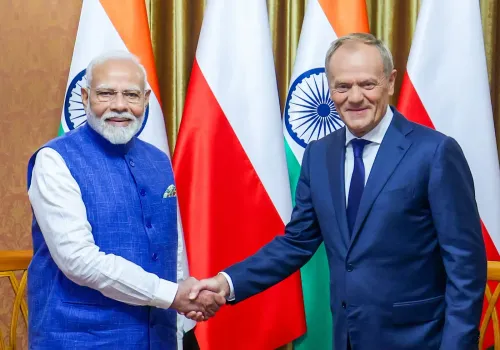
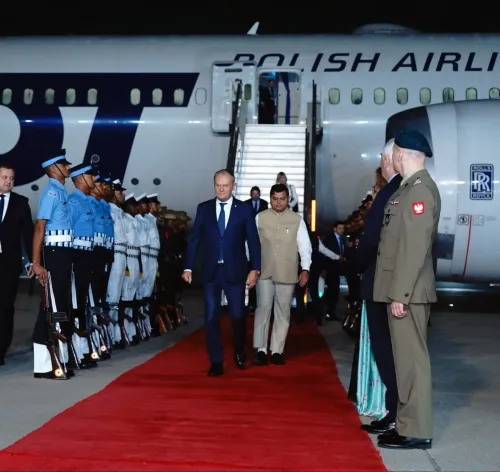
Two flags, one handshake, and a four-point agenda that reaches from climate resilience to counter-terrorism — Union Coal and Mines Minister G. Kishan Reddy on Thursday, 22 October 2026, spotlighted the outcomes of Prime Minister Narendra Modi's bilateral meeting with Polish Prime Minister Donald Tusk during Tusk's official visit to India, flagging a set of agreements that signal a decisive step-up in one of Europe's most strategically underrated partnerships.
The four agreements India and Poland sealed
The two leaders agreed on a concrete target: double bilateral trade by 2030, with deliberate attention to growth, investment, and opportunities for MSMEs. Alongside the headline trade pledge, Poland formalised membership in India's Coalition for Disaster Resilient Infrastructure (CDRI), the global platform Modi launched at the UN Climate Action Summit in September 2019 to promote climate-resilient infrastructure worldwide.
The defence dimension was equally significant. Both sides agreed to establish a Defence Industry Dialogue to facilitate joint development, co-production, and defence technology collaboration. And in a sign of the times, they also committed to a structured counter-terrorism dialogue focused on information-sharing, capacity-building, and collective security.
Why Poland — and why now
India has long anchored its European outreach in legacy relationships with France, Germany, and the UK. Poland represents something different: a EU member with a front-line security posture — sharing a border with both Russia's ally Belarus and war-torn Ukraine — and a rapidly modernising defence industrial base. For New Delhi, Warsaw is a gateway into NATO-adjacent defence technology supply chains without the political ceiling that larger European powers sometimes impose.
The push for co-production and technology collaboration in defence mirrors the logic of Atmanirbhar Bharat, India's self-reliance drive that has made joint manufacturing a precondition for major foreign defence contracts. Poland, which is on one of the largest military modernisation spending programmes in all of Europe, has its own industrial incentives to co-develop rather than simply export.
CDRI's growing European footprint
Poland's entry into the CDRI adds a significant European economy to a coalition India has methodically expanded since 2019. The initiative — designed to help nations build infrastructure that can withstand climate shocks, floods, and disasters — gains credibility with every new member that comes from outside India's immediate neighbourhood. Poland's experience with infrastructure reconstruction and climate adaptation in Central Europe adds practical knowledge to the coalition's mandate.
What the trade target actually means
Doubling bilateral trade by 2030 sets a four-year clock ticking. The MSME emphasis matters here: it signals both governments want growth rooted in supply-chain integration and small-business linkages, not just headline investment figures. The first real test will come in the form of implementation timelines for the Defence Industry Dialogue and the counter-terrorism mechanism — the two new structures that have no predecessors and will need institutional scaffolding from scratch.
India and Poland have carried on a diplomatic relationship since the 1950s; what changed this week is the ambition behind it. Four agreements in one visit — trade, climate, defence, security — is not a courtesy call. It is an architecture.
Point of View
Aligning with Atmanirbhar Bharat goals while giving Warsaw industrial returns on technology transfers. Poland's CDRI entry, meanwhile, strengthens India's soft-power play of framing itself as a global leader on climate resilience. The four-agreement structure — trade, climate, defence, counter-terrorism — suggests both governments are building a relationship designed for durability, not optics.
NationPress
22 Oct 2026
Frequently Asked Questions
What did India and Poland agree to in their bilateral meeting?
India and Poland agreed to double bilateral trade by 2030, admitted Poland into the Coalition for Disaster Resilient Infrastructure (CDRI), established a Defence Industry Dialogue for co-production, and launched a counter-terrorism cooperation dialogue.
What is the Coalition for Disaster Resilient Infrastructure (CDRI)?
The CDRI is a global coalition launched by Prime Minister Modi at the UN Climate Action Summit in September 2019 to help countries build infrastructure resilient to climate shocks and natural disasters. Poland's membership expands its European representation.
What is the India-Poland Defence Industry Dialogue?
It is a newly established bilateral mechanism aimed at promoting joint development, co-production, and defence technology collaboration between India and Poland, mirroring India's broader Atmanirbhar Bharat push for domestic defence manufacturing.
Why is Poland important for India's strategic partnerships in Europe?
Poland is a NATO member with one of Europe's largest defence modernisation programmes and a front-line security posture. For India, Warsaw offers access to NATO-adjacent defence technology supply chains and a growing economic market within the European Union.
What is India and Poland's target for bilateral trade by 2030?
The two countries have agreed to double their bilateral trade by 2030, with both governments emphasising growth, investment, and opportunities specifically for MSMEs as key pillars of the target.