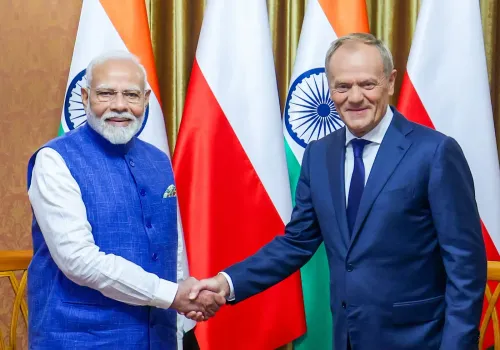
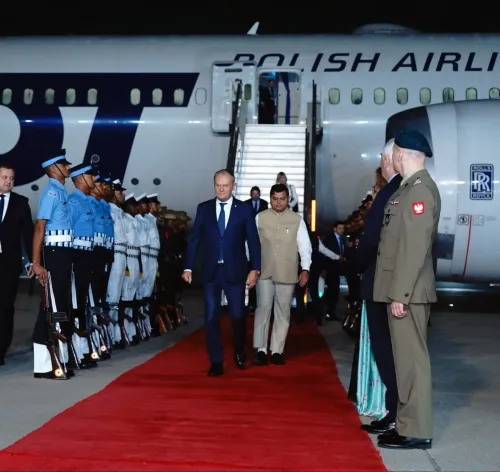
Modi, Tusk set 2030 target to double India-Poland bilateral trade
Synopsis
Modi and Tusk didn't just exchange pleasantries — they set a hard 2030 deadline to double bilateral trade, called for fast-tracking the long-stalled EU-India FTA, and flagged semiconductors, critical minerals, and AI as the real battlegrounds of the partnership. With an MoU on critical minerals under negotiation and IMEC on the table, this visit marks a clear strategic pivot in India-Europe engagement.
Key Takeaways
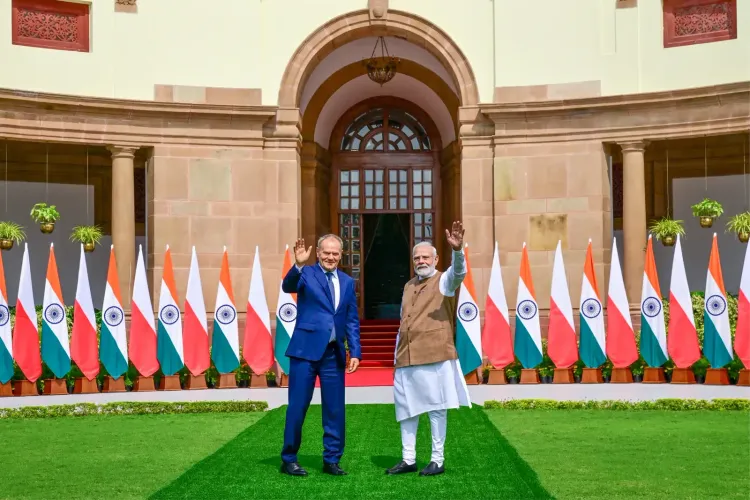
PM Narendra Modi and Polish PM Donald Tusk agreed on 22 October 2026 in New Delhi to double India-Poland bilateral trade by 2030 .
Both leaders called for early signing and ratification of the EU-India Free Trade Agreement (FTA) .
Collaborative research agreed on AI, semiconductors , and quantum technologies under the India-EU Comprehensive Strategic Agenda.
An MoU on geology, mining and critical minerals is reportedly under negotiation between the two sides.
Both leaders flagged the India-Middle East-Europe Economic Corridor (IMEC) as a key connectivity and supply chain initiative.
Direct flight expansion between India and Poland was encouraged, with civil aviation authorities asked to hold talks.
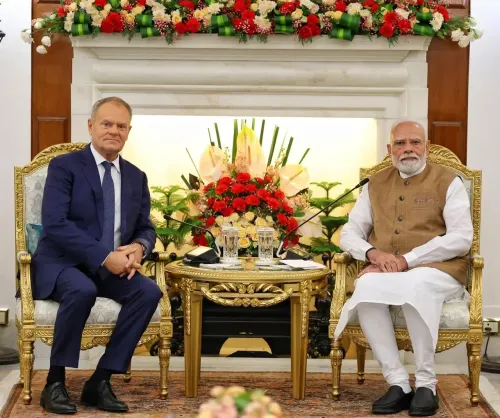
Prime Minister Narendra Modi and Polish Prime Minister Donald Tusk on Thursday, 22 October 2026, agreed to double bilateral trade between India and Poland by 2030, according to a joint statement issued after their meeting in New Delhi. The two leaders also called for early signing and ratification of the EU-India Free Trade Agreement (FTA), underscoring its potential to unlock new investment opportunities and diversify critical value chains.
Trade and Investment Goals
Prime Minister Modi invited Polish companies to expand their investments and operations in India, citing the country's large market, skilled workforce, and growing manufacturing and innovation ecosystem. Tusk, in turn, appreciated Indian investment in Poland and positioned the country as a strategic gateway for Indian businesses seeking a foothold in Central and Eastern Europe and the broader European market.
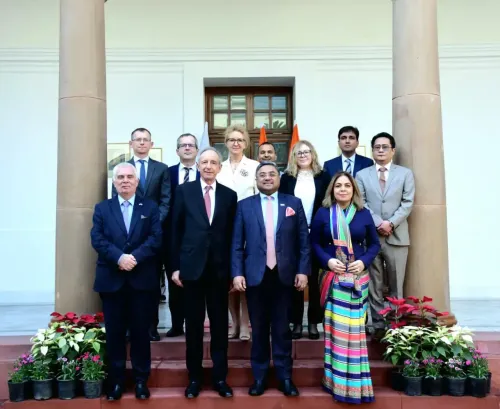
The two leaders also welcomed the India-Poland Business Forum held during the visit, attended by leading chief executives and industry representatives from both countries. They encouraged businesses to forge partnerships in sectors including industrial machinery, defence, infrastructure, pharmaceuticals, mining and critical minerals, energy, ICT, and other areas of mutual interest.
Technology, AI and Semiconductors
Both leaders recognised the transformative role of digital technologies and artificial intelligence in economic growth, productivity, and public service delivery. Acknowledging the India-EU Comprehensive Strategic Agenda, Modi and Tusk agreed to undertake collaborative research on AI, semiconductors, and quantum technologies, and to enhance startup partnerships. They also agreed to foster closer cooperation between enterprises, research institutions, and innovation ecosystems in both countries.
Notably, the leaders highlighted specific opportunities in the semiconductor space — an area that has emerged as a strategic priority for both India and the European Union amid global supply chain realignment.
Critical Minerals, Circular Economy and Space
The Prime Ministers emphasised the potential for collaboration in the circular economy and recovery industry, with a particular focus on battery recycling and rare earth mineral refining. An MoU on geology, mining and critical minerals is reportedly under negotiation, signalling that both sides are moving toward formal institutional arrangements in this strategically sensitive domain.
Cooperation in the space sector was also recognised as a key element of the India-Poland Strategic Partnership, with both leaders encouraging stronger institutional and industry-level engagement to identify concrete areas of mutually beneficial collaboration.
Connectivity and Supply Chain Resilience
The leaders welcomed prospects for enhanced direct flights between Poland and India and encouraged civil aviation authorities from both sides to hold direct talks. On maritime cooperation, both sides highlighted opportunities in the shipping industry and maritime security, underscoring the importance of port cooperation for building a secure and resilient global supply chain network.
The two leaders also noted the importance of the India-Middle East-Europe Economic Corridor (IMEC) initiative as a key connectivity mechanism that can shorten transit times and safeguard critical infrastructure against geopolitical disruptions.
With an MoU on critical minerals under negotiation and the EU-India FTA discussions gaining fresh political momentum, the India-Poland partnership appears poised for a significant structural upgrade in the months ahead.
Point of View
Sitting on rare earth deposits and backed by EU industrial policy, needs a large emerging-market partner. That mutual dependency is a far stronger foundation than trade volume targets. What mainstream coverage misses is the IMEC thread — if the corridor gains traction, Poland's position as a Central European logistics hub suddenly makes this bilateral far more strategic than it looks on paper.
NationPress
22 Oct 2026
Frequently Asked Questions
What did PM Modi and PM Tusk agree on during their New Delhi meeting?
Prime Minister Narendra Modi and Polish Prime Minister Donald Tusk agreed on 22 October 2026 to double bilateral trade between India and Poland by 2030 and called for early ratification of the EU-India Free Trade Agreement. They also pledged cooperation on AI, semiconductors, critical minerals, and space.
What is the current status of the EU-India Free Trade Agreement?
The EU-India FTA is still under negotiation. Both leaders called for its early signing, ratification, and timely implementation to unlock new trade and investment opportunities between India and the European Union.
What sectors are India and Poland targeting for business cooperation?
The two countries are encouraging partnerships in industrial machinery, defence, infrastructure, pharmaceuticals, mining and critical minerals, energy, and ICT. An MoU specifically covering geology, mining, and critical minerals is reportedly under negotiation.
What is the India-Middle East-Europe Economic Corridor (IMEC) and why did Modi and Tusk mention it?
IMEC is a multi-country connectivity initiative designed to link India with Europe via the Middle East, reducing transit times and diversifying global supply chains. Both leaders flagged it as an important mechanism for strengthening bilateral and regional connectivity between India and Poland.
What did the leaders agree on regarding AI and emerging technologies?
Modi and Tusk agreed to undertake collaborative research on artificial intelligence, semiconductors, and quantum technologies under the India-EU Comprehensive Strategic Agenda. They also committed to enhancing startup partnerships and closer cooperation between enterprises and research institutions in both countries.