Karnataka drought: Kumaraswamy seeks ₹3,705 crore central aid, IMCT visit from Oct 3
Synopsis
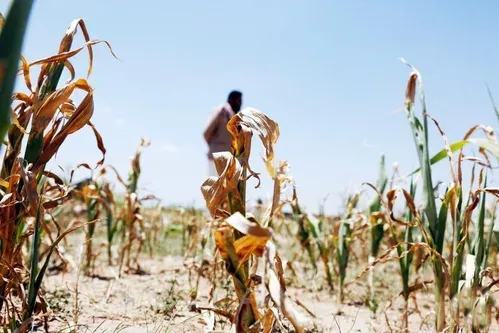
Karnataka's drought has scorched 19.52 lakh hectares and inflicted an estimated ₹18,748 crore in crop losses — and now the Centre's assessment team arrives on 3 October. With 89 of 101 drought-declared taluks classified as severely affected, the scale of the crisis puts ₹3,705 crore in federal relief on the line for millions of Karnataka farmers.
Key Takeaways
Kumaraswamy sought ₹3,705.30 crore in Central assistance for Karnataka's drought via a letter to Shivraj Singh Chouhan on 24 September 2026 .
Karnataka recorded a 34 per cent rainfall deficit as of 9 September ; 30 of 31 districts and 182 of 240 taluks faced deficiency.
Crop damage spans 19.52 lakh hectares , with estimated losses of ₹18,748.23 crore ; 101 taluks declared drought-hit, 89 classified as severely affected.
An Inter-Ministerial Central Team (IMCT) was constituted on 17 September and will visit Karnataka from 3 to 7 October 2026 for field assessment.
NDRF release will be approved by the High-Level Committee headed by the Union Home Minister , following the IMCT report and SC-NEC review.
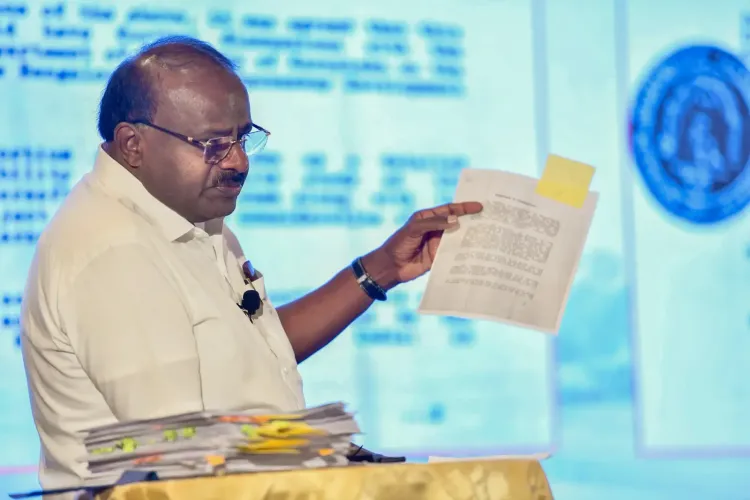
Union Minister H.D. Kumaraswamy has formally requested ₹3,705.30 crore in Central financial assistance for drought-hit Karnataka, citing a 34 per cent rainfall deficit as of 9 September and crop losses estimated at ₹18,748.23 crore across the state. The request, made via a letter dated 24 September to Union Agriculture and Farmers Welfare Minister Shivraj Singh Chouhan, underscores the growing agrarian distress gripping large parts of Karnataka.
Scale of the Drought
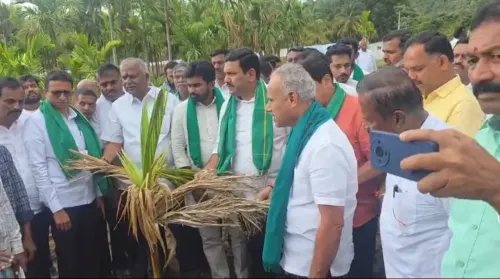
Of Karnataka's 31 districts, 30 have recorded rainfall deficiency, with 182 of 240 taluks adversely affected. The state government has officially declared 101 taluks as drought-hit, of which 89 have been classified as severely affected. Crop damage has been reported across 19.52 lakh hectares, making this one of the most widespread agricultural crises in the state in recent memory.
Kumaraswamy's letter invoked the State Disaster Response Fund (SDRF) and National Disaster Response Fund (NDRF) frameworks, urging the Centre to release funds under applicable norms. He also called for the immediate deployment of an Inter-Ministerial Central Team (IMCT) to conduct an on-the-spot assessment, arguing that an independent Central evaluation would help determine the true extent of losses and unlock additional relief.
Centre's Response
In a reply dated 29 September, Chouhan confirmed that the Centre's assessment process had already been set in motion — predating Kumaraswamy's letter. According to Chouhan, the Karnataka government had submitted a memorandum seeking NDRF assistance, following which an IMCT was constituted on 17 September. The team is scheduled to visit Karnataka from 3 to 7 October for a comprehensive field assessment of drought-affected areas.
Chouhan assured that after completing its five-day review, the IMCT's report would be examined by a sub-committee of the National Executive Committee (SC-NEC), headed by the Secretary of the Department of Agriculture and Farmers Welfare. The final decision on NDRF disbursement will rest with the High-Level Committee chaired by the Union Home Minister — a body of which Chouhan himself is a member.
What Farmers Stand to Lose
The estimated crop loss of ₹18,748.23 crore reflects damage across multiple kharif crops that sustain millions of farming households in Karnataka. With 89 taluks in the severe category, the crisis extends well beyond isolated pockets, affecting the agricultural backbone of the state's rural economy. This comes amid broader concerns about erratic monsoon patterns across peninsular India in 2026, which have already strained agrarian communities in neighbouring states.
Notably, the IMCT visit — spanning 3 to 7 October — will be critical in establishing the ground-level damage figure that the Centre uses to compute eligible NDRF relief, which is governed by pre-defined per-hectare norms.
What Happens Next
Following the IMCT's field assessment, its report will undergo a structured review at the SC-NEC before being placed before the Home Minister-led High-Level Committee for final approval. Chouhan reiterated that the Government of India would extend all possible support to Karnataka's relief efforts. The quantum and timeline of NDRF assistance will become clearer once the committee reviews the IMCT's findings, likely in late October 2026.
Point of View
Confirming the IMCT was constituted a week before Kumaraswamy even wrote, subtly reclaims the initiative. The real variable is the NDRF quantum: pre-defined per-hectare norms often fall well short of actual farmer losses, meaning even a successful relief claim may cover only a fraction of the ₹18,748 crore gap. Structural questions about drought-proofing Karnataka's rain-dependent kharif economy — irrigation coverage, crop insurance penetration — remain unaddressed in this exchange.
NationPress
29 Sept 2026
Frequently Asked Questions
Why is Karnataka seeking ₹3,705 crore from the Centre?
Karnataka is seeking ₹3,705.30 crore under the SDRF and NDRF frameworks to address severe drought conditions that have caused crop losses estimated at ₹18,748.23 crore across 19.52 lakh hectares. A 34 per cent rainfall deficit as of 9 September left 30 of the state's 31 districts rainfall-deficient.
How many taluks in Karnataka have been declared drought-hit?
The Karnataka government has declared 101 taluks as drought-hit, of which 89 have been classified as severely affected. Overall, 182 of 240 taluks in the state have faced some degree of rainfall deficiency.
What is the IMCT and when will it visit Karnataka?
The Inter-Ministerial Central Team (IMCT) is a Central government body that conducts on-the-spot assessments of disaster-affected areas to determine eligibility for NDRF assistance. It was constituted on 17 September and is scheduled to visit Karnataka from 3 to 7 October 2026.
How will the NDRF relief amount for Karnataka be decided?
After the IMCT completes its five-day field assessment, its report will be reviewed by a sub-committee of the National Executive Committee (SC-NEC) headed by the Agriculture Secretary. The final NDRF disbursement will then be approved by the High-Level Committee chaired by the Union Home Minister.
What was Shivraj Singh Chouhan's response to Kumaraswamy's request?
In a reply dated 29 September, Chouhan confirmed that the Centre had already initiated its assessment process, with the IMCT constituted on 17 September — before Kumaraswamy's letter. He assured that the Centre would extend all possible support to Karnataka's relief efforts.