Karnataka gets no reply from PM, HM on drought relief plea, tells Central team
Synopsis
Karnataka's Deputy Chief Minister G. Parameshwara disclosed before the Inter-Ministerial Central Team that letters to PM Modi, HM Amit Shah, and the Agriculture Minister on the state's devastating drought have gone unanswered. With 217 of 240 taluks declared drought-hit, crop losses spanning 47.09 lakh hectares, and a ₹7,142.64 crore relief request pending, the political silence from New Delhi is as significant as the agrarian crisis itself.
Key Takeaways
Karnataka has received no response from PM Narendra Modi , HM Amit Shah , or the Union Agriculture Minister on drought relief letters, Deputy CM G.
Parameshwara told the IMCT on 3 October 2026 .
217 of 240 taluks have been declared drought-hit; crop damage spans 47.09 lakh hectares with economic losses estimated at ₹46,324.50 crore .
Karnataka has sought ₹7,142.64 crore in NDRF relief across two memoranda for 177 assessed taluks.
The state recorded a 35% rainfall deficit in the 2026 southwest monsoon — only 551 mm , the second-lowest since 1956 .
Drinking water is being supplied to 861 rural areas via tankers and borewells; over 2,300 gram panchayats are expected to face shortages in coming months.
The state has released ₹306 crore for emergency drinking water supply through the Rural Development and Panchayat Raj Department .
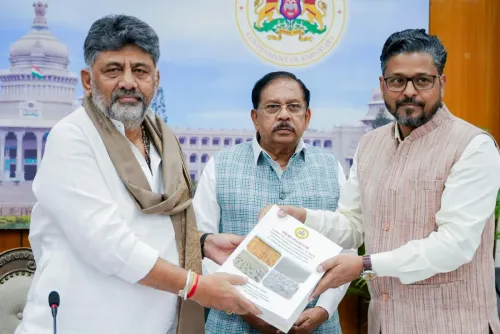
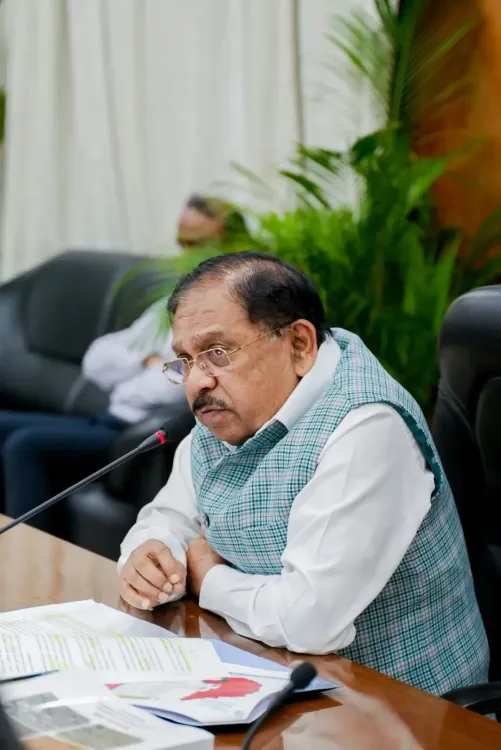
Karnataka has sent multiple letters to Prime Minister Narendra Modi, Union Home Minister Amit Shah, and the Union Agriculture Minister seeking emergency drought relief, but has received no response from any of them, Deputy Chief Minister and Revenue Minister G. Parameshwara disclosed on Saturday, 3 October 2026. The disclosure was made before the Inter-Ministerial Central Team (IMCT) convened at Chief Minister D.K. Shivakumar's official residence, Krishna, in Bengaluru.
Karnataka's Drought: The Scale of the Crisis
The state has declared 217 of its 240 taluks drought-hit — a declaration that underscores the breadth of the crisis. In the 177 taluks assessed so far, crop damage has been recorded across approximately 47.09 lakh hectares, with estimated economic losses of ₹46,324.50 crore.
Karnataka recorded an overall 35 per cent rainfall deficit during the 2026 southwest monsoon, receiving only 551 mm of rainfall — the second-lowest southwest monsoon rainfall in the state since 1956. Of the state's 31 districts, 30 have recorded deficient rainfall, while 209 of the 240 taluks have reported rainfall deficiency.
“This is one of the most severe droughts we have seen in our time. In many places, crops germinated and dried up after producing just two leaves. When it rained, farmers sowed again, but the second crop also dried up. If you visit the fields today, you will see that in many places there is no crop left,” Parameshwara told the IMCT.
What Karnataka Has Formally Sought From the Centre
The state submitted its first memorandum seeking ₹3,705.30 crore under the National Disaster Response Fund (NDRF) for 101 drought-hit taluks. A supplementary memorandum submitted on 1 October 2026 sought a further ₹3,437.34 crore for 76 additional taluks. In total, Karnataka has sought ₹7,142.64 crore for the 177 assessed taluks across both memoranda.
Parameshwara emphasised that the state has strictly followed the criteria prescribed under the Centre's Manual for Drought Management in identifying and declaring drought-hit areas. “We are not asking for anything extra. Our only request is that a fair assessment be made. Please take note of the ground reality and help us get the assistance that the state genuinely deserves,” he said.
Silence From New Delhi: A Pointed Allegation
Parameshwara's charge that not a single response has been received from the Prime Minister's Office, the Home Ministry, or the Agriculture Ministry despite multiple letters is the sharpest political element of Saturday's briefing. “We have written several letters to the Prime Minister, Home Minister and Agriculture Minister. I have also written to the concerned Union ministers. But so far, we have not received even a single response,” he said, urging the IMCT to conduct an impartial and comprehensive assessment.
This comes amid a well-documented pattern of friction between the Congress-led Karnataka government and the Bharatiya Janata Party (BJP)-led Centre over resource allocation and disaster relief. Critics argue that Centre-state relief flows have frequently been delayed when the ruling parties at both levels differ.
Drinking Water Shortage Compounds Agricultural Distress
Beyond crop losses, drinking water has emerged as a parallel emergency. Drinking water is currently being supplied to 861 rural areas through 227 tankers and 720 hired borewells. The government anticipates that more than 2,300 gram panchayats will face drinking water shortages in the coming months and has prepared emergency action plans accordingly.
The state has released ₹306 crore through the Rural Development and Panchayat Raj Department for drinking water supply. However, Parameshwara cautioned that financial outlays alone would not suffice. “Money alone cannot solve this problem. Drinking water and overall water availability will be major challenges. We will need greater support from the Centre to manage the situation in the coming months,” he said.
What Happens Next
The IMCT visit is a procedural step toward unlocking central relief — the team's assessment report typically informs the Centre's decision on NDRF disbursements. Parameshwara, Chief Minister Shivakumar, and district in-charge ministers have personally visited drought-affected areas to bolster the state's case with ground-level evidence. Whether the Centre responds to Karnataka's ₹7,142.64 crore request — and how quickly — will determine the state government's capacity to scale up relief operations before the water crisis deepens in the coming months.
Point of View
If accurate, signals either administrative dysfunction or deliberate delay, neither of which is acceptable when 47.09 lakh hectares of crops have failed. This also exposes a structural fault line: disaster relief in India remains discretionary in practice, even when statutory norms like the Manual for Drought Management exist. The Congress-led Karnataka government and the BJP-led Centre have clashed repeatedly over resource flows, and opposition-ruled states have historically had to fight harder for what should be routine entitlements. The IMCT's report will be the next test of whether institutional process can override political friction.
NationPress
3 Oct 2026
Frequently Asked Questions
Why has Karnataka approached the Inter-Ministerial Central Team?
Karnataka approached the IMCT to present evidence of its severe drought and press for central relief under the National Disaster Response Fund. The state has declared 217 of its 240 taluks drought-hit and is seeking ₹7,142.64 crore in NDRF assistance across two memoranda covering 177 assessed taluks.
What is the scale of Karnataka's 2026 drought?
Karnataka recorded a 35 per cent rainfall deficit during the 2026 southwest monsoon, receiving only 551 mm — the second-lowest since 1956. Crop damage has been reported over 47.09 lakh hectares, with estimated economic losses of ₹46,324.50 crore, affecting agriculture, horticulture, drinking water supply, and rural livelihoods.
How much relief has Karnataka sought from the Centre?
Karnataka has submitted two memoranda seeking a combined ₹7,142.64 crore under the NDRF — ₹3,705.30 crore for 101 taluks in the first memorandum and ₹3,437.34 crore for 76 additional taluks in a supplementary memorandum submitted on 1 October 2026.
What is the drinking water situation in drought-hit Karnataka?
Drinking water is currently being supplied to 861 rural areas through 227 tankers and 720 hired borewells. The state government expects more than 2,300 gram panchayats to face shortages in coming months and has released ₹306 crore for emergency supply measures.
Has the Centre responded to Karnataka's drought relief requests?
According to Deputy Chief Minister G. Parameshwara, the state has not received any response from the Prime Minister, Home Minister, or the Union Agriculture Minister despite writing multiple letters. The IMCT visit on 3 October 2026 is the procedural step that could unlock central disbursements.