Karnataka seeks ₹22,400 crore drought relief; Dy CM writes to Modi, Shah
Synopsis
Karnataka's Deputy CM has put a ₹22,400 crore figure on the table, writing directly to PM Modi, Amit Shah, and Shivraj Singh Chouhan as crop losses ravage 226 taluks across 57.93 lakh hectares. The real flash point: compensation rates set at ₹11,000–₹30,000 per hectare that farmers and the state say bear no relation to actual cultivation costs in 2026.
Key Takeaways
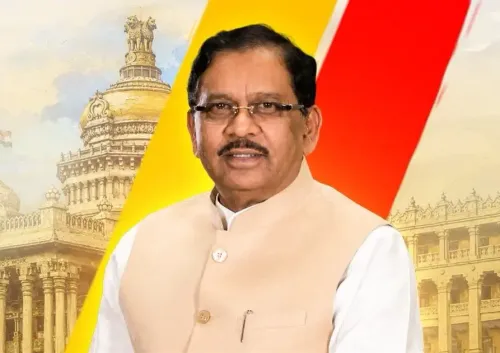
Karnataka Deputy CM G.
Parameshwara wrote to PM Modi , Amit Shah , and Shivraj Singh Chouhan on 3 November 2026 seeking urgent drought relief.
The state's revised drought relief demand stands at ₹22,400.58 crore , up from an earlier ₹20,585.73 crore following revised SDRF/NDRF norms.
Crop damage has been reported across 226 taluks and 57.93 lakh hectares ; estimated economic losses are ₹62,481.88 crore .
Revised compensation rates — ₹11,000/hectare for rain-fed, ₹22,000/hectare for irrigated, and ₹30,000/hectare for perennial crops — are contested as inadequate against actual input costs.
Parameshwara objected to use of the 2015-16 Agricultural Census and urged adoption of Karnataka's FRUITS database for identifying eligible farmers.
Parameshwara has sought personal appointments with all three Union leaders to present Karnataka's case directly.
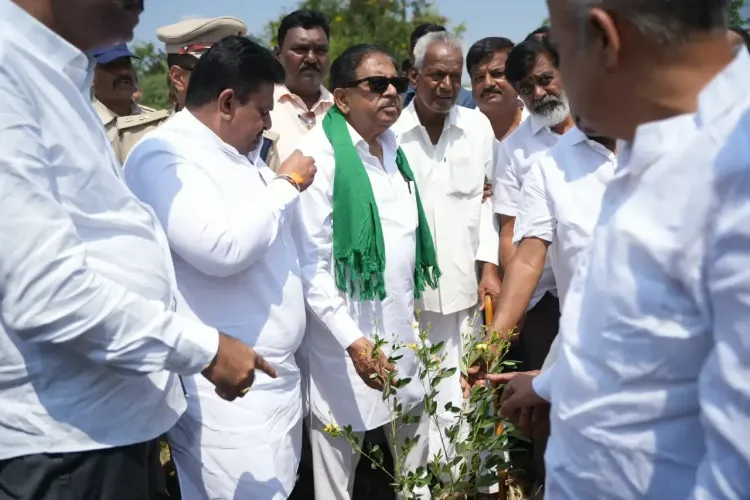
Karnataka Deputy Chief Minister and Revenue Minister G. Parameshwara on Tuesday, 3 November 2026, wrote separate letters to Prime Minister Narendra Modi, Union Home Minister Amit Shah, and Union Agriculture Minister Shivraj Singh Chouhan, urging the Centre to urgently sanction and release ₹22,400.58 crore in drought relief for the state. The move comes as 226 taluks across Karnataka reel from crop damage spanning 57.93 lakh hectares and estimated economic losses of ₹62,481.88 crore.
Scale of the Crisis
According to the letters, Karnataka's farmers are facing what Parameshwara described as an unprecedented crisis. Crop losses have been recorded across 226 taluks, covering 57.93 lakh hectares of agricultural land. The estimated economic losses have been pegged at ₹62,481.88 crore, a figure that underscores the severity of the drought's impact on livelihoods across the state.
Parameshwara also sought personal appointments with all three Union leaders to present Karnataka's case directly, signalling the urgency the state government attaches to the matter.
Revised SDRF/NDRF Norms and the Funding Gap
The letters reference a notification issued by the Union Home Ministry on 26 October 2026, which revised compensation norms under the State Disaster Response Fund (SDRF) and National Disaster Response Fund (NDRF) for the period 2026-27 to 2030-31. Following the revision, Karnataka's crop damage input subsidy requirement has risen from ₹6,128.70 crore to ₹7,943.55 crore — an increase of ₹1,814.85 crore. This has pushed the state's overall drought relief demand from ₹20,585.73 crore to ₹22,400.58 crore.
While Parameshwara welcomed the Centre's decision to revise the norms, he argued that the enhancement falls well short of addressing the actual financial distress faced by farmers, particularly as agricultural input costs continue to climb and extreme weather events grow in frequency and intensity.
Why Current Compensation Rates Are Contested
Under the revised norms, compensation has been fixed at ₹11,000 per hectare for rain-fed crops, ₹22,000 per hectare for irrigated crops, and ₹30,000 per hectare for perennial crops. Parameshwara argued these figures do not reflect the actual expenditure farmers incur on seeds, fertilisers, agricultural labour, irrigation, and other essential inputs.
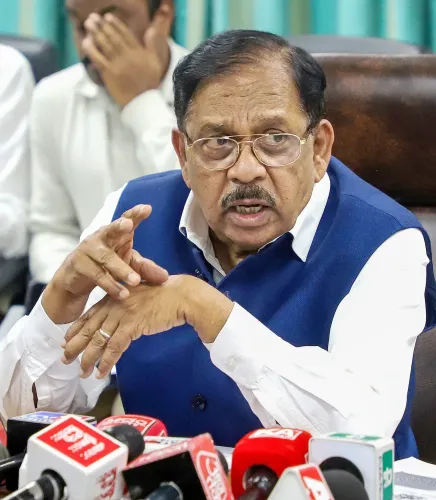
'Compensation norms must be in tune with agricultural costs and economic conditions prevailing in 2026. A compensation mechanism that does not adequately take into account the actual expenditure incurred by farmers in cultivating their crops and the losses suffered by them cannot ensure justice,' Parameshwara said in the letters.
Objection to Outdated Agricultural Data
A key concern raised by the Deputy Chief Minister is the continued reliance on data from the 2015-16 Agricultural Census to identify farmers eligible for drought relief. Parameshwara argued that a decade-old dataset does not accurately reflect current landholdings and agricultural circumstances, potentially excluding small and marginal farmers who may have acquired or lost land since then.
He urged the Centre to instead adopt Karnataka's FRUITS database — a state-level repository containing updated and verified farmer information — to ensure that eligible beneficiaries are not inadvertently left out of the relief framework. This is a pointed call for administrative modernisation within the national disaster response architecture.
Cooperative Federalism and the Political Dimension
Parameshwara was careful to frame the demand in the language of cooperative federalism, explicitly stating that 'political and administrative differences should not come in the way of protecting farmers' interests.' The appeal carries implicit weight: Karnataka is governed by the Congress, while the Centre is led by the Bharatiya Janata Party (BJP), a dynamic that has previously complicated Centre-state fiscal transfers in India.
Linking the issue to the national vision, Parameshwara cautioned that if a single failed monsoon can 'wipe out years of hard work by farmers, exhaust their family savings and push the future of an entire generation of farmers into uncertainty,' the goal of building a developed India by 2047 would remain out of reach.
The Centre's response — and whether it grants Parameshwara the requested appointments — is now closely watched by farmer groups and opposition parties across Karnataka.
Point of View
400 crore demand from Karnataka is as much a political document as an administrative one. A Congress-governed state writing to a BJP-led Centre — and invoking 'cooperative federalism' — signals that this relief process has already acquired a partisan undertow. The more substantive challenge, however, is the structural one: SDRF/NDRF compensation rates that have long lagged actual cultivation costs, and an eligibility framework still anchored to decade-old census data. Until the Centre agrees to index compensation norms to real input costs and update beneficiary databases, every drought cycle will produce the same spectacle — large headline demands, contested disbursal, and farmers receiving a fraction of their actual losses.
NationPress
3 Nov 2026
Frequently Asked Questions
Why is Karnataka demanding ₹22,400 crore in drought relief?
Karnataka has reported crop damage across 226 taluks covering 57.93 lakh hectares, with total estimated economic losses of ₹62,481.88 crore. Following the Centre's revision of SDRF/NDRF compensation norms in October 2026, the state's recalculated relief requirement rose to ₹22,400.58 crore.
What are the revised SDRF/NDRF compensation rates for crop damage?
Under norms notified by the Union Home Ministry on 26 October 2026, compensation is set at ₹11,000 per hectare for rain-fed crops, ₹22,000 per hectare for irrigated crops, and ₹30,000 per hectare for perennial crops. Karnataka's government argues these rates do not cover actual farm input costs in 2026.
What is Karnataka's FRUITS database and why is it relevant?
FRUITS is Karnataka's state-level digital repository of updated and verified farmer information. Deputy CM Parameshwara has urged the Centre to use it instead of the 2015-16 Agricultural Census data, arguing that decade-old records risk excluding small and marginal farmers who are currently eligible for drought relief.
Who has Karnataka's Deputy CM written to and what has he asked for?
G. Parameshwara has written separately to Prime Minister Narendra Modi, Union Home Minister Amit Shah, and Union Agriculture Minister Shivraj Singh Chouhan. He has requested urgent sanction and release of ₹22,400.58 crore, a review of compensation norms, adoption of updated farmer databases, and personal appointments to present Karnataka's case.
What is the political context of this Centre-state dispute?
Karnataka is governed by the Congress while the Centre is led by the BJP, a combination that has historically complicated Centre-state fiscal transfers in India. Parameshwara explicitly called for relief efforts to 'rise above political differences' and invoked the principle of cooperative federalism in his letters.