Rajnath Singh: Private Sector, Corridors Driving Record Defence Output
Synopsis
Union Defence Minister Rajnath Singh credited private-sector participation, the two Defence Industrial Corridors in UP and Tamil Nadu, and an emerging-technology focus for driving what he called record defence production and exports, marking a milestone in India's Atmanirbhar Bharat indigenisation push.
Key Takeaways
Union Defence Minister Rajnath Singh highlighted private-sector participation, Defence Industrial Corridors , and emerging technologies as key drivers of defence growth.
Two Defence Industrial Corridors — in Uttar Pradesh and Tamil Nadu — were announced in 2018 to build clustered manufacturing ecosystems.
The iDEX scheme , launched in 2018 , channels startups and innovators into emerging defence-technology segments.
In 2020 , the FDI ceiling in defence was raised to 74 per cent under the automatic route , opening the sector to deeper private and foreign investment.
The Atmanirbhar Bharat initiative, also launched in 2020 , introduced negative import lists mandating procurement of listed items from domestic sources.
The next Union Budget defence allocation and fresh negative-import-list notifications remain key near-term indicators of the policy's next phase.
India's defence manufacturing story is being rewritten — not in government arsenals alone, but on the factory floors of private firms, in startup labs, and across two dedicated industrial corridors stretching from Uttar Pradesh to Tamil Nadu. Union Defence Minister Rajnath Singh underscored this shift on Tuesday, 3 November 2026, pointing to greater private-sector participation, the two Defence Industrial Corridors, and a sharper focus on emerging technologies as the engines behind what he described as record defence production and exports.
From Import Dependence to Industrial Corridors
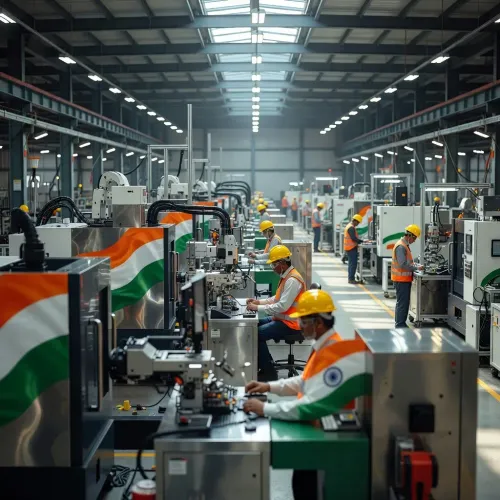
The architecture behind this push was laid in stages. Two Defence Industrial Corridors — one each in Uttar Pradesh and Tamil Nadu — were formally announced in 2018 to create clustered manufacturing ecosystems that could anchor supply chains, attract investment, and build domestic capacity at scale. The logic was straightforward: concentrate industry, reduce friction, and let private capital do the heavy lifting that state-owned enterprises alone could not.
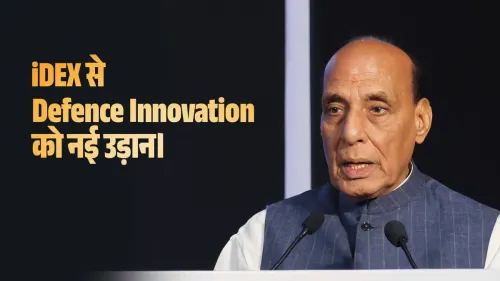
That same year, the iDEX (Innovations for Defence Excellence) scheme was launched to pull startups and innovators into the emerging-technology end of the defence ecosystem — drones, AI, electronic warfare, and beyond. These were not standalone moves; they were part of a broader liberalisation arc that successive administrations accelerated sharply after 2020.
The 2020 Policy Pivot That Changed the Numbers
The pivot year was 2020. The government released the Defence Production and Export Promotion Policy, setting explicit domestic manufacturing and export targets for the decade. Simultaneously, the FDI ceiling in defence manufacturing was raised to 74 per cent under the automatic route — a significant signal to global original equipment manufacturers and joint-venture partners that India was open for serious business, not just token partnerships.
The same year, Atmanirbhar Bharat gave the indigenisation drive a political brand and an institutional backbone, with negative import lists — items that the armed forces could no longer procure from abroad — becoming the stick to complement the carrot of corridor infrastructure and FDI liberalisation. Defence MSMEs, long crowded out by public-sector giants, found new procurement pathways opening up.
What 'Record' Production Actually Means in Practice
Rajnath Singh's post frames the outcomes in confident terms — 'record defence production and exports' — though specific figures were not cited. The policy lineage makes the directional claim credible: a decade of incremental rule changes, two dedicated industrial zones, startup-facing innovation schemes, and a hard import-substitution mandate collectively do move production and export needles. The armed forces themselves are among the most consequential stakeholders, since a deeper domestic industrial base reduces single-vendor dependencies and shortens replenishment timelines in a crisis.
The watch items ahead are concrete: the next Union Budget's defence allocation, any fresh negative-import-list notifications that push indigenisation further, and progress reports on corridor project completions and the export order pipeline — particularly as Indian platforms begin attracting interest from partner nations in Southeast Asia, Africa, and Latin America.
India's journey from one of the world's largest defence importers to a credible exporter is not a headline yet fully earned — but the infrastructure to earn it is now visibly in place.
Point of View
Cumulative success. That framing matters politically: with the next Union Budget cycle approaching, signalling 'record' outcomes reinforces the case for sustained or increased defence-capital allocations. The emphasis on private-sector participation is also significant; it reflects a deliberate effort to shift credit and accountability away from legacy public-sector units toward a broader industrial coalition that is harder for any future government to dismantle. Whether the 'record' production and export numbers hold up under scrutiny will determine how durable this narrative proves to be.
NationPress
3 Nov 2026
Frequently Asked Questions
What are India's Defence Industrial Corridors?
India has two Defence Industrial Corridors — one in Uttar Pradesh and one in Tamil Nadu — announced in 2018 to create clustered manufacturing zones that attract defence companies, build supply chains, and reduce import dependence.
What is Atmanirbhar Bharat in defence?
Atmanirbhar Bharat , launched in 2020 , is India's self-reliance initiative that in defence includes negative import lists — banning procurement of specified items from abroad — to push domestic manufacturing and reduce dependence on foreign suppliers.
What is the iDEX scheme in India?
The iDEX (Innovations for Defence Excellence) scheme, launched in 2018 , provides funding and procurement pathways for Indian startups and innovators working on emerging defence technologies such as drones, AI, and electronic warfare systems.
How much FDI is allowed in India's defence sector?
Since 2020 , India permits up to 74 per cent FDI in defence manufacturing under the automatic route , meaning foreign investors do not need prior government approval up to that threshold, encouraging joint ventures with Indian firms.
What is India's Defence Production and Export Promotion Policy?
The Defence Production and Export Promotion Policy , released in 2020 , sets targets for domestic defence manufacturing and exports over the decade, providing a roadmap for building India's industrial base and growing its share of global defence trade.