Taliban enters year six with only Russia's recognition; China, UAE accept envoys
Synopsis
Five years after seizing Kabul, the Taliban has formal recognition from just one country — Russia — while four nations quietly accept its Ambassadors without that diplomatic stamp. The gap between expanding economic ties and withheld formal status reveals exactly how the world is managing an inconvenient reality: engaging the Taliban without legitimising it.
Key Takeaways
Russia is the only country to have formally recognised the Taliban regime, a step taken in July 2025 .
Four countries — China , UAE , Uzbekistan , and Russia — have accepted Taliban diplomatic credentials at the Ambassadorial level.
Five foreign Ambassadors have presented credentials to Taliban officials, the latest being Belarus in November 2026 .
Key conditions for recognition include an inclusive government, human rights respect, and fulfilment of the Doha Agreement signed on 29 February 2020 .
Taliban spokesperson Zabihullah Mujahid reportedly blamed Western, particularly US, influence for blocking formal diplomatic expansion.
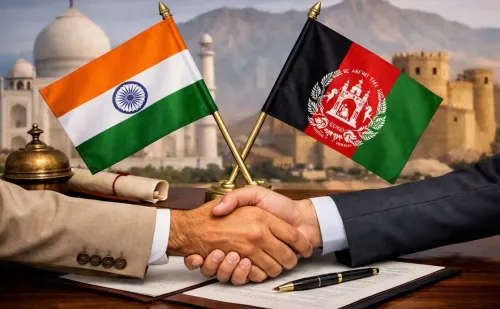
India maintains pragmatic engagement — providing humanitarian aid and expanding trade — without formally recognising the Taliban administration.
As the Taliban administration enters its sixth year in power in Afghanistan, only one country — Russia — has formally recognised the regime, while four nations have accepted Taliban diplomatic credentials at the Ambassadorial level. The milestone underscores an enduring global standoff over the Kabul government's record on inclusivity and human rights, according to reports citing Tolo News.
The Recognition Scoreboard
The four countries that have accepted Taliban Ambassador credentials are China, the United Arab Emirates (UAE), Uzbekistan, and Russia. Of these, Russia stands apart as the only state to have formally and officially recognised the Taliban-led Islamic Emirate of Afghanistan, a step it took in July 2025.
On the reciprocal side, five foreign Ambassadors have presented their credentials to Taliban ministers and senior officials. China moved first, on 13 September 2023, followed by Uzbekistan in November 2024, the UAE in November 2025, Qatar in December 2025, and most recently Belarus in November 2026.
Taliban Envoys on the Global Stage
In the other direction, Taliban representative Bilal Karimi presented credentials to Chinese President Xi Jinping on 30 January 2024 — accepted at the Ambassadorial level. In August 2024, Badruddin Haqqani presented his credentials to the President of the UAE, while Abdul Ghaffar Bahr's credentials were accepted two months later by Uzbek Foreign Minister Bakhtiyor Saidov. In Russia, Gul Hassan Hassan presented credentials to President Vladimir Putin on 15 January 2026 — the clearest symbol of Moscow's singular formal recognition.
Why Global Recognition Remains Elusive
The conditions that most countries have set for formal recognition remain unmet, according to analysts. Jannat Fahim Chakari, a university lecturer, told Tolo News: 'The main conditions set by countries for recognising the Islamic Emirate have so far largely centred on issues such as the formation of an inclusive government, respect for human rights, and fulfilment of the Doha commitments.'
The Doha Agreement — formally titled the 'Agreement for Bringing Peace to Afghanistan' — was signed on 29 February 2020 by US envoy Zalmay Khalilzad and Taliban representative Mullah Abdul Ghani Baradar in Qatar's capital, laying out the framework for the withdrawal of NATO-led forces. The Taliban's post-takeover conduct, critics argue, has diverged sharply from the commitments made under that accord.
Taliban spokesperson Zabihullah Mujahid reportedly attributed the diplomatic impasse to Western interference, claiming that the influence of Western countries — particularly the United States — had prevented the formal expansion of relations between the Islamic Emirate and regional nations.
India's Stance: Pragmatic Engagement Without Recognition
India and Afghanistan share a historically layered relationship built on civilisational, trade, and cultural ties. Over the past two decades, New Delhi has been among Kabul's largest development partners, funding landmark projects including the Afghan Parliament building, the Salma (Afghan-India Friendship) Dam, and the Zaranj-Delaram highway.
India currently maintains a policy of pragmatic engagement with the Taliban administration — continuing humanitarian assistance, including food, medicines, and development support — while stopping short of formal recognition. Both sides have expanded cooperation in trade, healthcare, agriculture, and regional connectivity. India views a stable Afghanistan as critical for regional security and for overland links with Central Asia.
With Russia's formal recognition now logged and regional economic ties quietly deepening, the question of whether Afghanistan's isolation shifts in year six will depend heavily on whether the Taliban moves on the governance and rights benchmarks that the international community has consistently demanded.
Point of View
But political legitimacy is not. Russia's solitary recognition is as much a statement about Moscow's geopolitical positioning as it is about Kabul's governance. The widening gap — five foreign Ambassadors engaging Taliban officials without formal recognition — reveals a world that has quietly accepted the Taliban's permanence while withholding the one thing it most wants: legitimacy. For India, the calculus is sharper still; its infrastructure investments and humanitarian stakes in Afghanistan are too large to abandon, yet formal recognition would come at a cost to its international credibility on human rights and women's rights norms. The longer this ambiguity persists, the more it benefits the Taliban — engagement without accountability.
NationPress
3 Nov 2026
Frequently Asked Questions
Which countries have formally recognised the Taliban government in Afghanistan?
As of November 2026, only Russia has formally recognised the Taliban-led Islamic Emirate of Afghanistan, a step it took in July 2025. Three other countries — China, the UAE, and Uzbekistan — have accepted Taliban envoys at the Ambassadorial level without extending formal recognition.
What is the Doha Agreement and why does it matter for Taliban recognition?
The Doha Agreement, formally the 'Agreement for Bringing Peace to Afghanistan,' was signed on 29 February 2020 between US envoy Zalmay Khalilzad and Taliban representative Mullah Abdul Ghani Baradar. It laid out the framework for NATO troop withdrawal, and most countries cite the Taliban's failure to fulfil its commitments under this accord — on inclusive governance and human rights — as a key reason for withholding formal recognition.
What is India's current policy toward the Taliban government?
India maintains a policy of pragmatic engagement without formal recognition. New Delhi continues to provide humanitarian assistance — including food and medicines — and has expanded cooperation in trade, healthcare, and regional connectivity, while keeping diplomatic channels open through its mission in Kabul.
Which countries have sent Ambassadors to the Taliban government?
Five countries have presented credentials to Taliban ministers or senior officials: China (13 September 2023), Uzbekistan (November 2024), the UAE (November 2025), Qatar (December 2025), and Belarus (November 2026). Presenting credentials, however, falls short of the formal diplomatic recognition that only Russia has granted.
Why has the Taliban failed to secure wider international recognition after six years?
According to analysts, the primary conditions set by the international community — formation of an inclusive government, respect for human rights, and fulfilment of the Doha commitments — remain largely unmet. Taliban spokesperson Zabihullah Mujahid has reportedly attributed the diplomatic impasse to Western, particularly US, influence blocking formal expansion of the Islamic Emirate's ties.