Taliban pushes for global ties as women's rights crisis deepens in Afghanistan
Synopsis
The Taliban's supreme leader is asking the world to engage — but the world keeps pointing to the same answer: Afghan women. With only 17% of female returnees earning an income and a near-total ban on girls' education and women's employment, the regime's Eid outreach lands against a backdrop of deepening international isolation and a UN report that lays the crisis bare in numbers.
Key Takeaways
Sheikh Hibatullah Akhundzada called for expanded global political and economic ties in his Eid al-Adha message reported on 25 May .
Only 17 per cent of Afghan women returnees from Iran and Pakistan are currently earning an income, according to a UN report released last month.
Nearly 40 per cent of returnees have vocational, technical, or digital skills they are unable to use inside Afghanistan.
Russia is reportedly the only country to have formally recognised the Taliban government, doing so in July 2025 .
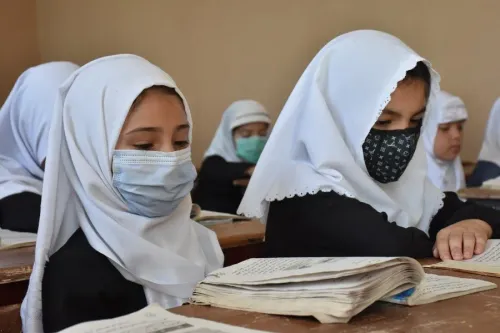
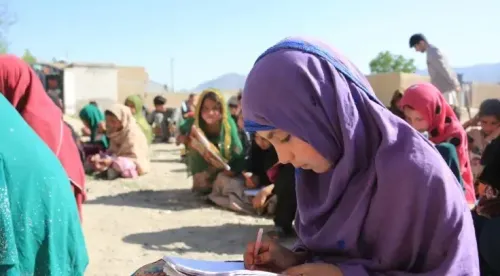
The Taliban has banned girls from secondary and higher education and restricted women's employment, movement, and public participation since returning to power in August 2021 .
An asset freeze abroad and non-recognition of the Afghani currency remain additional barriers to the regime's international integration.
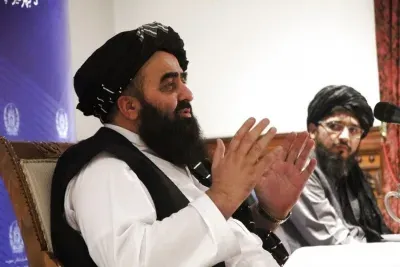
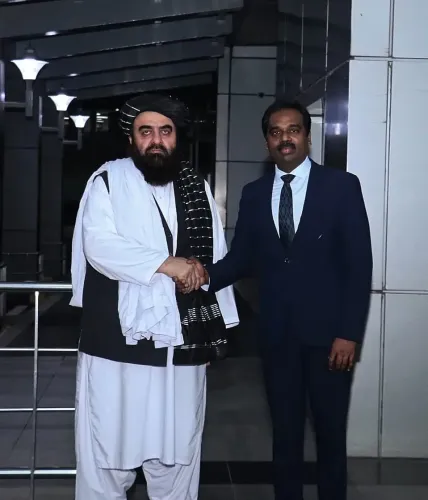
Taliban supreme leader Sheikh Hibatullah Akhundzada has called for expanded political and economic engagement with nations across the world, even as international scrutiny over the regime's systematic suppression of women's rights continues to block any meaningful path to global recognition. The appeal, made in his Eid al-Adha message reported by Tolo News on Sunday, 25 May, arrived in stark contrast to fresh international media coverage documenting the deepening crisis facing Afghan women.
What Akhundzada Said
In his Eid message, Akhundzada stated that Kabul 'seeks to expand political and economic relations with all countries of the world, especially Islamic countries, within the framework of Islamic Sharia principles, and has fulfilled its responsibility in this regard.' The statement signals the Taliban's continued effort to reframe itself as a legitimate governing authority, even as no country — save reportedly Russia — has formally extended recognition.
According to reports, Russia became the first country to formally recognise the Taliban government in July 2025, driven primarily by strategic considerations including trade in energy, infrastructure, agriculture, and regional connectivity, rather than ideological alignment. Analysts suggest Moscow may also have sought to position itself as an influencer among authoritarian states across Central and South Asia.
The Women's Rights Barrier
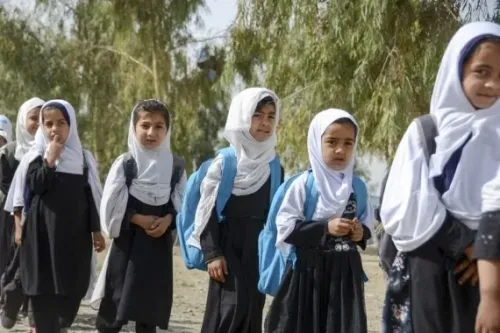
The Taliban's treatment of women remains the most visible and widely cited obstacle to international legitimacy. Since the group returned to power in August 2021, it has imposed sweeping restrictions on women and girls — barring them from secondary and higher education, most forms of employment, and independent movement, while requiring a male guardian for access to basic public services.
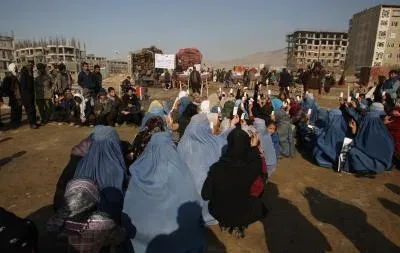
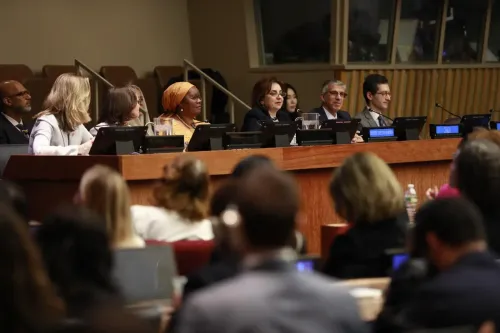
A UN report released last month underscored the scale of the crisis, finding that only 17 per cent of Afghan women returnees from Iran and Pakistan are earning an income. The report noted that 'despite many women having worked and gained skills while in other countries, they face a near-total collapse in job opportunities once in Afghanistan.' Nearly 40 per cent of returnees reported possessing vocational, technical, or digital skills they are unable to use.
International Community's Position
Most governments and international organisations cite three primary grounds for withholding recognition: the regime's treatment of women, the absence of an inclusive government, and concerns about the Taliban's ties to militant groups. Beyond recognition, the regime also faces an asset freeze abroad and the non-recognition of the Afghani as a valid currency in international transactions — compounding its economic isolation.
Human rights organisations and international media have consistently documented what they describe as a systematic rollback of women's rights, with enforcement visible in the banning of girls from high school, restrictions on women's workplaces, and public policing of dress and movement. Critics argue these measures are not incidental policy choices but deliberate expressions of the regime's governing ideology.
What the UN Recommends
The UN report offered actionable recommendations to improve the economic absorption of women returnees within Afghanistan, alongside steps to reinforce social cohesion with host communities. However, analysts caution that without direct and sustained engagement between the global community and the Taliban regime, such recommendations risk remaining aspirational rather than operational.
As the Taliban continues to seek international legitimacy on its own terms, the gap between Kabul's outreach and the conditions demanded by the international community shows little sign of narrowing. Whether any government beyond Russia moves toward formal recognition — and on what terms — will be among the defining diplomatic questions for the region in the months ahead.
Point of View
Framed as strategic pragmatism, may embolden Kabul to wait out Western pressure rather than reform. The real question is whether the international community has the appetite for conditional engagement — and whether any framework short of full recognition could actually change behaviour inside Afghanistan.
NationPress
11 Oct 2026
Frequently Asked Questions
What did Taliban leader Akhundzada say in his Eid al-Adha message?
Sheikh Hibatullah Akhundzada stated that Kabul 'seeks to expand political and economic relations with all countries of the world, especially Islamic countries, within the framework of Islamic Sharia principles.' The message, reported by Tolo News on 25 May, was widely seen as an appeal for broader international engagement and recognition.
Why has no country officially recognised the Taliban government?
Most governments and international organisations cite the Taliban's systematic suppression of women's rights, the lack of an inclusive government, and concerns about ties to militant groups as reasons for withholding recognition. The regime also faces an asset freeze and non-recognition of the Afghani currency internationally. Russia is reportedly the sole exception, having formally recognised the Taliban in July 2025.
What does the UN report say about Afghan women returnees?
A UN report released last month found that only 17 per cent of Afghan women returning from Iran and Pakistan are earning an income. Nearly 40 per cent reported having vocational, technical, or digital skills they are unable to use inside Afghanistan, pointing to a near-total collapse in women's employment opportunities.
Why did Russia recognise the Taliban government?
According to reports, Russia formally recognised the Taliban in July 2025 primarily for strategic reasons, including strengthening trade ties in energy, infrastructure, and agriculture, and expanding its influence in Central and South Asia. Analysts suggest Moscow also sought to position itself as a key player among authoritarian-leaning states in the region.
What restrictions has the Taliban imposed on women since 2021?
Since returning to power in August 2021, the Taliban has banned girls from secondary and higher education, restricted women's employment and freedom of movement, and required a male guardian for women to access public services. Human rights organisations describe these measures as a systematic and enforced rollback of women's rights across all aspects of public life.