Indian Political Leaders Respond to Taliban's Domestic Violence Legislation
Synopsis
The Taliban's new domestic violence code allowing harm to women has ignited fierce backlash in India. Leaders across the political spectrum are condemning it as an egregious violation of women's rights and a dangerous precedent, urging for a collective international response to uphold justice and human dignity.
Key Takeaways
Outrage in India: The Taliban's code permitting violence against women has sparked widespread condemnation.
Violation of Rights: Critics argue it represents a serious infringement on women's rights and justice.
Political Reactions: Leaders across the political spectrum are calling for accountability and international intervention.
Class Disparities: The code imposes varying penalties based on social status.
Urgent Action Needed: Human rights organizations are advocating for immediate global intervention.
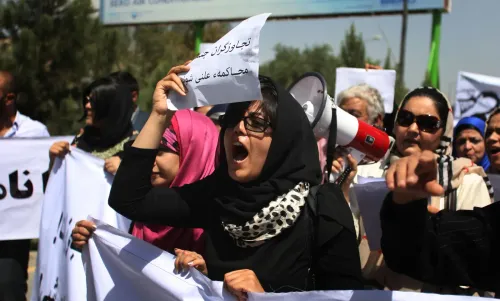
New Delhi, Feb 23 (NationPress) The Taliban's latest domestic violence code has incited significant outrage across India, as it permits physical harm to women as long as no bones are fractured. Critics have condemned it as an attack on fundamental human dignity and a stark reminder of the perils that arise when authority and religious doctrines eclipse essential rights. This law has been denounced as a serious infringement on women's rights, a direct affront to justice, and a troubling indication that oppressive measures can be institutionalized under the pretense of legality.
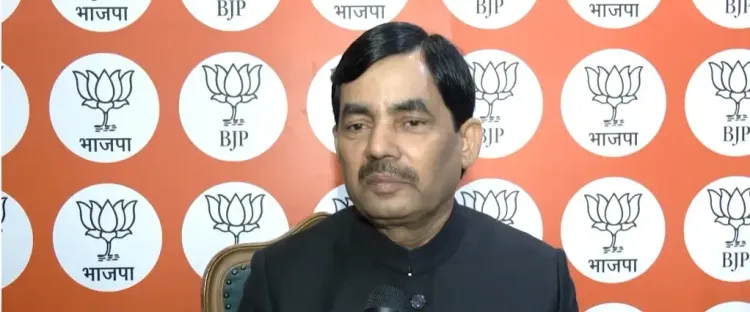
BJP National Spokesperson Syed Shahnawaz Hussain expressed strong disapproval, stating, “The Taliban will not shy away from such conduct. Their return to power has fostered an environment where their actions cannot be justified. The fatwa they issued and the legislation they enacted allow for severe violence against women, and those responsible for these laws must be held accountable.”
JD(U) Spokesperson Neeraj Kumar labeled the regulation as a gross violation of democratic and human rights principles.
“When democratic values are undermined and policies are dictated by religious beliefs, injustice is unavoidable. Such mistreatment of women under the guise of religion is intolerable. No faith endorses the mistreatment of daughters, the denial of their education, or their discrimination,” he stated.
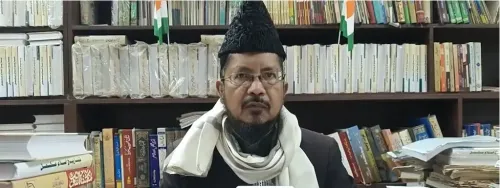
Congress MP Imran Masood criticized the Taliban's rationale for the new code, saying, “I fail to comprehend which Islamic texts they referenced in its creation. This is unjustifiable according to Islamic principles regarding the status of women.”
JD(U) National Spokesperson Rajeev Ranjan Prasad pointed out the broader diplomatic ramifications. “This issue impacts international relations. We stand by the central government's policies and decisions concerning such global matters.”
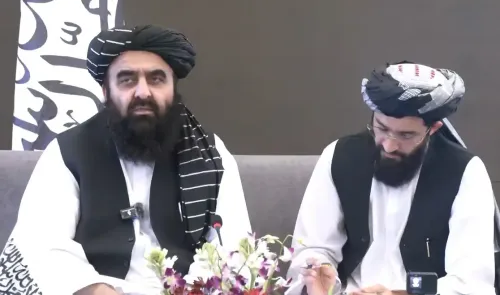
The Taliban's 90-page code, endorsed by Supreme Leader Hibatullah Akhundzada, also nullifies the 2009 law aimed at Eliminating Violence Against Women (EVAW) and introduces penalties that vary based on social class, imposing lighter consequences for the elite while enforcing harsher penalties on lower-class individuals.
Human rights organizations, including the UN Special Rapporteur on violence against women, have called for urgent international action to prevent the enforcement of this law.
Point of View
It is imperative to recognize the gravity of the Taliban's new domestic violence code, which not only undermines women's rights but also reflects broader implications for global human rights standards. India’s strong condemnation shows a collective commitment to uphold justice and dignity internationally.
NationPress
30 Sept 2026
Frequently Asked Questions
What does the Taliban's new domestic violence code entail?
The new code allows for the physical abuse of women, provided that no bones are broken, and it abolishes the 2009 law on the Elimination of Violence Against Women.
How has India reacted to the new code?
Indian political leaders across parties have expressed outrage, condemning the code as a violation of women's rights and an affront to justice.
What are the broader implications of this law?
The law not only affects women's rights domestically but also has significant diplomatic implications, impacting relations between countries.
What can be done to counter this legislation?
Human rights organizations are calling for immediate international intervention to prevent the implementation of this law.
Why is this code considered a violation of human rights?
It formalizes oppressive measures against women under the guise of law, which undermines their fundamental human dignity and rights.